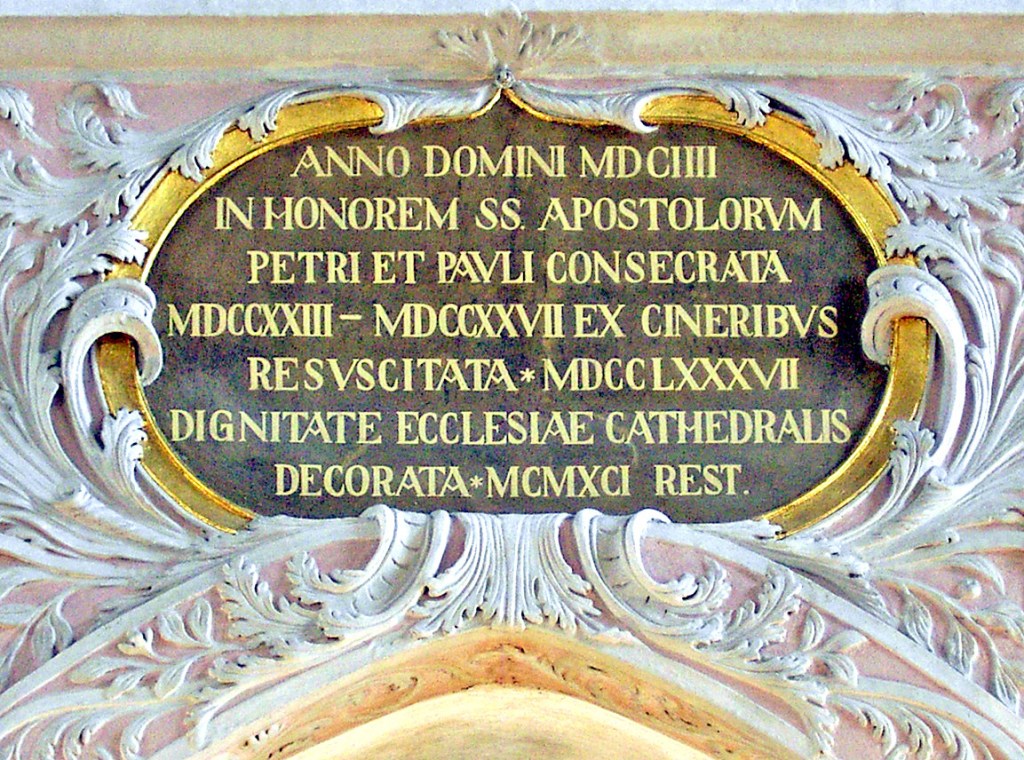
The Importance of AD and BC
In writing calendar dates, it is commonplace today among academics to substitute “CE” (“common era”) for “AD” (“Anno Domini” – a Latin phrase for “the Year of the Lord”). This notation has become more popular in the last several decades as academics, museums, and others have consciously sought to distance the calendar from any specifically Christian connotations.
To be blunt, this is simply nonsensical. If the calendar is marking years from a given point, then what, if not the Advent of Christ Jesus, the Son of God, is the reference point? What marks the start of the so-called “Common Era”? Here are some of the things that occurred in the year 1 CE:
- It was the 27th year of the Roman Emperor, Caesar Augustus. Tiberius—Augustus’s successor—was still a general quelling revolts in Germania.
- It was the 754th year since the founding of Rome (ab urbe condita or AUC) and Roman historian Livy began writing his History of Rome.
- The Parthian Empire began conquering the petty kingdoms of Gadara in the Indus Valley.
- In China, the nine year old Emperor Ping of the Han Dynasty began the Yuashi Era, which would last all of five years and be known as the beginning of the end for the dynasty.
In short, none of these events of the greatest empires of the world served as the basis for a “Common Era.” In the full sweep of the histories of the Roman, Parthian, and Han Empires, great things happened before and after 1 CE but the year itself was rather dull. From a Christian perspective, however, the most significant event in the totality of human history occurred: the birth of Jesus—the Son of God, the Messiah, the Christ—in the obscure Judean village of Bethlehem, on the periphery of the Roman Empire.
If others want to come up with their own dating system independent of any Christian reference, that’s their prerogative. They should at least have the courage of the French Revolutionaries to justify what they want to identify as Year 0 or Year 1. When the French Revolutionaries proclaimed “Year Zero” in 1792 with the abolition of the French Monarchy and the institution of a non-Gregorian calendar, they were proclaiming the institution of a New Order of the Ages (Novus Ordo Seclorum). So, too, when the Khmer Rouge in Cambodia made a similar pronouncement in 1978 and began a genocide against educated people. Both conceptualizations were anti-God, but the declaration of “Year Zero” carried with it the connotation not merely of a change in the calendar, but the idea that something new has happened and is ushering in a new era to affect all of human history, such that all subsequent life needs to refer back to that point.
Modern revolutionaries show hubris in declaring their revolution as a turning point in human existence, but if we are to reestablish a Christian worldview, then we need to, among other things, recover a Christian sense of time. Time, in fact, has eschatological significance. In denoting our years with AD and BC, we are doing more than simply marking time. The phrase, “The Year of the LORD,” is similar to the regnal formulations typically used of kings and queens—”the 4th year of Charles III” or the “5th year of Ashurbanipal” for example. Anno Domini, the Year of the LORD, implies that Christ is still reigning. Indeed, according to orthodox Christian theology in all the major traditions of the Faith, He is reigning, even now. Simply calling the era the “Common Era” or even the “Christian Era” grossly diminishes that fact. It suggests that this era is like some other human era and it neutralizes any sense that we as individuals are participants in, not merely observers, of this era. And, because He is reigning, we as His people have obligations upon us to honor and extend His rule. Because calendar time is eschatological, there is the sense that the time we are now in is pregnant with significance. We are in the age in which the LORD is reigning, but His physical presence is hidden. It is the age in which the nations are being gathered into His Kingdom. That age will end in a Day—the Day of the LORD—when He will bodily return, bring Final Judgment upon the world, and usher in the fullness of His kingdom for all time.
It is the year of the LORD. Praise be to Him!
 Covenantide
Leave a comment