For much of the fourth century AD, the Roman Empire was consumed in combating the Arian controversy, which asserted that Christ Jesus, the Second Person of the Trinity, was a created being and neither fully God nor fully man. Were that the case, then Christ could not be a genuine Savior of His people. The Council of Nicaea in 325 encapsulated Christian orthodoxy in the Nicene Creed, stating that Christ was indeed fully God and fully man, but supporters of the heretic Arius sought for decades to use imperial political power to overturn the creed, touching off a bitter conflict across the Empire. The end of the conflict came in 380 AD with the triumph of the pro-Nicene Emperor, Theodosius I, over his rivals to become the sole Emperor of the Empire. The defeat of the Arians was sealed in 381 AD when the Council of Constantinople reaffirmed the Nicene Creed as reflecting the Trinitarian truth that God was one in substance (ousios) and three in Persons (hypostases).
The first clear observance of the Feast of the Nativity–what we would now call Christmas–was held in Constantinople in 380 AD, presided over by Gregory of Nazianzus. Observance of the Feast of the Nativity, however, did not become regular within the Christian Church for some decades. During his pontificate, Leo the Great delivered a series of sermons on the Feast of the Nativity which did much to solidify observance of the feast in the Western tradition.
The settlement of the Trinitarian controversy led naturally to the next question, namely, how it was that Christ was both human and divine. This was worked out in a series of councils, culminating with the Council of Chalcedon in 451 AD. Leo the Great was active in promoting what would come to be accepted by the Church as orthodoxy and used the occasion of the Feast over several years to expound and teach that truth about Christ. While Leo’s sermons were deep in theology, they also were beautiful in describing that truth devotionally. Below is the third of Leo’s Christmas sermons, the text of which is taken from the Phillip Schaff’s Nicene and Post Nicene Fathers, found in the Christian Classics Ethereal Library.
On the Feast of the Nativity, III.
I. The truths of the Incarnation never suffer from being repeated.
The things which are connected with the mystery of to-day’s solemn feast are well known to you, dearly-beloved, and have frequently been heard: but as yonder visible light affords pleasure to eyes that are unimpaired, so to sound hearts does the Saviour’s nativity give eternal joy; and we must not keep silent about it, though we cannot treat of it as we ought. For we believe that what Isaiah says, “who shall declare his generation?” applies not only to that mystery, whereby the Son of God is co-eternal with the Father, but also to this birth whereby “the Word became flesh.” And so God, the Son of God, equal and of the same nature from the Father and with the Father, Creator and Lord of the Universe, Who is completely present everywhere, and completely exceeds all things, in the due course of time, which runs by His own disposal, chose for Himself this day on which to be born of the blessed virgin Mary for the salvation of the world, without loss of the mother’s honour. For her virginity was violated neither at the conception nor at the birth: “that it might be fulfilled,” as the Evangelist says, “which was spoken by the Lord through Isaiah the prophet, saying, behold the virgin shall conceive in the womb, and shall bear a son, and they shall call his name Emmanuel, which is interpreted, God with us.” For this wondrous child-bearing of the holy Virgin produced in her offspring one person which was truly human and truly Divine, because neither substance so retained their properties that there could be any division of persons in them; nor was the creature taken into partnership with its Creator in such a way that the One was the in-dweller, and the other the dwelling; but so that the one nature was blended with the other. And although the nature which is taken is one, and that which takes is another, yet these two diverse natures come together into such close union that it is one and the same Son who says both that, as true Man, “He is less than the Father,” and that, as true God, “He is equal with the Father.”
II. The Arians could not comprehend the union of God and man.
This union, dearly beloved, whereby the Creator is joined to the creature, Arian blindness could not see with the eyes of intelligence, but, not believing that the Only-begotten of God was of the same glory and substance with the Father, spoke of the Son’s Godhead as inferior, drawing its arguments from those words which are to be referred to the “form of a slave,” in respect of which, in order to show that it belongs to no other or different person in Himself, the same Son of God with the same form, says, “The Father is greater than I,” just as He says with the same form, “I and my Father are one.” For in “the form of a slave,” which He took at the end of the ages for our restoration, He is inferior to the Father: but in the form of God, in which He was before the ages, He is equal to the Father. In His human humiliation He was “made of a woman, made under the Law:” in His Divine majesty He abides the Word of God, “through whom all things were made.” Accordingly, He Who in the form of God made man, in the form of a slave was made man. For both natures retain their own proper character without loss: and as the form of God did not do away with the form of a slave, so the form of a slave did not impair the form of God. And so the mystery of power united to weakness, in respect of the same human nature, allows the Son to be called inferior to the Father: but the Godhead, which is One in the Trinity of the Father, Son, and Holy Ghost, excludes all notion of inequality. For the eternity of the Trinity has nothing temporal, nothing dissimilar in nature: Its will is one, Its substance identical, Its power equal, and yet there are not three Gods, but one God; because it is a true and inseparable unity, where there can be no diversity. Thus in the whole and perfect nature of true man was true God born, complete in what was His own, complete in what was ours. And by “ours” we mean what the Creator formed in us from the beginning, and what He undertook to repair. For what the deceiver brought in, and man deceived committed, had no trace in the Saviour; nor because He partook of man’s weaknesses, did He therefore share our faults. He took the form of a slave without stain of sin, increasing the human and not diminishing the divine: for that “emptying of Himself,” whereby the Invisible made Himself visible, was the bending down of pity, not the failing of power.
III. The Incarnation was necessary to the taking away of sin.
In order therefore that we might be called to eternal bliss from our original bond and from earthly errors, He came down Himself to us to Whom we could not ascend, because, although there was in many the love of truth, yet the variety of our shifting opinions was deceived by the craft of misleading demons, and man’s ignorance was dragged into diverse and conflicting notions by a falsely-called science. But to remove this mockery, whereby men’s minds were taken captive to serve the arrogant devil, the teaching of the Law was not sufficient, nor could our nature be restored merely by the Prophets’ exhortations; but the reality of redemption had to be added to moral injunctions, and our fundamentally corrupt origin had to be re-born afresh. A Victim had to be offered for our atonement Who should be both a partner of our race and free from our contamination, so that this design of God whereby it pleased Him to take away the sin of the world in the Nativity and Passion of Jesus Christ, might reach to all generations: and that we should not be disturbed but rather strengthened by these mysteries, which vary with the character of the times, since the Faith, whereby we live, has at no time suffered variation.
IV. The blessings of the Incarnation stretch backwards as well as reach forward.
Accordingly let those men cease their complaints who with disloyal murmurs speak against the dispensations of God, and babble about the lateness of the Lord’s Nativity as if that, which was fulfilled in the last age of the world, had no bearing upon the times that are past. For the Incarnation of the Word did but contribute to the doing of that which was done: and the mystery of man’s salvation was never in the remotest age at a standstill. What the apostles foretold, that the prophets announced: nor was that fulfilled too late which has always been believed. But the Wisdom and Goodness of God made us more receptive of His call by thus delaying the work which brought salvation: so that what through so many ages had been foretold by many signs, many utterances, and many mysteries, might not be doubtful in these days of the Gospel: and that the Saviour’s nativity, which was to exceed all wonders and all the measure of human knowledge, might engender in us a Faith so much the firmer, as the foretelling of it had been ancient and oft-repeated. And so it was no new counsel, no tardy pity whereby God took thought for men: but from the constitution of the world He ordained one and the same Cause of Salvation for all. For the grace of God, by which the whole body of the saints is ever justified, was augmented, not begun, when Christ was born: and this mystery of God’s great love, wherewith the whole world is now filled, was so effectively pre-signified that those who believed that promise obtained no less than they, who were the actual recipients.
V. The coming of Christ in our flesh corresponds with our becoming members of His body.
Wherefore since the loving-kindness is manifest, dearly beloved, wherewith all the riches of Divine goodness are showered on us, whose call to eternal life has been assisted not only by the profitable examples of those who went before, but also by the visible and bodily appearing of the Truth Itself, we are bound to keep the day of the Lord’s Nativity with no slothful nor carnal joy. And we shall each keep it worthily and thoroughly, if we remember of what Body we are members, and to what a Head we are joined, lest any one as an ill-fitting joint cohere not with the rest of the sacred building. Consider, dearly beloved and by the illumination of the Holy Spirit thoughtfully bear in mind Who it was that received us into Himself, and that we have received in us: since, as the Lord Jesus became our flesh by being born, so we also became His body by being re-born. Therefore are we both members of Christ, and the temple of the Holy Ghost: and for this reason the blessed Apostle says, “Glorify and carry God in your body:” for while suggesting to us the standard of His own gentleness and humility, He fills us with that power whereby He redeemed us, as the Lord Himself promises: “come unto Me all ye who labour and are heavy-laden, and I will refresh you. Take My yoke upon you and learn of Me, for I am meek and lowly of heart, and ye shall find rest to your souls.” Let us then take the yoke, that is not heavy nor irksome, of the Truth that rules us, and let us imitate His humility, to Whose glory we wish to be conformed: He Himself helping us and leading us to His promises, Who, according to His great mercy, is powerful to blot out our sins, and to perfect His gifts in us, Jesus Christ our Lord, Who lives and reigns for ever and ever. Amen.
It is not hard to make the argument today that we need a new Reformation; the weakness of the Christian church and the evidence of overall moral decay and degradation is both self-evident and pervasive. In the books of 1 and 2 Kings there is a leaden refrain that “The king did evil in the sight of the LORD and did not walk in the ways of his father David.” This echoes the depressing refrain in the book of Judges that “There was no king in Israel and everyone did what was right in his own eyes.” In our own day, we see wars and crises abroad, violence and political dysfunction at home, and the moral bearings of our society dissolving. First and Second Kings seem today all too apropos.
Deep frustration at the dysfunctional situation we are in has led some Christians to pessimistically conclude that the liberal democracy which has characterized the United States for the past 236 years is no longer sustainable. Roman Catholic writers like Patrick Dineen, Adrian Vermeule, and Sohrab Ahmari are flirting with a return to “integralism,” a Catholic social teaching that holds the Catholic faith should be the basis for public law and public policy. On the Protestant side, similar ideas are being expounded by thinkers like Stephen Wolfe and Doug Wilson, who are debating the merits of some kind of Christian Nationalism. What these two perspectives have in common is a view that the separation of church and state, which found its most first and most definitive expression in the founding of the American Republic, has at best failed and possibly should not even have been tried at all. The solutions put forth by these thinkers, while varied and often inchoate, also share an advocacy for a much closer affiliation between church and state than currently exists.
Others have made effective critiques of integralism and Christian Nationalism, and while I concur in the main with those critiques, my purpose here is not to add to them. Rather, it is to remember how the Reformation laid the groundwork for the eighteenth-century separation of church and state in what I will call, the American Settlement. There are good reasons why the American Founders separated the two that still hold wisdom for today. In the contemporary debates of today, it seems that thinkers too often operate off of caricatures, cherry-pick from this history, or ignore it altogether. If there is the possibly of revising the American Settlement, then it behooves us to know the tectonic factors that prompted it coming into being in the first place. Admittedly, this is a vast topic, so my approach in what follows is to draw out four general themes that came out in the interactions between church and state in the Reformation, and then at the end to show how the American Settlement addresses these themes.
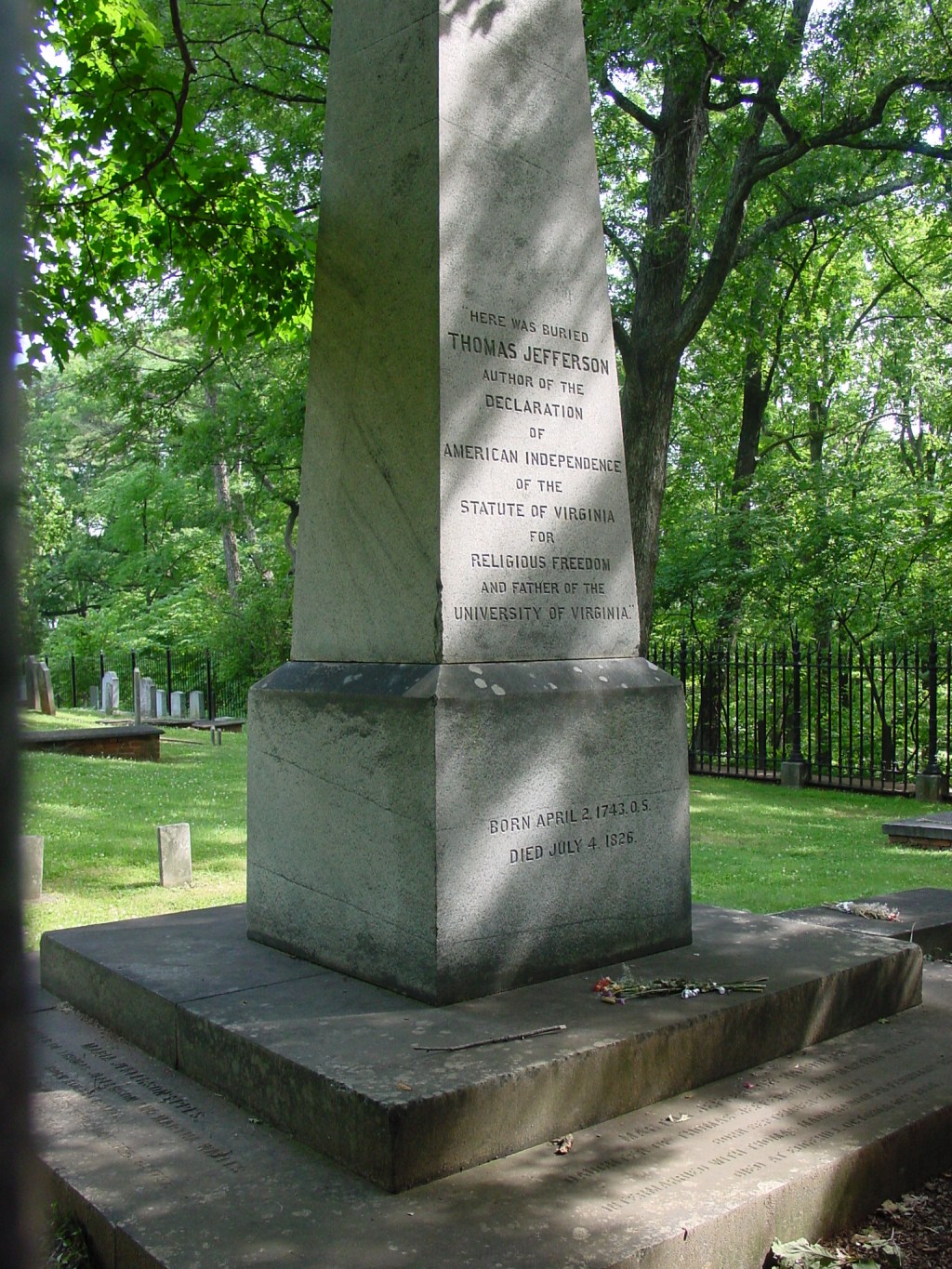
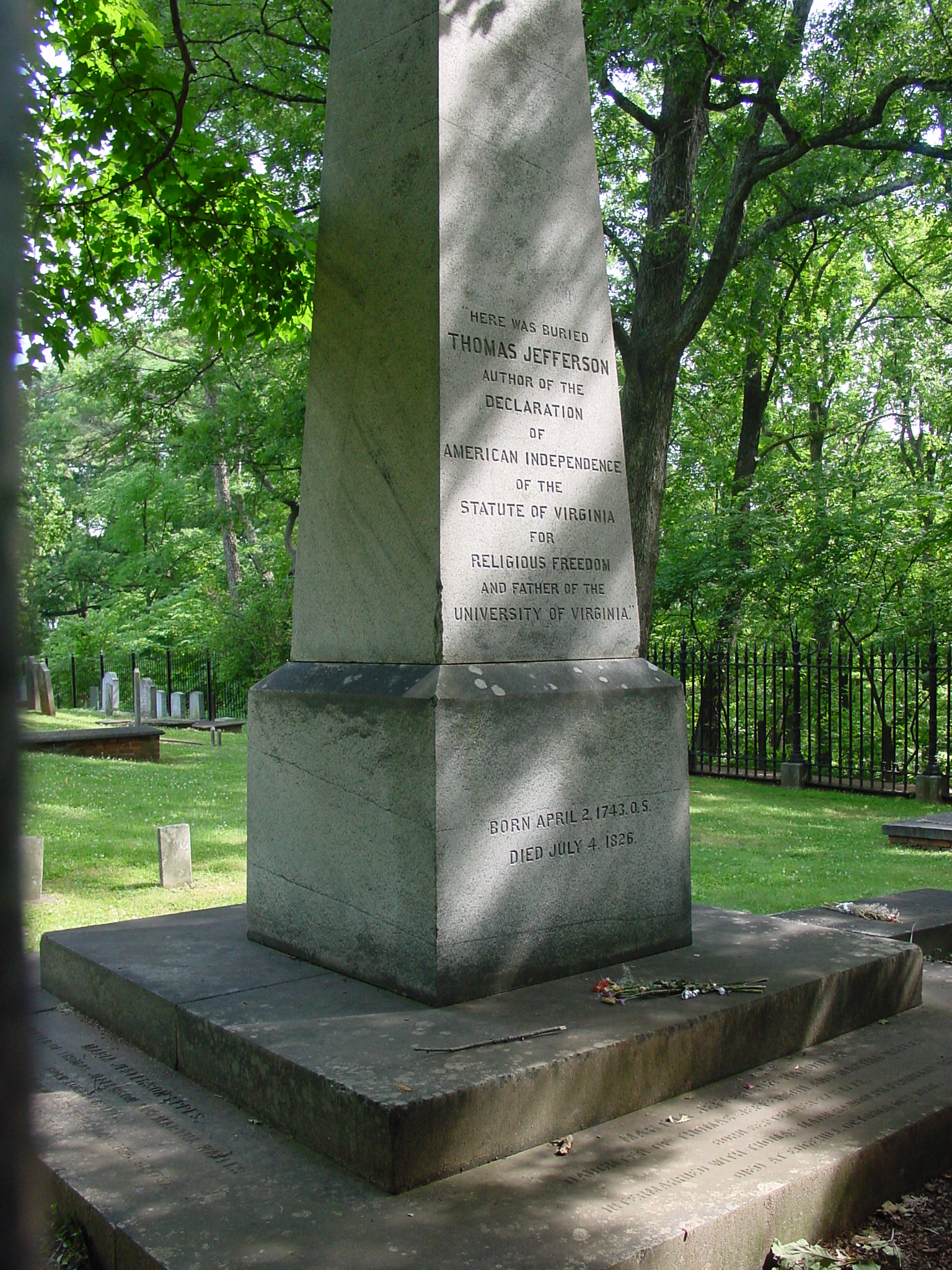
Thomas Jefferson’s Memorial Highlighting His Authorship of the Virginia Statute on Religious Freedom
1. As Christians, our foremost goal must in be promoting the purity of true worship in God’s church ahead of trying to reform the beliefs or behaviors of society generally.
In discussions of reforming society, we tend not to think of worship as something that should be at the top of our agenda, but this was the focal point for the Protestant Reformers. In 1544, on the eve of the Diet of Speyer, the Genevan reformer John Calvin wrote a treatise entitled, The Necessity of Reforming the Church, which was nominally was addressed to the Catholic Holy Roman Emperor Charles V but in reality, was probably aimed at consolidating the Protestant Reform movement. The Protestants had been divided between Germans in the north and Swiss in the south since 1529, when Martin Luther and Ulrich Zwingli disagreed at the Marburg Colloquy over their understanding of how Christ was present in the Eucharist. The Schmalkaldic League, a defensive alliance of the German Protestant princes, was weak in the face of the powerful Charles V and needed encouragement to stand together and extract concessions from him. Calvin’s treatise provided that encouragement by clearly and succinctly explaining that the heart of the Reformers’ demands was the reform and purification of the worship of God in the church.
Given all the challenges that existed at the time it may seem odd to consider the issue of right worship to be paramount among them, but it does make sense in how it brings together everything. Why, for example, do we worship God? For His glory (soli deo gloria) and because of the grace He extended to us in salvation (sola gratia). How was that salvation obtained? Soley through the work of Christ (solus Christus) which we lay hold of through faith alone (sola fide). What is the right way to worship God? As He has instructed us in His Word (sola Scriptura). Biblically, the first four Commandments in the Decalogue are focused on the proper worship and honoring of God. The duty we owe to God precedes the duty we owe to our neighbors. As can be seen in the books of 1 & 2 Kings, false worship, religious syncretism, and idolatry starts a people on the path of societal unraveling. This is because corruption of the worship of God results in a corruption of our understanding of who God is, the requirement He has for holiness, and the need for and nature of our salvation in Christ Jesus. To focus on beliefs and behaviors without considering worship central is sterile. There is a practical and a pastoral aspect to this as well. Worship involves our heart, not just our head or our actions. This takes us beyond seeing the Reformation merely as an intellectual matter about justification by faith alone or the five solas and goes to the core of the Christian life.
In our own day, for all the interest in changing the culture and for all the attention given to political or public theology, it seems that this view of the centrality of promoting pure worship seems to be conspicuously absent from the dialogue. For many, worship is a matter of aesthetic taste—single style or mixed music selection, contemporary praise songs or traditional hymns, and so forth. As such, those interested in a closer affiliation between the church and the state because of the moral degradation of our day see it as a sidebar issue. Others—mostly confessionalists—who do see it as a central problem are often derided as being too wedded to mere traditionalism. But if the Bible is right and worship really is central to the well-being of both God’s people and the societies that they live in—as the Reformers understood—then we need to reevaluate our priorities for reform in light of that.
2. Political leaders do not always have the same interests or ends as the church, even when they support a religious agenda.
In promoting reformation in the public sphere, wisdom requires Christians to realize there are limits to cooperation with magistrates. In some cases, political leaders may support religious reform as part of a broader political game. One can see this in the case of Frederick the Wise of Saxony, Martin Luther’s protector. Frederick consistently resisted appeals of the Pope and others to turn over Martin Luther to their custody, and, indeed, after the Diet of Worms in 1521 Frederick’s men kidnapped Luther and took him into protective custody in Warburg Castle. In some ways, Frederick was a loyal son of the Catholic Church: he personally had one of the largest collections of holy relics in Europe, which gave him a pious reputation, and potentially money-making capacity. So why did he support and protect Luther? Some degree of sympathy for Luther’s ideas certainly has to be in the mix of motivations, but other reasons contributed as well. Frederick had a principled interest in defending Luther as one of his subjects being treated unfairly by Roman Catholic hierarchy. Luther also was the most prominent professor at Frederick’s newly established University of Wittenberg, which was drawing attention and scholars to the city, bolstering its—and Frederick’s—prominence. Most importantly, Frederick, like other German nobles had political frictions with the Roman papacy and resented its interference in German affairs; supporting Luther provided a justification for resisting Rome’s political machinations.
In other cases, the goal may be for the political leader to strengthen his or her own control. One can see in the case of the English king Henry VIII and his successors. Henry earned the title, “Defender of the Faith” from the Pope for his early criticism and opposition to Luther’s ideas, a title which English monarchs have retained to this day. Henry, however, was only two generations away from a hard-fought civil war within England, and so his house risked becoming extinguished if he did not have a male heir. When the Pope refused to grant Henry an annulment of his marriage to Catherine of Aragon, Henry declared himself the head of the English Church, thus beginning the English Reformation. His sensibilities remained Catholic in practice.
When Henry’s daughter Elizabeth I acceded to the throne after the disastrous reign of her half-sister Mary, who had brutally persecuted Protestants, Protestants felt hopeful that not only would Protestantism be restored but that reform would move forward. Many of the Puritans had been in exile during Mary’s reign and saw how thorough the reforms were in Calvin’s Geneva; they wanted to emulate that. Elizabeth had Parliament pass an Act of Supremacy (1559) to reaffirm her position as head of the Anglican Church, but her religious policy did not go further than that, much to the frustration of the nascent Puritan movement. The Puritans were again frustrated when James I acceded to the throne after Elizabeth. James had been raised Presbyterian in Scotland and English reformers felt he would be sympathetic to having the Anglican Church be more reformed like the Church of Scotland. James, however, liked controlling the episcopacy and calculated that reforms which could depose the bishops could also depose the king; in light of the subsequent English Civil War, his view proved to be prescient.
The fact that political leaders do not share the same interests or ends as the church is a truth worth being mindful of in our own day even though we do not have established churches. Today, many politicians stoke populist outrage over the moral degradation that is around us, but once in office their willingness to resolve the issue prompting that outrage seems to dim considerably. That is because fueling the outrage is good for fundraising and garnering votes; resolving those problems, however, would require expending potentially serious political capital which might impede their ability to get re-elected. The incentives, then, work against actually addressing the problems.
3. Political leaders and their allies in the church have often suppressed true religion for their own ends, even to the point of backing heresy.
In 1 Kings, we see where Jeroboam I created a separate, idolatrous, religious system to enhance the separation between his northern kingdom of Israel and the southern kingdom of Judah. His goal was basically to use religion as a means of social control or at least to keep it quiescent and politically under control. Two examples from among many are illustrative that the misuse of religion for political end existed in the Reformation and post-Reformation period as well.
In the mid-sixteenth century, Protestant ideas began making considerable headway France, especially among the nobility. This created a political problem for the French crown, because it de facto challenged the king’s claims to absolute rule. Rather than trying to find some accommodation with the Huguenots (the French Protestants), the crown instead initiated a harsh persecution. The worst incident at the time was on August 24, 1572, St. Bartholomew’s Day, when a number of the Huguenot leaders were in Paris for the marriage of the Protestant, Henri of Navarre to the Catholic king’s daughter, Margarite de Valois. Catherine de Medici, the Queen Mother, along with other royalists, initiated a massacre of the Huguenots, purportedly in defense of the Catholic faith. Within Paris alone, as many as 3,000 people were killed and estimates go as high as 70,000 for the number of Huguenots who died nationwide. The massacre touched off 30 years of religious warfare in France.
England, too, suffered because of the misuse of religion. After James I’s death in 1625, his son Charles I ascended to the crown and Charles appointed one of his favorites, William Laud, to be archbishop of Canterbury, a position from which Laud oversaw the entire Anglican Church. Both Charles and Laud were insistent on adding extra-biblical and unbiblical elements to worship over the objections of many Puritans. Moreover, at the same time, they were willing to tolerate and accept Arminian clergy in the Church of England because such individuals supported their worship innovations. Arminianism had been deemed heretical in 1618-19 at the Synod of Dort in Holland, an international Reformed synod to which James had sent legates and accepted its rulings. Tensions broke in 1636 when the crown tried to impose a revised Book of Common Prayer on the Scots, who saw this as a deliberate affront on their understanding of true and acceptable worship of God. The Scots went into revolt against the crown, followed a few years later by many English. The result was the English Civil War (also known as the War of the Three Kingdoms [England, Scotland, and Ireland]), which would lead ultimately to the execution of Charles I and a dictatorship under Oliver Cromwell. With the restoration of the king under Charles II in 1660, the gains of English and Scottish Presbyterianism were erased by a restored Anglican hierarchy that neither forgot nor forgave their earlier loss of stature. Reformed pastors and teachers, now officially called Dissenters or Non-Conformists, would continue to be persecuted by the crown until 1689, when a measure of toleration was extended to them after the Glorious Revolution.
Given the degree to which church and state were intertwined during the Reformation and post-Reformation periods, the question of what constituted the true religion rather than a false religion inevitably became a political question, often leading, as we have seen, to bitter armed conflict. Among conservative Christians today who are flirting with ideas of integralism or Christian Nationalism there is a tendency to describe “Christian” in more generic terms, so as to be inclusive and not specifically sectarian, but it cannot really sidestep issues of sectarianism in practice. The fundamental problem is determining where and on what basis to draw the line as to what is right and wrong, what is permissible and impermissible. This cannot really be avoided and once one begins drawing lines, then some degree of sectarianism is inevitable. This was a problem in the Reformation, and for us today as well.
Reformed Christians do have an epistemological standard to address this question of drawing lines, namely Scripture. This is not mere proof-texting, but they insisted on asking the question, “Is there a positive warrant in Scripture to claim that something is essential to faith or worship?” Using this biblical standard, Reformed Christians rightly found much in Roman Catholic teaching and practice to be idolatrous. For this reason, they could not in good conscience take a “big tent” approach and thereby overlook significant substantive differences for the sake of some nebulous sense of “Christendom” or “Christian unity.”
The Reformed approach stands in contrast to that of other Protestants, who felt that the absence of a negative sanction was sufficient to justify deeming a matter to be essential to faith or worship. The difference is subtle but important. The former standard is narrower but sounder, whereas the latter opens the door to much subjectivity. We see this problem even today as theological progressives have increasingly relativized doctrines of the historic Christian faith to accommodate worldly preferences, whether they be things like the atonement or like traditional Christian sexual morality. In practice, without an objective standard subjectivity boils down essentially to a power issue more so than a doctrinal one. One can see this in the examples just provided, but it is also true for the modern period as well. This year, for example, we commemorate the 100th anniversary of J. Gresham Machen’s Christianity and Liberalism, and that brings to mind the account of how Machen was forced out of the Presbyterian Church USA in 1936. In Machen’s case, PCUSA leaders railroaded his excommunication trial, denying him even the opportunity to testify in his own defense. Their actions said in effect “We’re right because we are in power, and you are heretical because you disagree with us.” Many PCUSA leaders rationalized this by falsely claiming that Madchen was temperamentally argumentative, without any acknowledgement of the merits of the concerns he had been putting forth.
4. From a political perspective, any sustained religious reform efforts have to navigate some real dangers.
It would be easy to look back on the Reformation and assume and assume an air of inevitability, without appreciating the tenuousness facing the Reformers and their heirs. It was inevitable in the sense that God in His Providence brought to pass what actually happened, but if we look at the circumstances the Reformers faced through their eyes, we realize that they could not and did not assume that everything would work out for them. They understood the fragility of what they were undertaking. Looking back with hindsight we can see that there are at least three dangers which the Reformers faced and which we need to be mindful of even in our own day.
First, there is the topography of power. In a more nuanced discussion than I can do justice to here, Roland Bainton, in his book, The Reformation of the Sixteenth Century, draws out how political centralization or decentralization either impeded or facilitated the spread of Reformation ideas. In looking at Europe at the time, the region now constituting Germany was a collection of over 400 kingdoms, duchies, baronies, and free cities. No one had any centralized control over this region, so it is not surprising—especially in light of the frictions that German leaders had with Rome—that there would be places where Protestant ideas could find safehaven. To the east, the vast lands of Poland and Lithuania showed some interest in Protestant ideas, but the nascent level of national institutions meant that it would be difficult for such ideas to take root in a lasting way, as proved to be the case in how the Counter-Reformation was able to reclaim them back into the Catholic fold. To the west—namely, Spain, France, and England—state power was becoming more consolidated, and those countries could legitimately claim to be the first modern nation states. In Spain, the Reformation never took hold. In 1492 the Spanish were finally able to expel the Muslims from Granada, their last stronghold in Iberia, marking the culmination of a 700-year Reconquista against the Muslims. The Catholic Church supported Spain throughout the Reconquista, and Spain repaid the Church by being a loyal son well into the twentieth century. In France, as already noted, Huguenot sentiment flourished for a time among the nobility. As the most centralized state in Europe and given the intertwining of state and church, it also is not surprising that it would be in France where the Reformation would meet its most serious opposition. As for England, it was less centralized than either France or Spain and its Reformation longer and messier than either of those states. The lesson that this diversity suggests for us today is to be wary of a “one-size-fits-all” theory of church-state relations to guide our own efforts at religious reform. America today is nearly the size of Europe, with a tremendous diversity of its own. Religious reform will differ widely between states. On the one hand, there are states centralized and left-leaning state governments like California and Massachusetts, and on the other hand, states with more limited governments or attitudes favorable to Christianity, such as Alabama or Texas, along with all sorts of variations in between. As the COVID-19 pandemic showed a few years ago, churches will face different situations and will need to find their own way forward in their local circumstances.
Second, there is the problem of identity politics intertwining with religion and the church. Looking back on the Reformation there is little doubt that most of the warfare that characterized the period was due to the fusion of church, state, and national identity. To cite but one example, English national identity in the early modern period sought unity in the crown, Parliament, and a Protestant Church of England. Religiously, the Book of Common Prayer and the King James Bible were icons of national identity, alongside John Foxe’s Book of Martyrs, which highlighted the depravations English Protestants experienced under Queen Mary. In any predominantly Christian country such a mixture of religion, state, and national identity will be inevitable. What makes the combination potentially toxic is when religion becomes the handmaiden to the other forms of identity. This is not merely a patriotic sense among Christians of wanting the well-being of the nation they are part of; it would be the manifestation of the attitude that “God is on our side because of who we are.” This ties the moral credibility of the church to the success or failure of the state, and that can seriously compromise the church’s witness. Such a prideful sentiment is likely to trump the skepticism the Christian faith has towards tribalism, the injunctions against self-righteousness, and the commands which our Lord Jesus Christ gives to love our neighbors. If the church remains faithful to Christ, it will necessarily and naturally feel tension between being faithful to Him and being good citizens in this country. If it does not feel that, then that should trigger some self-examination.
Lastly, there is the problem of disillusionment and exhaustion that people will have in times when the church has been caught up in the politicization of the age. For the 172 years from the time that Martin Luther nailed his Ninety-Five Theses to the door of the Castle Church in Wittenberg until the Glorious Revolution of 1688/89, Europe had been convulsed with reformation, revolution, and war. It is hard for us now to emotionally comprehend the degree of change and the level of psychological exhaustion which set in among the people. Periods of warfare, especially warfare bound up with religion, typically open the door to greater secularization, and the period of warfare of the seventeenth century was no exception. By the mid-seventeenth century, philosophers, scholars, and theologians were moving in directions to deemphasize the religious foundations of society. That trend would continue throughout the eighteenth century, breaking into an outright rejection of religion after 1789 after the French Revolution. This is the world that created our world of today and the church needs to be sensitive to the fact that the more politically active it is, the most likely that it will see the backlash directed against it. Although the past two decades of counter-terrorism wars do not approach the scale of the religious warfare of the sixteenth and seventeenth centuries, one can still sense an exhaustion with religion today.
In bringing this discussion to a close, we need to circle back to the beginning, namely the disillusionment with the separation of church and state and the American Settlement.
The American Founding Fathers were heirs to the Reformation. Their views on the separation of church and state were not a theoretical secularist experiment, but the result of long historical experience. The United States, indeed, was the first Western country to embark on a course of formally separating church and state when it ratified the US Constitution in 1787. As the Founders understood it, the separation was intended to protect the church from the intrusions of the government, but in the twentieth century that has become increasingly interpreted as keeping religion and religious discussion out of the public sphere altogether. This shift is indeed important, and in my opinion, wrong, but we do not fix it by throwing out the American Settlement altogether. We fix it by going back to an originalist understanding of what it meant to begin with.
The American Settlement in many ways addresses the lessons given here from the Reformation period. By making church and formally separate, it allows the church the freedom to promote the purity of worship without (as many) complications posed by political leaders with alternative agendas or who are trying to manipulate religion to be a means of social or political control. It allows for the church to adjust to the disparities power and culture across regions by refraining from a one-size-fits all approach. It also allows the church room to speak prophetically to society and to stand apart from the political verities of the age. This space can also be useful for the church for self-reflection and renewal. The advantages of the American Settlement have made the United States a paradox in the Western world: although the United States does not have any established church or even a preferred church, yet at the same time the country has one of the highest rates of religious affiliation and participation anywhere in the developed world.
That said, the American Settlement is by no means perfect. The space that it gives to the church needs to be actually utilized by the church for the ends of promoting purity of worship and the expansion of the Gospel. If the church instead seeks worldly influence and temporal goals, then it will squander these opportunities. Moreover, as we have increasingly seen over the past few decades, the instinctive desire of political leaders to control or manipulate religion remains unabated and needs to be restrained. Such control and manipulation can be manifested either in efforts to coopt Christianity or exhibit hostility toward it—and sometimes both simultaneously. In the past few decades, the legal basis for religious liberty has become better enshrined in law today more so than at any point in the history of the Republic. To throw out the American Settlement is likely to reopen the problems that existed prior to its creation, and which were extant during the Reformation. A better course, in my opinion, would be to retain the American Settlement, all the while strengthening it and fixing it.

 Covenantide