Category: Biblical Commentary

  • Holy War, Just War

    Holy War, Just War

    When you go near a city to fight against it, then proclaim an offer of peace to it.  And it shall be that if they accept your offer of peace, and open to you, then all the people who are found in it shall be placed under tribute to you, and serve you.   Now if the city will not make peace with you, but makes war against you, then you shall besiege it.  And when the LORD your God delivers it into your hands, you shall strike every male in it with the edge of the sword.  But the women, the little ones, the livestock, and all that is in the city, all its spoil, you shall plunder for yourself; and you shall eat the enemies’ plunder which the LORD your God gives you.  Thus you shall do to all the cities which are very far from you, which are not of the cities of these nations.  But of the cities of these peoples which the LORD your God gives you as an inheritance, you shall let nothing that breathes remain alive, but you shall utterly destroy them:  the Hittite and the Amorite and the Canaanite and the Perizzite and the Hivite and the Jebusite, just as the LORD your God has commanded you, lest they teach you to do according to all their abominations which they have done for their gods, and you sin against the LORD your God. (Deuteronomy 20:10-18 NKJV)

    What are we to make of this?

    On the face of it, what the Lord is commanding the Israelites to do to inhabitants of the Canaan is in modern terms ethnic cleansing (that is, removing an entire people group from their land) and genocide (destroying an entire people simply because they belong to that group).  Even the more “benign” treatment of captured cities outside of Canaan gives some pause in light of the Lord’s command to put all the men of the captured city to death.  Nor is this the only passage describing such violence.  In the account of the Flood (Genesis chapters 6-8) the Lord destroys the entire world for the depravity in it, save Noah’s family.  He disperses the nations of the world in response to the hubris of the Tower of Babel in Genesis 11, completely destroys the cities of Sodom and Gomorrah in Genesis chapters 18 and 19, and leaves Egypt in ruins as a result of the plagues that led up to the Exodus of the Israelites (see Ex. 10:7).  In Exodus 23:20-33,  He tells the Israelites that His Angel will completely destroy the people groups later repeated in Deuteronomy 20 so that Israel can occupy the land and that these peoples will not be a snare to them.  The law codes of Exodus and Leviticus are probably the earliest parts of Scripture, so this means that these statements go back to the earliest part of the biblical history.  In Numbers 33:50-56, these commands are repeated again on the plains of Moab, as Israel is planning to enter into the land which the Lord has promised.  Leading up to that point, in the precursor to what the Israelites would later do in Canaan, the “Lord’s vengeance was executed” on Midian and the Israelites killed all the men.  When Moses and Eleazar the high priest learned that women and children had been spared, they became angry and ordered the wives and male children of the Midianites to be killed as well (Num. 31:17).

    Clearly there is a pattern here.

    The critic of the Faith will point to these passages as prima facie evidence for the idea that if they are true and if God exists at all then He is neither good nor loving.  Conversely, such commands for violence seem to be utterly incompatible with both modern sensibilities and modern expectations of the benign character of Deity and seemingly can only mean that if God really exists then Scripture is not true.  And if Scripture is not wholly true, then that raises the obvious question as to what parts are true and what parts are untrue and on what grounds does one decide?  It is not hard to see in light of those questions that it is a short road from rejecting difficult parts of Scripture such as these to a more fundamental questioning of the Faith.  Thus, these holy war passages are not an easy question for Christians to face.  For the Christian, the passages go beyond the idea that the Lord permits evil to happen.  They seem to say the Lord is active in doing injustice and this puts God on the same level as Adolf Hitler, Josef Stalin, Pol Pot, Jean Kambanda,[1] Saddam Hussein and Slobodan Milosevic, which is an unpalatable conclusion.  That returns us to the earlier question of what we are to make of these passages.
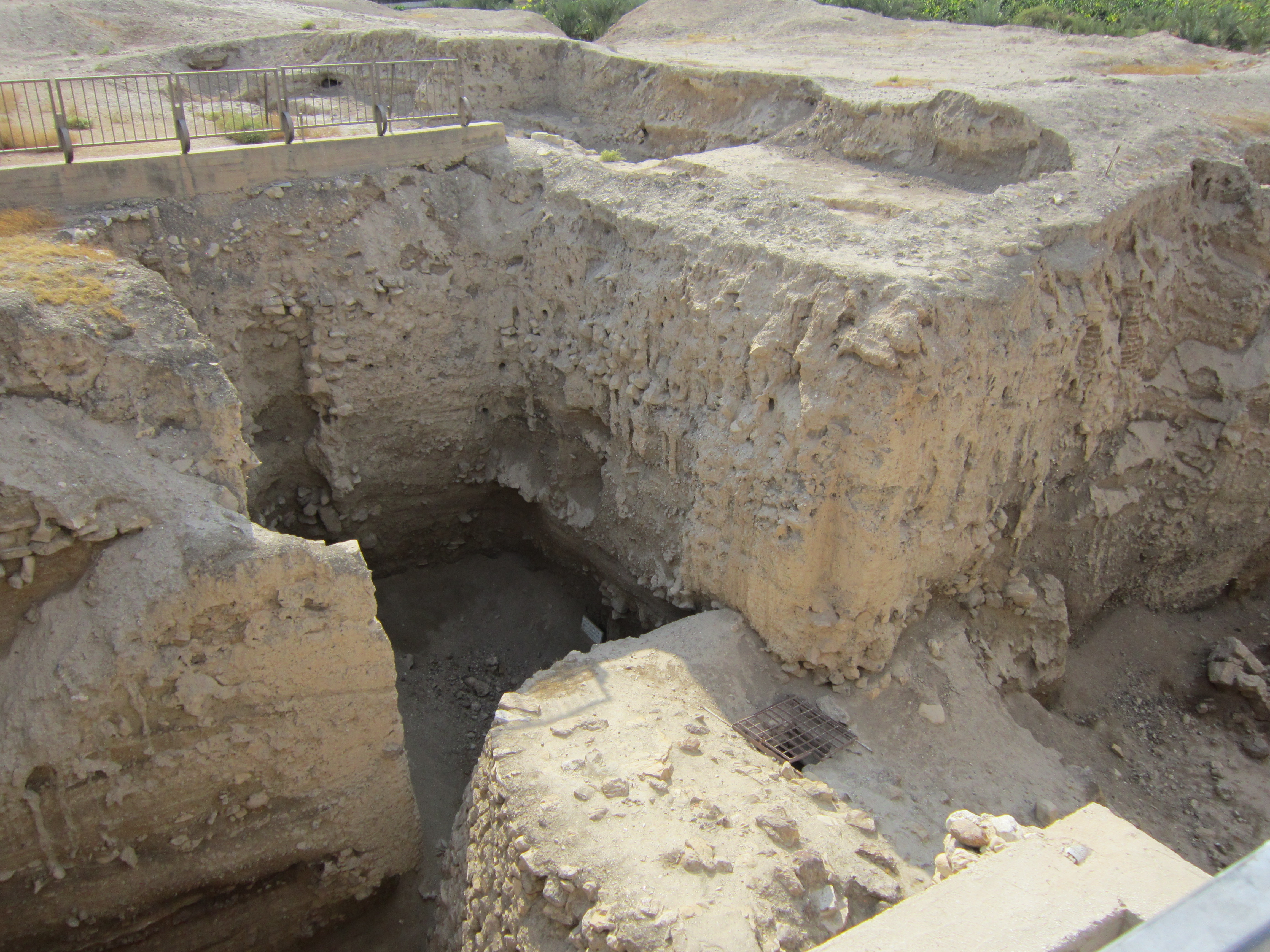
    Excavation of a Wall of Jericho

    No Dichotomy and No Easy Way Out

    The natural inclination for many Christians is to posit some kind dichotomy between Jesus on the one hand and the passages of divine destruction in the Old Testament.  In this way, Jesus trumps the commands on warfare and they can be conveniently ignored.  Thus, some argue that these Old Testament passages reflect an early stage in Israel’s evolution which Jesus later superseded with His teaching on love and turning the other cheek.  The problem with this is that Scripture itself shows the Israelites were not as “primitive” as they are made out to be by this caricature.  The “primitive” Israelites had no stomach for the bloodiness of the holy war commands and they actually cut deals with their pagan Canaanite enemies rather than exterminate them as the Lord commanded.

    A variant of this is the idea that the Old Testament depicts the Lord as a God of wrath, whereas the New Testament reveals Him to really be a God of love.  This is simplistic and unsatisfactory, especially if one intends to take Scripture seriously.  Jesus, who talked about turning the other cheek in the Sermon on the Mount, said in the same sermon He did not come to abolish the Law but to fulfill it (Matt. 5:17).  His descriptions of Hell and of the pending Final Judgment—more frequent than that by anyone else in the New Testament (see Matt. 5:22-30, 10:28, 18:9, 23:15 & 33)—show that the wrath of God is not limited to the Old Testament alone.  Indeed, Jesus’ own death on the cross to propitiate God’s wrath is sufficient evidence of that.

    On the other hand, love and mercy are not the exclusive monopoly of the New Testament.  When the Lord put Moses in a cleft of a rock, passed by, and declared His name he described Himself as “merciful and gracious, longsuffering, and abounding in goodness and truth; keeping mercy for thousands, forgiving iniquity and transgression and sin, by no means clearing the guilty, visiting the iniquity of the fathers on the children and the children’s children to the third and fourth generation” (Ex. 34:6-7).  When Jesus was asked about the greatest commandment in the Law (Matt. 22:36), He quoted the Old Testament to show the Law was summed up in the command to love the Lord with all one’s heart, soul, and mind and to love one’s neighbor as oneself (Deut. 6:5, Lev. 19:18).  Again, this does not easily fit the stereotype of the Old Testament being of law and judgment and the New Testament being one of grace and forgiveness.  It is fair to say that the Lord is depicted as both loving and judging in the Old and New Testaments.

    The greatest challenge to positing a dichotomy between Jesus and these commands on holy war is how Scripture actually links the two.  The Apostle Luke records two of Jesus’ post-resurrection appearances and in them Christ gives His disciples insight into how Scripture is to be understood.  In both cases He says that all Scripture points to Himself (Luke 24:27, 44-45).  This, of course, must also include the holy war passages of the Old Testament as well.  Indeed, in the Ex. 23:20-33 passage mentioned earlier, the Lord tells Moses that He will send an Angel ahead of the Israelites to bring them into the Promised Land and defeat their enemies.  Although the identity of the Angel is not conclusive for scholars, He most likely is the pre-incarnate Christ.  The Lord, for example, says that this “Angel” is to be completely obeyed because God’s name is “in Him.”  Christ bears God’s name and, moreover, the Lord and the Angel are used interchangeably through the passage.  Joshua later encounters what is probably this same Person before the conquest of Jericho when he meets the Captain of the Lord’s army.  That this Captain is the pre-incarnate Christ is evident from the fact that he unhesitatingly accepts Joshua’s immediate response of worship (Jos. 6:13-15).  Elsewhere in Scripture, when homage is offered to angels they redirect that to God alone.  Not here though.  What all this means is that the shocking violence of the holy war passages probably had Christ Himself at the center—the same Christ who taught the Sermon on the Mount which so many pacifists take as their primary proof text.  There is no easy way out of the challenges these passages pose.

    Confronting the Personality and Power of God

    Without question, the holy war passages challenge our presuppositions about who God is.  This is evident in the most common reaction people have when they ask, “How could a loving God command these things?”  This question, however, makes a presumption about God’s character that first of all needs to be examined more closely.  God’s character is only known to us from what He has revealed in His Word.  The fullness and complexity of God’s Word should be a curb to the temptation to select a few attributes with which to create a caricature of God whose appropriateness we will then judge.  The question, “how could a loving God command these things?” however, tends in the direction of caricature with the fundamental assumption that God’s defining trait is love.  Admittedly, John the Apostle says “God is love” in his first epistle (1 John 4:16), and while this is a true statement according to Scripture, the fact of the matter is that God is not reducible to just that trait.

    Imagine, for example, describing one’s best friend or spouse solely with the term, “loyal.”  It may well be true, and it could even be an exemplary trait in that person.  But that term by itself is insufficient to answer questions about what motivates the person, what his likes and dislikes are, what experiences have shaped who he is or what aspirations he may have.  People are far more complex than can be summarized by a single personality trait.  Why, then, are we so inclined to think that the Lord—who is Three Persons in one Godhead—can be reduced simply to “love”?  The effect of this is to make God into a principle, not a Person.  This depersonalization makes it easier to write Him off.  If God is solely love, then it is not hard to conclude that “Love is god”—indeed, the conclusion follows tautologically.  Because there is ambiguity associated with defining what “love” is, it becomes all too easy to dismiss God because He does not match what we assume or want love to be.  As a result, for some individuals (certainly not all), the question of “how could a loving God command these things?” may well be a veil for what is really a more fundamental rejection of a judging God.

    Yet by what right do we have to judge God?  The question “How could a loving God command such things?” is too often merely an intellectual one.  The fact of the matter, however, is that if God is the Creator God of the heavens and Earth, then this Being—whatever His character—possesses a power that is well beyond our capabilities.  God, for His part, knows our very being to the utmost subatomic particles.  He could change the minutest thing to heal us or he could annihilate us completely.  This raw power is evident from nature.  Whether God is consistent or inconsistent with Himself, whether He is good or evil or whatnot is secondary to the fact that He is omnipotent and can hurt us.  God is a reality with whom we need to reckon on a personal level, not an abstraction for a dorm room bull session.

    To be sure, this is not to suggest that whatever God does is right simply by virtue of the fact that God does it.  God’s actions are consistent with His character, so if justness is part of God’s character (as it indeed is), then God will act justly in accordance with who He is.  The only way we can know God’s character is through what He has revealed in His Word.  The logical implication of this is that there are no legitimate grounds for dismissing God on the basis of His character if Scripture is not admitted to the discussion.  And if Scripture is admitted, then intellectual honesty must concede that the picture of God’s character is richer than cherry picking a few traits would portray.  The implication of these points is that we need to approach this topic with sobriety and humility.  It is not without reason that Scripture says the “Fear of the Lord is the beginning of wisdom” (Ps. 111:10, Job 28:28, Prov. 1:7 and 9:10).

    One last note with regard to invoking 1 John 4:16.  Although it sounds spiritual to reduce God to “love,” even the Apostle John would not have meant his statement to be taken in this way.  This John was the same John who started off as a disciple of John the Baptist.  In this, he no doubt shared the Baptist’s expectation of imminent eschatological judgment.  Remember, the Baptist called for his hearers to repent because “…even now the axe is laid to the root of the trees…” and judgment is near (Matt. 3:2, 10).  This same Apostle John and his brother received the nickname “Boanerges”—sons of thunder (Mark 3:16)—perhaps in part because of an incident recorded in Luke 9:51-56 in which they were prepared to call God’s wrath down on a Samaritan city that had disrespected Jesus.  This very John also was the one who penned the Book of Revelation, which features front and center God’s wrath and Final Judgment on the world, executed through Christ Jesus.  God’s judgment and God’s love clearly are not antithetical in John’s thinking.

    Defending the Covenant Lord’s Image

    If it is inappropriate to reduce God to merely being “love,” then perhaps there is a better way of phrasing the concern being raised here, especially for Christians genuinely wondering how to reconcile this with other aspects of God’s character.  To that end, one could well ask how it is that God, who imparted dignity to men by making them in His own image and who commanded His people to love their neighbors as themselves, would also command them to engage in a hideous attack on His own image bearers?  If God created man in His own image, then God’s love would seem to naturally follow.  Yet, the apparent unjustness of the holy war commandments is that they seem so unprovoked and so disproportionate.  How could God command this and not contradict His own character as being just?

    The issue of God’s image is at the heart of the matter posed by the holy war passages.  That said, what it means to have been made in the image of God is something that is poorly understood by most Christians.  Some, like Thomas Aquinas, make this a matter of man’s superior intelligence as distinguished from the lower animals.  Others, like Martin Luther, make this a matter of man’s moral character.  The Westminster Confession of Faith, drawing on Eph. 4:24 and Col. 3:10, captures both of these ideas in noting that man was “endued with knowledge, righteousness, and true holiness, after His [God’s] own image” (WCF IV.ii).  There is a richness in the notion of image which goes beyond these qualities, however, and which I would posit is fundamentally covenantal in its orientation.

    In ancient Near Eastern covenants, the suzerain king often would not only obligate the vassal king with upholding his political interests, but also with defending his name and honor.  For the vassal, this was a way of demonstrating his loyalty to the suzerain.  For the suzerain, it was a way of projecting his majesty and authority both within the vassal’s realm and beyond it to those regions not incorporated into the suzerain’s empire.  Thus, for the vassal to bear the image of the suzerain was not only something that is intrinsic to the individual, as in many theological formulations, but it is also reflective to the surrounding world.  To demonstrate their loyalty, vassal kings would not only swear allegiance to the suzerain, but would often adopt the suzerain’s gods, the suzerain’s governing practices, even the suzerain’s personal styles.  Imitation, of course, is the highest form of flattery.  One can see a perverted form of this in the Scriptural account of Ahaz’s relationship to the Assyrian Empire in 2 Kings 16:10-18 and 2 Chronicles  28:16-25.  There we see Ahaz willingly subordinating himself to the Assyrians in order to gain assistance against local threats.  As part of this, he went to Damascus—at that time occupied by the Assyrians—and among other things copied the altars the Assyrians used for worship.  Upon returning to Judah, he began instituting worship of Assyrian gods.  He did this not only to demonstrate his loyalty to his Assyrian overlords, but because he believed the Assyrian gods were stronger than the Lord.

    In the Lord’s relationship with His people, he expects them not only to uphold His name, but to reflect His character.  Indeed, this is embedded in the Law that He gave to Israel at Sinai and which was recapitulated forty years later on the plains of Moab.  As indicated by the First, Second, and Third Commandments of the Decalogue (Ex. 20:4-7), the Lord jealously defends His name and prerogative.  Not only does He refuse to be dishonored, but He determines how He will be honored and is exclusive in demanding His people’s loyalty to Himself.  That this is so can be seen in another verse that is often difficult for Christians to grasp, 2 Sam. 12:14.  This verse occurs after the prophet Nathan confronts King David over his sin with Bathsheba.  Although David repented, Nathan added, “However because by this deed you have given great occasion to the enemies of the Lord to blaspheme, the child also who is born to you shall surely die.”  To most readers, this seems unfair.  The baby born to Bathsheba did no wrong, so it is not clear why he should have to die for his parents’ sin.  Had the child lived, however, the gossipmongers among the court—and eventually the public more broadly—would have been keenly aware of the double standard between David’s professed faith and his actual actions.  The natural inclination would have been to consider the faith a charade or God, if He exists, to be impotent or inconsistent.  God would not let his Name be sullied like that—not to David’s court, not to the surrounding nations, and not even to the supernatural powers and principalities of this world.  What the leader did would in time encourage the people to mimic as well.  By causing the child to die, the Lord showed that above all, He would be honored and that he would jealously guard His name.

    The Sins of the Canaanites and the Justice of the Lord

    The Lord’s intention to defend His name and his image have direct bearing on what He was to do to the Canaanites.  In withholding His hand of grace, the Lord allowed them to pursue whatever lifestyle they chose.  To say that the worship they chose was depraved does not really provide a clear image to our minds and can be too easily dismissed as mere moralizing.  It is therefore worth looking briefly at Canaanite religion and society.

    Texts from the ancient Near Eastern city of Ugarit (modern day Syria) provide much insight into Canaanite religion beyond what is mentioned in the Bible.  The Canaanite pantheon was headed by a shadowy creator god named El.  The more prominent deity, however, was Baal, the storm god who controlled the rains necessary for agriculture.  According to the Ugaritic texts, Baal would yearly fight with the god of death, Mot, and lose, ushering in a period corresponding to the agricultural dry season.  Fertility would only be restored to the land by the annual sexual intercourse between Baal and Anath.  Anath is variously described by scholars as either Baal’s sister or the sister and wife of El and was renown for her vengefulness.  Baal’s other sexual consorts were Asherah and Astarte, also described as being both El’s wives and sisters.  Like Anath, they were goddesses associated with violence and war.  Although the Ugaritic texts do not explicitly state so, it is not hard to infer from them the prevalence of ritual male and female prostitution in the Canaanite religious system.  Numerous ancient figurines of nude female figures found throughout the Near East, combined with the foregoing cosmology and contrasting Scriptural prohibitions against such practices suggest that these things were prevalent throughout the region.  It is unclear from the Ugaritic texts whether human sacrifice was part of this system, although it most likely was.  Because Israel did not completely destroy the Canaanites, there was a persistence of Canaanite practices that were incorporated into the worship of Israel and the surrounding nations.  In 2 Kings 3:27, for example, the king of Moab offered his son as a burnt offering.  King Ahaz of Judah similarly sacrificed one of his sons (2 Kings 16:1-4), an unidentified brother of the good reformist king Hezekiah.  Hezekiah’s son Manasseh also offered human sacrifices of his sons (2 Chron. 33:6).

    This cosmology had to have an effect on Canaanite society on the personal and familial level as well.  The glorification of violence and the intrigues among the gods of the Canaanite pantheon had their parallel in the fundamental political disunity of Canaan.  If the gods were engaged in orgiastic and incestuous sexual practices, then it is not hard to conceive that people would emulate those things.  Indeed, it is foregone conclusion that they did so.  Incestuous relationships, fornication, and violence were all intertwined with personal advancement.  To get ahead in Canaanite society materially one needed the favor of the gods, which meant appeasing their anger (i.e. human sacrifice) and emulating their practices (incest, promiscuity).  We know from modern victims of child sexual abuse the lasting psychological traumas resulting from such abuse.  The abused, moreover, too often become abusers themselves.  We further know from modern sexual mores that, however much permissiveness is tolerated or encouraged by society, jealousies and insecurities abound with such practices on a personal level.  Emotional scarring, relational distrust, and familial rivalries resulting from these things literally tear apart families and turn them against themselves.  This would only be reinforced by the practice of human sacrifice.  It could not have encouraged family harmony to know that if the family fell on tough times then father would sacrifice one of the children to the gods.  Nor would it end there.  As Israel increasingly adopted syncretistic worship that incorporated these practices, the Lord’s prophets not only condemned them for these things, but for other evils emerged as well.  Efforts to get ahead by appeasing or manipulating the gods through such practice no doubt divided society into the haves and have nots, since success was deemed divinely endorsed.  Those who did not achieve success earned only contempt and their only recourse was to turn to the same debased practices.  This cycle only fostered injustices and oppression in society.

    This is the society that the Lord instructed the Israelites to destroy.  Such people, though not chosen by Yahweh, bore His image simply by virtue of being human.  Their behavior, however, was completely contrary to His character—indeed, it reflected a rejection of everything about who the Lord was and how He worked.  For Him to allow that to stand would have been to consider the desecration of His image as acceptable.  The Lord will defend His name and His image indeed, especially since He is the True Suzerain.  The sin of the Canaanites justified the Lord’s judgment if He was to vindicate His name.  The pervasiveness of Canaan’s religious system throughout all of society also explains the command to bring judgment not only on the men, but also on the women and children of the society as well.  In our understandable focus on individual responsibility we often forget the strength of social networks.  To use modern parlance, the Canaanite religious system was totalitarian.  In Canaan, however—unlike, say, Nazi Germany in the twentieth century—this religious system had grown up over centuries rather than being imposed at once.  Because of this, it was more organic and thus more resilient in how it was interwoven into the social fabric.  For Israel to have spared anyone would have meant that the survivors would be intent on preserving their old ways and gaining revenge for their losses.  It is facile to suggest that Israel could have “converted” the survivors to the true faith—indeed, as Scripture shows, Israel did spare some Canaanites, but it was the Israelites, not the Canaanites, who adopted their enemies’ religious practices.

    The Lord was indeed just in bringing judgment down on the Canaanites, even as argued here, completely upon the society as a whole.  It should be noted, however, that even this is not without certain elements of mercy.  In the Exodus account of the holy war commands, God says that He will send a terror ahead of the advancing Israelites to drive out the peoples in Canaan and that the campaigns would be incremental (Ex. 23: 27-30).  Israel’s early victories and the likelihood that the inhabitants of Canaan eventually would have gotten wind of God’s command for their total destruction would have established a lasting fear among the inhabitants.  Prior to successive battles, this fear, combined with “God’s terror” (e.g. hornets, Ex. 23:28) would have produced a kind of psychological warfare to encourage the Canaanites to flee if they knew the Israelites were coming.  In the way that the Lord gave His commands, those who fled to cities outside of Canaan would have been covered by those regulations He gave Israel for how to treat the “faraway” cities; only those who remained would be subject to the command.  One sees echoes of this approach in the battles leading up to Israel’s entrance into the Promised Land, as well as in the guile of the Gibeonites (Josh. 9) who fooled the Israelites into thinking they were from a distant city to avert their destruction.  Psychological warfare thus could have mitigated the actual number of people killed.

    The Lord’s Ultimate Ends in the Destruction of Canaan

    The distinction between how Israel was to militarily treat the “faraway cities” vice the cities in Canaan serves to highlight the fact that the total destruction kind of warfare the Lord commanded for Israel in Canaan was not to be the normative practice for Israel for all time.  Presumably, if Israel had been fully obedient to the Lord in its conduct of battles in Canaan and all of the inhabitants were killed or driven out, then the only operative warfare regulations would have been those for the “faraway cities”—regulations consistent with customary ancient Near Eastern practices at the time.  The destruction of Canaan therefore was unique for that situation.  Because the ban on Canaan was unique though, it is important to remember that God’s agenda in this action was not limited to judgment upon Canaan.  The Lord, being a personal Being, was pursuing multiple agendas simultaneously.

    In using the Israelites as His instrument of judgment on the Canaanites, the Lord also was settling the Israelites into the land He promised to their forefathers.  Suzerains in the ancient Near East would often provide loyal vassal kings with land grants as a way of rewarding their past loyalty and to encourage their future loyalty.  Failure for the suzerain to follow through on a promised grant could be considered an abrogation of the covenant.  As the True Suzerain, the Lord was following through on His promises made originally to Abraham (Gen. 15:18).  More than that, however, the Lord was in the process of creating a people for Himself, and the land was emblematic in His people finding their ultimate blessedness in their sovereign Lord.  The land was a foreshadowing of the eschatological promise of enjoying the Lord forever, lost initially with Adam’s sin in Eden and which the Lord would eventually restore through the Seed of Eve prophesied in Genesis 3:15.

    The total destruction of Canaan fits into this in a practical way.  Had Israel followed the Lord’s commands, the nation would have had internal religious unity.  Such a unity, grounded in God’s law, would have had significant geopolitical implications.  Geographically, Israel straddled the primary north-south/east-west trade and invasion routes of the ancient Near East.  East of the river systems feeding into the Jordan River, the Sea of Galilee and the Dead Sea, the topography of the Near East becomes desert.  Thus, a unified Israel, faithful to her Lord would have been the lynchpin of the region—everyone would need to pass through the country to conduct trade in the region.  At the same time, no one could invade without enlisting Israel’s support or tacit acceptance.  By refusing alliances, Israel could have been an enforcer of the peace.  The social and cultural influence of the Lord’s Israelite Kingdom would have emanated out to the known world.  As it turned out in Israel’s actual history, the failure to rid the land of pagan influence did eventually become a snare that left the nation internally divided and ultimately led to its undoing.  The only time Israel even approximated the influence it could have had if it had been faithful to the Lord was under Solomon’s reign.  Indeed, Solomon’s forty-year reign (971-931 bc) was the only time in the nearly 1,000 year period covered by the Old Testament that the nation was internally united and free from external threats.  Second Chronicles chapters 8 and 9 describe the country as rich from trade, militarily significant, and chief among—and arguably a suzerain over—its neighbors.  Solomon’s wisdom from the Lord attracted people from far away, notably the Queen of Sheba.  However, Israel’s failure to eradicate Canaanite influence and Solomon’s willingness to indulge in pagan practices as part of his many marriages would eventually lead to the destruction of the entire nation.  As the Lord had judged the Canaanites for their sins, so too would He judge Israel for engaging in the same practices that so dishonored Him.  The Lord was consistent in his enmity towards those things that desecrated His image.

    If the conquest of Canaan anticipated the eschatological rest for the People of God, then judgment upon Canaan, harsh as it may seem, also anticipates God’s eschatological judgment on the world.  This only stands to reason.  As noted earlier, the Angel of the Lord mentioned in connection with the holy war passages in Exodus 23 and Deuteronomy 20 is likely to have been the pre-incarnate Christ.  Christ also, of course, is the slain Lamb in Revelation chapter 5 who approaches the throne of God and is able to open the seals of judgment.  Against Him the kings of the world will wage war (Rev. 17:14) and He will defeat them, leading the armies of Heaven, executing the wrath of God, and establishing His suzerainty (Rev. 19:11-19).  The Final Judgment, coming at the time of Christ’s return, will be total.  The completeness of this judgment is manifest from the laments given by the world over the destruction of the idolatrous world system, the Harlot of Babylon.  Only those written in the Lamb’s book of life will be allowed to enter into His eschatological rest (Rev. 21:27).

    The Final Judgment will bring full circle the pattern of judgment that the Lord has executed since the expulsion of Adam and Eve from Eden.  The judgment on Canaan seems harsh to modern ears because it is so bluntly explicit.  In the context of Scripture, however, it is actually more moderate than God’s earlier judgment in the Flood.  There God destroyed the entire world, save only Noah’s family.  One also should remember that the Lord’s judgment is refined throughout Scripture.  Following the Flood, in Genesis 11, the Lord disperses the nations.  In the Exodus He ruined a great nation, Egypt.  With the judgment on Canaan, He destroyed city states.  Later, He expelled first Israel and then Judah from the Land for their covenantal disobedience.  In Christ, all the world is again judged, but the full unmitigated force of God’s wrath is taken on by One only, Christ Himself.  In the Final Judgment, as with the Flood, all individuals outside of the covenant community will be judged.

    The refined scope of the Lord’s judgment is paralleled by the growth in God’s redeemed community.  Prior to the Flood, human institutions were so nascent that they provided no effective restraints on human behavior.  People really could be as bad as they wanted to be, and here it is not surprising to see the Lord’s harshest judgment.  In an age when great nations dominated the international scene, God judged the preeminent empire at the time, Pharonic Egypt.  In the course of that judgment, He created His own nation, Israel.  At the same time, when city states were beginning to coalesce elsewhere in the ancient world, He judged the city states of Canaan in part to give His people a homeland.  The destruction of Israel and Judah coincided with the growth of the ancient empires (Babylonian, Persian, Greek and ultimately Roman).  That destruction dispersed God’s people throughout the known world.  When Christ arrives, the international scene was unified by the Roman Empire, eventually allowing the proclamation of the Gospel to go to the ends of civilization.  It is no coincidence that in this period between the ascension and return of Christ, a time of the ingathering of the nations (John 4:35), civilization has become global and God’s people are being drawn from the ends of the world.  The significance of this parallelism between God’s increasingly refined judgment and the ushering in of the covenant community—and with Christ, of the Kingdom—is that in each phase of judgment God is simultaneously preparing the way for the Kingdom.

    What Does This Mean for Us Today?

    To pull together the various threads discussed so far into some closing thoughts, there are three questions that should be posed.  First, what do these holy war passages tell us about God?  Second, are they a biblical model for warfare today?  And lastly, if they are not such a model, then what do they have to say about a Christian perspective on war?

    In juxtaposing the judgment of the Lord with our assumptions about His loving and gracious nature, the holy war passages challenge us as Christians to think more deeply about the fact that God is not some cosmic force, but a Person and an omnipotent One at that.  Understanding who God is requires both a reverential fear for the sheer power that He possesses and a humility in appreciating the complexity of His personal character.  Without such an approach, the temptation would be to put God on the witness stand and set ourselves up as the judge of His character.  That is both arrogant and naïve.

    The destruction of the inhabitants of Canaan certainly demonstrated the Lord’s justice towards them, while simultaneously showing His grace to those who are His people.  Since the Lord is our covenant suzerain, our loyalty is to Him personally, not to an abstract principle.  This is all the more true since Jesus Himself was both the leader of the army of the Lord in the Old Testament as well as the Victorious One who will bring the Final Judgment at the end of time.  The fact that Christ is depicted meekly in the Gospels is consistent with the Father’s purpose at that time—to reconcile to the Father those the Father gave Christ, to inaugurate the Kingdom, and to initiate the ingathering of the nations that must precede the Final Judgment.  This underscores the fact that as a Person, the Lord does have an agenda and that agenda is bound up with having His image reflected through all of creation by His image bearers.

    The Lord’s defense of His image is not self-centered, but an acknowledgement of His perfection and aseity.  An analogy would be a company’s effort to defend its brand image.  If someone outside the company were to take the brand logo and use it on their own website to make money and engage in illegal activity, the company would be fully justified in taking the individual to court in a civil suit to restore their reputation and recover damages for the injury done to them.  The Lord, likewise, is justified in defending His image.  A difference between the analogy and the biblical reality, however, is that the degree of harm man has done to God’s image is far greater than that by an individual hijacking a company logo.  It is desecration, not just copyright infringement.  On a personal level, this should deepen the seriousness with which we view our sin.  The Lord judged the Israelites as well as the Canaanites.  As Christians, it is this wrath Christ bore for us.

    These holy war passages raise the temptation that if the Lord was so zealous to defend His name and image, should not Christians be similarly zealous and could not these passages serve as justification to do likewise.  This, of course, is the temptation of the Crusades.  Biblically speaking, however, the fact the Lord Himself provided that once the land was conquered the laws of war would revert to the then-prevailing international norm is sufficient evidence that this war of total destruction was never intended to be the norm.  Unlike the Muslim attitude towards Allah, while God requires us to honor His name He does not require us to do it by violent means.  The Lord will ultimately defend His name.  The danger for making this normative for Christians today is that human nature is still corrupted by the Fall.  God could execute such judgment perfectly because He is perfectly self-controlled.  If we take on decisions to be “agents of God’s wrath” we risk conflating His agenda with ours.

    This does not mean that the passage has no bearing on how we are to think of warfare today.  In considering the Canaanite society that the Lord commanded to be destroyed, it should be a spur to us to think about justice.  Canaanite society not only was desecrating the image of God, but it was also a nasty society to live in.  If we are to love our neighbor as well as the Lord, then we need to be outraged at how depravity dehumanizes people and wise to how such depravity becomes embedded in social networks.  The fact that the Lord authorized warfare and given the unchanging nature of His character means that warfare can be a just pursuit—a virtuous good rather than a necessary evil.  As Christ was a warrior, then we, like Him, need to have our means consistent to the ends we seek to achieve and the justice we hope to establish.  For us, those ends—and therefore the means for achieving them—will always be more limited.  When to declare war, on what grounds, and for what ends are all issues that we would need to look elsewhere in Scripture beyond the holy war passages for answers.

    Printable Version


    [1] Kambanda was the Prime Minister of Rwanda during the Rwandan genocide in 1994 and was later convicted for his role in it by the International Criminal Tribunal for Rwanda.
  • Descent into Ungodliness (Lesson 7)

    Descent into Ungodliness (Lesson 7)

    The Downward Spiral (1 Kings chs. 15-16)

    I. Transition to the Second Generation

    The united kingdom of Israel was divided in 930 BC and by 910 BC the first-generation leaders, Rehoboam in Judah and Jeroboam in Israel, were dead.  Both were succeeded by sons with short reigns who served primarily as transitional figures.  The next phase in the history of the divided kingdoms goes from 910 BC to about 870 BC, a period of forty years.  For Judah, this was a period of stability under the long reign of the good king Asa, but for Israel it would be a period plagued by assassinations, usurpations and short-lived dynasties.  At the end of this period emerge a grossly wicked king in Israel, Ahab, but also the foremost of the godly prophets, Elijah.

    Abijam/Abijah of Judah (913-910 BC) (1 Kings 15:1-8 cf. 2 Chron. 13:1-14:1)

    The account of the reign of Abijam/Abijah is an example of how the narratives between Kings and Chronicles can differ.  In 1 Kings 15:6 & 8, Jeremiah records that “6there was war between Rehoboam and Jeroboam all the days of his [Abijah’s] life… 8and there was war between Abijam and Jeroboam.”  We do not know how old Abijah was upon his succession but given that the antipathy between Rehoboam and Jeroboam existed throughout the entirety of Rehoboam’s reign, that almost certainly would have dominated the life of his son, Abijah, and Abijah upon coming to the throne appears to have continued his father’s policy.  The Chronicles account describes at length a decisive military battle between Abijah and Jeroboam I.  Jeroboam probably initiated the conflict, given that he fielded an army twice the size of Abijah’s and Abijah’s and Abijah’s speech against Israel presumes that Judah is on the defensive.  It is likely that Jeroboam thought that he could take advantage of Abijah being new to the throne to, at a minimum, weaken Judah, and possibly even reunite the country solely under his rule.  Abijah not only asserted that God gave the kingdom to David and his heirs (2 Chron. 13:5), but also highlighted the idolatry that the Jeroboam led the people into, including the golden calves and making anyone into a priests (2 Chron. 13:8-12).  Israel encircled Judah’s army but lost the battle in a deliverance that came when Judah’s army called upon the LORD (2 Chron. 13:14).  Israel lost more than half of its army, as well as its worship center in Bethel and the surrounding towns, Ephrain, and Jeshanah.  The LORD struck Jeroboam down shortly thereafter. (2 Chron. 13:20).  Abijah died the same year, but the security situation he bequeathed to his son Asa ended the warfare between Israel and Judah resulted in peace for ten years (2 Chron. 14:1).

    13 Now in the eighteenth year of king Jeroboam began Abijah to reign over Judah. He reigned three years in Jerusalem. His mother’s name also was Michaiah the daughter of Uriel of Gibeah. And there was war between Abijah and Jeroboam. And Abijah set the battle in array with an army of valiant men of war, even four hundred thousand chosen men: Jeroboam also set the battle in array against him with eight hundred thousand chosen men, being mighty men of valour.

    And Abijah stood up upon mount Zemaraim, which is in mount Ephraim, and said, Hear me, thou Jeroboam, and all Israel; Ought ye not to know that the Lord God of Israel gave the kingdom over Israel to David forever, even to him and to his sons by a covenant of salt? Yet Jeroboam the son of Nebat, the servant of Solomon the son of David, is risen up, and hath rebelled against his lord. And there are gathered unto him vain men, the children of Belial, and have strengthened themselves against Rehoboam the son of Solomon, when Rehoboam was young and tenderhearted, and could not withstand them. And now ye think to withstand the kingdom of the Lord in the hand of the sons of David; and ye be a great multitude, and there are with you golden calves, which Jeroboam made you for gods. Have ye not cast out the priests of the Lord, the sons of Aaron, and the Levites, and have made you priests after the manner of the nations of other lands? so that whosoever cometh to consecrate himself with a young bullock and seven rams, the same may be a priest of them that are no gods. 10 But as for us, the Lord is our God, and we have not forsaken him; and the priests, which minister unto the Lord, are the sons of Aaron, and the Levites wait upon their business: 11 And they burn unto the Lord every morning and every evening burnt sacrifices and sweet incense: the shewbread also set they in order upon the pure table; and the candlestick of gold with the lamps thereof, to burn every evening: for we keep the charge of the Lord our God; but ye have forsaken him. 12 And, behold, God himself is with us for our captain, and his priests with sounding trumpets to cry alarm against you. O children of Israel, fight ye not against the Lord God of your fathers; for ye shall not prosper.

    13 But Jeroboam caused an ambushment to come about behind them: so they were before Judah, and the ambushment was behind them. 14 And when Judah looked back, behold, the battle was before and behind: and they cried unto the Lord, and the priests sounded with the trumpets. 15 Then the men of Judah gave a shout: and as the men of Judah shouted, it came to pass, that God smote Jeroboam and all Israel before Abijah and Judah. 16 And the children of Israel fled before Judah: and God delivered them into their hand. 17 And Abijah and his people slew them with a great slaughter: so there fell down slain of Israel five hundred thousand chosen men. 18 Thus the children of Israel were brought under at that time, and the children of Judah prevailed, because they relied upon the Lord God of their fathers. 19 And Abijah pursued after Jeroboam, and took cities from him, Beth-el with the towns thereof, and Jeshanah with the towns thereof, and Ephrain with the towns thereof. 20 Neither did Jeroboam recover strength again in the days of Abijah: and the Lord struck him, and he died. 21 But Abijah waxed mighty, and married fourteen wives, and begat twenty and two sons, and sixteen daughters. 22 And the rest of the acts of Abijah, and his ways, and his sayings, are written in the story of the prophet Iddo.

    14 So Abijah slept with his fathers, and they buried him in the city of David: and Asa his son reigned in his stead. In his days the land was quiet ten years.

    First Kings omits this history altogether.

    15 Now in the eighteenth year of king Jeroboam the son of Nebat reigned Abijam over Judah. Three years reigned he in Jerusalem. And his mother’s name was Maachah, the daughter of Abishalom. And he walked in all the sins of his father, which he had done before him: and his heart was not perfect with the Lord his God, as the heart of David his father. 4Nevertheless for David’s sake did the Lord his God give him a lamp in Jerusalem, to set up his son after him, and to establish Jerusalem: Because David did that which was right in the eyes of the Lord, and turned not aside from any thing that he commanded him all the days of his life, save only in the matter of Uriah the Hittite. And there was war between Rehoboam and Jeroboam all the days of his life. Now the rest of the acts of Abijam, and all that he did, are they not written in the book of the chronicles of the kings of Judah? *And there was war between Abijam and Jeroboam. And Abijam slept with his fathers; and they buried him in the city of David: and Asa his son reigned in his stead.

    What Chronicles highlights is a very significant battle, but in Kings the reference to this is oblique at best, in verse 4 (regarding God giving Asa a “lamp in Jerusalem”) and verse 5 (regarding war between Abijah and Jeroboam).  Why the difference and what significance can we draw from this?

    There are at least three different ways of reading these passages together.  The first way, which modern theologians would tend to pursue, would be to see the differences as contradictions, thereby showing that the Bible is unreliable.  For Christians who believe in the inerrancy of Scripture, this is not an option, especially since the passages are not necessarily contradictory.  A second way would be to read them flatly; that is, Chronicles just gives more information.  But this does not get you to see the meaning of the passages.  A third way would be to read them in light of their respective, overarching narrative focus.  Chronicles was written by Ezra in the late 500s BC to encourage the covenant community as it was reconstituting itself that God is faithful to His covenantal promises; the account of the battle is consistent with that.  Kings, written by Jeremiah, focuses on the respective character of the kings.  Although Abijah was the king at the time of the battle and rightly affirmed the truth of God’s promises in the confrontation with Jeroboam, it was God who won the battle.  Scripture does not highlight any other accomplishments of Abijah, so Jeremiah’s judgment on Abijah’s character is eminently plausible, that his heart was not perfect with the LORD as David’s had been (1 Kings 15:3).  The Chronicles account does highlight that Abijah married fourteen wives, begat 22 sons and 16 daughters. (2 Chron. 13:21), indicating he was an ardent polygamist.  A lesson for us is that just because one invokes the name of the LORD does not necessarily mean he is on the LORD’s side.  The LORD, nevertheless, still used him as the instrument to punish Jeroboam.

    II. The Asa-Baasha Rivalry

    Baasha of Israel (909-886 BC) (1 Kings 15:32-16:7)

    Abijah in Judah and Nadab in Israel were transitional figures.  Jeremiah simply notes about Nadab that “he did evil in the sight of the LORD, and walked in the way of his father [Jeroboam], and in the sin wherewith he made Israel to sin” (1 Kings 15:25).  He only ruled two years and was assassinated by Baasha, who proceeded to murder the entire house of Jeroboam as part of his consolidation of power.  The text indicates that this was to fulfill God’s prophecy against Jeroboam (1 Kings 15:26, 30 cf. 1 Kings 14:7-16):

    Go, tell Jeroboam, Thus saith the Lord God of Israel, Forasmuch as I exalted thee from among the people, and made thee prince over my people Israel, And rent the kingdom away from the house of David, and gave it thee: and yet thou hast not been as my servant David, who kept my commandments, and who followed me with all his heart, to do that only which was right in mine eyes; But hast done evil above all that were before thee: for thou hast gone and made thee other gods, and molten images, to provoke me to anger, and *hast cast me behind thy back: 10 Therefore, behold, I will bring evil upon the house of Jeroboam, and will cut off from Jeroboam him that pisseth against the wall, and him that is shut up and left in Israel, and will take away the remnant of the house of Jeroboam, as a man taketh away dung, till it be all gone. 11 Him that dieth of Jeroboam in the city shall the dogs eat; and him that dieth in the field shall the fowls of the air eat: for the Lord hath spoken it. 12 Arise thou therefore, get thee to thine own house: and when thy feet enter into the city, the child shall die. 13 And all Israel shall mourn for him, and bury him: for he only of Jeroboam shall come to the grave, because in him there is found some good thing toward the Lord God of Israel in the house of Jeroboam. 14 Moreover the Lord shall raise him up a king over Israel, who shall cut off the house of Jeroboam that day: but what? even now. 15 For the Lord shall smite Israel, as a reed is shaken in the water, and he shall root up Israel out of this good land, which he gave to their fathers, and shall scatter them beyond the river, because they have made their groves, provoking the Lord to anger. 16 And he shall give Israel up because of the sins of Jeroboam, who did sin, and who made Israel to sin.

    Of the next generation of kings, Asa of Judah and Baasha of Israel had the longest reigns in this period, the former ruling for 40 years and the latter for 23 years.  The account of Baasha proper begins with the simple statement, “And there was war between Asa and Baasha king of Israel all their days” (1 Kings 15:32, repeating 15:16).  Baasha acceded to the throne the year before Asa did, and given the longevity of their reigns, it should not be surprising that their rivalry dominated the period.  Baasha was a usurper, who nonetheless followed the same pattern of rule that Jeroboam pursued, with the same consequences.

    1533In the third year of Asa king of Judah began Baasha the son of Ahijah to reign over all Israel in Tirzah, twenty and four years. 34 And he did evil in the sight of the Lord, and walked in the way of Jeroboam, and in his sin wherewith he made Israel to sin.

    16 Then the word of the Lord came to Jehu the son of Hanani against Baasha, saying, Forasmuch as I exalted thee out of the dust, and made thee prince over my people Israel; and thou hast walked in the way of Jeroboam, and hast made my people Israel to sin, to provoke me to anger with their sins; Behold, I will take away the posterity of Baasha, and the posterity of his house; and will make thy house like the house of Jeroboam the son of Nebat. Him that dieth of Baasha in the city shall the dogs eat; and him that dieth of his in the fields shall the fowls of the air eat. Now the rest of the acts of Baasha, and what he did, and his might, are they not written in the book of the chronicles of the kings of Israel? So Baasha slept with his fathers, and was buried in Tirzah: and Elah his son reigned in his stead. And also by the hand of the prophet Jehu the son of Hanani came the word of the Lord against Baasha, and against his house, even for all the evil that he did in the sight of the Lord, in provoking him to anger with the work of his hands, in being like the house of Jeroboam; and because he killed him.

    It is worth comparing the judgment that Jehu pronounces upon Baasha with that pronounced on Jeroboam; they are nearly identical.  God’s judgment is a result of each ruler consciously leading people into idolatry and sin; and would lead to the complete destruction of their respective royal houses.

    Asa of Judah (910-870 BC) (1 Kings 15:9-24, 2 Chron. chs. 14-16)

    Asa’s reign begins a decade of relative peace which came about as a result of the defeat of the threat from Israel during Abijah’s reign (2 Chron. 14:1).  Asa no doubt was cognizant of the great deliverance which the LORD provided in his father’s reign, and that may have spurred him to the religious reforms which he undertook in the majority of his reign.  This included driving out male prostitutes (sodomites, 1 Kings 15:12), rededicating the sacred things in the Temple worship (1 Kings 15:15), and destroying idols (1 Kings 15:12).  The latter involved taking on even members of the royal family, namely, his grandmother Maachah, the Queen Mother, who had made an Asherah idol.  This was probably not an accidental thing, and Maachah is proof that idolatry had high-level support within even Judah.  Asa destroyed the idol, burned it, and deposed Maachah.[1]

    And in the twentieth year of Jeroboam king of Israel reigned Asa over Judah. 10 And forty and one years reigned he in Jerusalem. And his mother’s name was Maachah, the daughter of Abishalom. 11 And Asa did that which was right in the eyes of the Lord, as did David his father. 12 And he took away the sodomites out of the land, and removed all the idols that his fathers had made. 13 And also Maachah his mother, even her he removed from being queen, because she had made an idol in a grove; and Asa destroyed her idol, and burnt it by the brook Kidron. 14 But the high places were not removed: nevertheless Asa’s heart was perfect with the Lord all his days. 15 And he brought in the things which his father had dedicated, and the things which himself had dedicated, into the house of the Lord, silver, and gold, and vessels.

    16 And there was war between Asa and Baasha king of Israel all their days. 17 And Baasha king of Israel went up against Judah, and built Ramah, that he might not suffer any to go out or come in to Asa king of Judah. 18 Then Asa took all the silver and the gold that were left in the treasures of the house of the Lord, and the treasures of the king’s house, and delivered them into the hand of his servants: and king Asa sent them to Ben-hadad, the son of Tabrimon, the son of Hezion, king of Syria, that dwelt at Damascus, saying, 19 There is a league between me and thee, and between my father and thy father: behold, I have sent unto thee a present of silver and gold; come and break thy league with Baasha king of Israel, that he may depart from me. 20 So Ben-hadad hearkened unto king Asa, and sent the captains of the hosts which he had against the cities of Israel, and smote Ijon, and Dan, and Abel-beth-maachah, and all Cinneroth, with all the land of Naphtali. 21 And it came to pass, when Baasha heard thereof, that he left off building of Ramah, and dwelt in Tirzah. 22 Then king Asa made a proclamation throughout all Judah; none was exempted: and they took away the stones of Ramah, and the timber thereof, wherewith Baasha had builded; and king Asa built with them Geba of Benjamin, and Mizpah. 23 The rest of all the acts of Asa, and all his might, and all that he did, and the cities which he built, are they not written in the book of the chronicles of the kings of Judah? Nevertheless *in the time of his old age he was diseased in his feet. 24 And Asa slept with his fathers, and was buried with his fathers in the city of David his father: and Jehoshaphat his son reigned in his stead.

    The religious reforms Asa began in Judah facilitated an exodus of people from Israel to Judah, showing the continuing existence of a godly remnant in Israel and the power of true religion.  It also created a political problem for Baasha to stem the flow and retain people in his country, hence his efforts to strengthen Ramah.  To counter this, Asa reached out to the king of Syria, Ben-Hadad, essentially to open a second front against Israel, which was politically astute and succeeded effectively.  With Israel preoccupied with Syria, Judah was able to dismantle the fortifications around Ramah and take the building materials.  Jeremiah notes this without comment, but in Chronicles, Hanani the Seer rebukes Asa for foolishly relying on his own political adroitness and not upon the LORD, thereby angering Asa (2 Chron. 16:7-10).  Asa subsequently became diseased in his feet, and here too he relied on his physicians and not the LORD (2 Chron. 16:11-12).  So, while on the whole his heart was with the LORD, that began breaking down late in life.  Asa’s life illustrates the point that short-term political expediency does not trump faithfulness to the LORD; such faithfulness is a lifelong commitment.

    III. Chaos in Israel

    In about 885 BC, Israel began a period of profound instability.  Just as Baasha had assassinated Nadab and exterminated the house of Jeroboam to gain power, so was his own dynasty ended in a similar manner as described in 1 Kings 16:8-28:

    Elah of Israel (886-885 BC) (1 Kings 16:9-14)

    In the twenty and sixth year of Asa king of Judah began Elah the son of Baasha to reign over Israel in Tirzah, two years. And his servant Zimri, captain of half his chariots, conspired against him, as he was in Tirzah, drinking himself drunk in the house of Arza steward of his house in Tirzah. 10 And Zimri went in and smote him, and killed him, in the twenty and seventh year of Asa king of Judah, and reigned in his stead. 11 And it came to pass, when he began to reign, as soon as he sat on his throne, that he slew all the house of Baasha: he left him not one that pisseth against a wall, neither of his kinsfolks, nor of his friends. 12 Thus did Zimri destroy all the house of Baasha, according to the word of the Lord, which he spake against Baasha by Jehu the prophet, 13 For all the sins of Baasha, and the sins of Elah his son, by which they sinned, and by which they made Israel to sin, in provoking the Lord God of Israel to anger with their vanities. 14 Now the rest of the acts of Elah, and all that he did, are they not written in the book of the chronicles of the kings of Israel?

    Zimri of Israel (885 BC, one week) (1 Kings 16:15-20)

    15 In the twenty and seventh year of Asa king of Judah did Zimri reign seven days in Tirzah. And the people were encamped against Gibbethon, which belonged to the Philistines. 16 And the people that were encamped heard say, Zimri hath conspired, and hath also slain the king: wherefore all Israel made Omri, the captain of the host, king over Israel that day in the camp. 17 And Omri went up from Gibbethon, and all Israel with him, and they besieged Tirzah. 18 And it came to pass, when Zimri saw that the city was taken, that he went into the palace of the king’s house, and burnt the king’s house over him with fire, and died, 19 For his sins which he sinned in doing evil in the sight of the Lord, in walking in the way of Jeroboam, and in his sin which he did, to make Israel to sin. 20 Now the rest of the acts of Zimri, and his treason that he wrought, are they not written in the book of the chronicles of the kings of Israel?

    Omri of Israel (885-874 BC) (1 Kings 16:21-28)

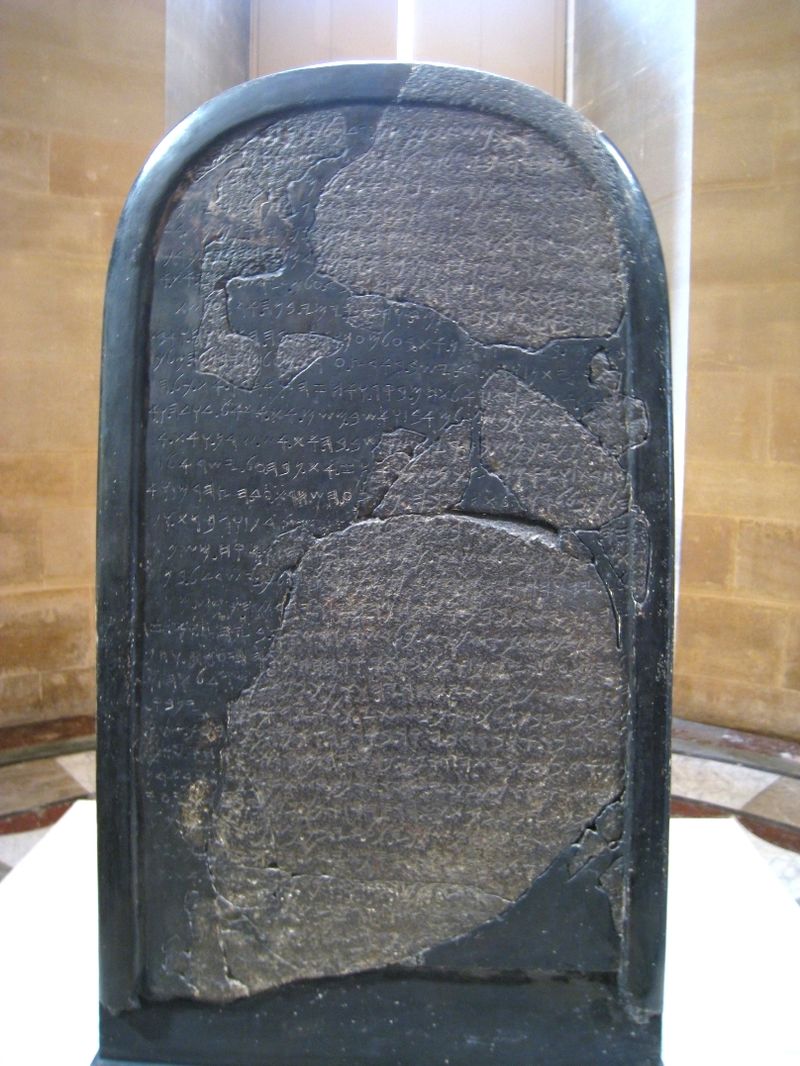
    21Then were the people of Israel divided into two parts: half of the people followed Tibni the son of Ginath, to make him king; and half followed Omri. 22 But the people that followed Omri prevailed against the people that followed Tibni the son of Ginath: so Tibni died, and Omri reigned. 23 In the thirty and first year of Asa king of Judah began Omri to reign over Israel, twelve years: six years reigned he in Tirzah. 24 And he bought the hill Samaria of Shemer for two talents of silver, and built on the hill, and called the name of the city which he built, after the name of Shemer, owner of the hill, uSamaria. 25 But Omri wrought evil in the eyes of the Lord, and did worse than all that were before him. 26 For he walked in all the way of Jeroboam the son of Nebat, and in his sin wherewith he made Israel to sin, to provoke the Lord God of Israel to anger with their vanities. 27 Now the rest of the acts of Omri which he did, and his might that he shewed, are they not written in the book of the chronicles of the kings of Israel? 28 So Omri slept with his fathers, and was buried in Samaria: and Ahab his son reigned in his stead.

    Mesha Stele Mentioning Omri of Israel

    The page space given to these kings does not accord with the length of their rule.  Elah ruled two years; Zimri seven days; Tibni ruled a faction of people but never all of Israel.  So, what is Jeremiah trying to emphasize with these kings?

    One issue continues to be the character of the kings.   Elah, for example, reigned only two years before he was assassinated.  What occasioned his assassination was the fact that while Israel’s army was engaged in a siege against Gibbethon at the time, Elah was in the capital Tirzah getting drunk at the house of Arza (“who was over the house of Jeroboam”).  Arza was probably more than a servant; his title suggests something akin to a Chief of Staff or a First Minister.  Nor was this drunken bout simply a minor event; it may be better to think of it as a drunken orgy.  Clearly, Elah did not comprehend the dignity or gravity of his position as king and that probably outraged Zimri.  Zimri, for his part, seemed to have been utterly ruthless, so much so that his actions prompted the people to anoint the army commander Omri as king.  When Zimri was confronted by Omri, he burnt the king’s palace down around himself rather than surrender.  In the situation that followed, some of the people followed Tibni, others Omri and eventually the supporters of Omri prevailed leading to the death of Tibni.  All these kings continued in the path of idolatry and sin laid out by Jeroboam.  All were men of low character and self-indulgence.

    A deeper issue is the problem of debasing legitimacy and pragmatic pursuit of the ends justifying the means.  By refusing the legitimacy God granted to his throne and pursuing idolatry, Jeroboam set Israel on a path of constant instability.  His pragmatism brought judgment on himself; those who usurped his throne and continued his ways set the precedent for debasing any notion of the kingship having an intrinsic legitimacy.  Not surprisingly, if the kingship can simply be obtained by violence, then violent men will pursue it.


    [1] The Biblical texts vary Maachah’s name somewhat, but it is likely that she was the granddaughter of David’s rebellious son, Absalom.  “Mother” in 1 Kings 15:2 and 10 probably simply means female ancestor, in this case, a grandmother.  She was the daughter of Uriel of Gibeah (2 Chron. 13:2) who probably married Absalom’s daughter Tamar (2 Sam. 14:27); the name was also the name of Absalom’s mother (2 Sam. 3:3).

  • Descent into Ungodliness (Lesson 6)

    Descent into Ungodliness (Lesson 6)

    This lesson was taught by Kyle Simmons

    Jeroboam’s Sin (1 Kings 12:25-13:34)

    I. Jeroboam Introduces Idolatry

    25 Then Jeroboam built Shechem in the mountains of Ephraim, and dwelt there. Also he went out from there and built Penuel. 26 And Jeroboam said in his heart, “Now the kingdom may return to the house of David: 27 If these people go up to offer sacrifices in the house of the Lord at Jerusalem, then the heart of this people will turn back to their lord, Rehoboam king of Judah, and they will kill me and go back to Rehoboam king of Judah.(1 Kings 12:25-27)

    Jeroboam fortified Shechem and made it his capital, but he quickly realized its easier said than done to separate Israel from Judah. They have had 120 years of continuous monarchy. The last 80 years saw their government and worship centralized under a single figure and religious location of Jerusalem. While the culture remained largely tribal, it was still very much tied to Jerusalem and Temple where God had made his dwelling place among His people. Jeroboam was therefore afraid that Israel, by continually making pilgrimages to worship at the Temple, would develop a love for Judah and its king, and thereby return eventually to Judah.

    In the eyes of Jeroboam, the religion of God’s people was becoming a national security threat to the state in general and him specifically. This isn’t without modern parallels. Roman Catholicism claimed the same thing about the Reformers.  A closer example to today would be Ukraine’s efforts to ban the Russian-affiliated Orthodox Church in Ukraine, and seizing its churches because Russia uses it to project influence into Ukraine.  So, to avoid this security threat, Jeroboam “asked advice.” Scripture does not say he prayed to God for wisdom, nor did he trust in God’s promises that he would be made into a great house if he continued in faithfulness. After he was blessed by God, he forgot about God’s promises.  Rather, Jeroboam “asked advice” of someone unspecified. Whoever they were, they gave bad advice. As noted in the previous lesson regarding Rehoboam and the wisdom of choosing wise counselors, and we see again that choosing foolish counselors results in foolish counsel.  Jeroboam here sets religious faithfulness aside to pursue what is politically expedient and self-enriching.

    28 Therefore the king asked advice, made two calves of gold, and said to the people, “It is too much for you to go up to Jerusalem. Here are your gods, O Israel, which brought you up from the land of Egypt!” 29 And he set up one in Bethel, and the other he put in Dan. 30 Now this thing became a sin, for the people went to worship before the one as far as Dan. 31 He made shrines on the high places, and made priests from every class of people, who were not of the sons of Levi.  32 Jeroboam ordained a feast on the fifteenth day of the eighth month, like the feast that was in Judah, and offered sacrifices on the altar. So he did at Bethel, sacrificing to the calves that he had made. And at Bethel he installed the priests of the high places which he had made. 33 So he made offerings on the altar which he had made at Bethel on the fifteenth day of the eighth month, in the month which he had devised in his own heart. And he ordained a feast for the children of Israel, and offered sacrifices on the altar and burned incense. (1 Kings 12:28-33)

    How did Jeroboam violate God’s commandments for worship?  There are four ways: (1) He established new religious centers and high places; (2) He build idols; (3) He made priests of anyone who paid enough for it, including himself; and (4) He established a false feast.

    • Establishment of new religious centers and building up high places

    Once more we see the high places make an appearance. We saw them in Solomon’s time before this, and we will see them appear in greater numbers in Judah. When Israel left Judah, they did not leave the paganism there. Quite the opposite.  Jeroboam established new religious centers in violation of Deuteronomy 12:1-7, which commands (among other things) that worship be held at the place that God will choose to dwell (The Temple), and in the way God has proscribed.

    The issue is not merely the centers of worship, but where they were located.  Bethel is in southern Israel, which before the split was central Israel. It was where God appeared to Jacob and told him that his name would be Israel. It therefore in a way can be considered the birthplace of Israel. Bethel also was a stop on the main north-south road between Israel and Judah. To get to Jerusalem, you have to pass through Bethel. It can be assumed that this site was chosen as a last ditch effort to lure pilgrims away from Jerusalem and towards this new worship.  The other center was at Dan in the north, which unlike Bethel does not share a rich and faithful history- it has a history of idolatry, sin, and unmitigated paganism. It was established by the tribe of Dan, the tribe that was prophesied by Jacob to be a “serpent by the road, an adder in the path that bites the heels of the horse and causes the rider to stumble.

    When the men of Dan first conquered it in Judges 18, they set up silver idols in the city, and installed priests of the sons of the grandson of Moses, who was not a Levite. These priests continued unabated until Israel was removed from the land in 722 BC. Jeroboam may well have set up here because of the pre-existing priesthood he could co-opt for his own purposes.  Jeroboam defends this decision in his announcement, that he is doing this for Israel. “It is too much for you to go up to Jerusalem, so here, I have made things easier with these golden calves. Your new gods!”  Jeroboam is making the assertion that ease and comfort trump God’s Word on this issue. “God said to do this thing, but that is simply too difficult, so I have made an easier version.” For Jeroboam, the small gate and narrow road that leads to life is simply too difficult, so he starts changing the road by his own standards. He ignores that one of the purposes of the Law of Moses is to be difficult, to show us that no one can follow the laws perfectly and be justified by his own works of righteousness. (Romans 3:20)

    There are times when doing what is right, doing what is commanded by God, is definitely difficult. In most circumstances, the people of God are promised difficult roads, long roads, roads of persecution, and isolation. But if they turn aside to Bethel, they’ll never see that Holy City of Jerusalem. That’s true for us as well as them.  Israel, however, takes Jeroboam up on his new offer, and worshipped at both Bethel and Dan.

    • Creation of Idols

    That was Violation 1. Violation 2 was that he created idols- two golden calves. Zero originality here. If this were a movie, it would be like a sequel-reboot, where the character of the golden calf has the same story as the original but is not the original. It is like the Force Awakens of idolatrous moves. Jeroboam even announces their debut with the same phrase as Aaron did back in Exodus 32:4: “This is your god, O Israel, that brought you out of the land of Egypt!”  These images are not made because Jeroboam thinks God is literally in the form of a golden bull, but because it is an attempt to control God’s power. The bull represents strength, fertility, and power—it is the reason someone built a massive bronze statue of it in front of our New York Stock Exchange to represent the economy. Jeroboam sees that as a parallel to God’s power, and so it is a way to extract those aspects and direct them towards his own gains.

    Jeroboam also builds shrines on the high places, just like Solomon did. He follows directly in the path of his predecessor, doing the same evil that led to his predecessor’s eviction and his installment as king.  Indeed, Jeroboam is doing everything he can to split Israel away from Judah, and that includes its God, and its history. This connection to the Exodus narrative, with himself playing the part of Aaron the high priest, tries to “restart” Israel’s history, to begin again, fresh.

    • Creation of a New Priesthood

    So, Violation 2 was the manufacture of idols.  In Violation 3 Jeroboam made priests from every class of people who were not the sons of Levi, including himself. We mentioned in the previous lesson that the tribe of Levi was a special case in the tribes of Israel, in that they held no land, but were a priestly caste. The Levites were not all priests, but all priests were Levites. They were in charge of teaching the Law, offering sacrifices, officiating religious ceremonies, maintaining the Tabernacle and Temple, and judging disputes. God had specifically set aside this tribe as the tribe who would officiate worship. Denying this in favor of making priests from “every class of people” was another rejection of God. And it is not specified that this is only the Israelites, which means it may have included even Canaanites who were still in the land. 

    The Levites did not take kindly to this move, or to the other violations of Jeroboam. The Levites actually have a history with golden calves specifically- it was they who rallied to Moses’s side, and stormed through the camp of the Israelites in Exodus 32, killing all the idolaters. The Levites take proper worship very seriously. As such, the tribe of Levi, en mass, left Israel and joined Judah, strengthening Rehoboam for those first few good years of Rehoboam’s reign
    (2 Chronicles 11:13-17). Israel was left largely bereft of the godly, and only the pretenders remained. This is a lasting problem for Israel throughout its future. While Judah occasionally sees priests instigate revivals, specifically through kings, Israel has no such priests to do so.

    When Israel was being corrupted by false priests, should the Levites have stayed and tried to reform it from the inside? Or were they right to leave, to preserve right worship of God elsewhere? How should it inform our decisions to stay or go?  As if that was not bad enough, Jeroboam also instantiated himself as a new priest of this religion. Just at the most basic level, you cannot make yourself a priest. As Hebrews 5:4 says- “And no man takes this honor to himself, but he who is called by God, just as Aaron was.” In the united kingdom of Israel, the office of king and priest were kept separate. Those offices were not to be mixed, though at times God made exceptions for David and Solomon, as they were members of the Messianic line. Jeroboam ignores this—he makes himself a new high priest, a King-priest. This is a usurpation of the office of King-priest of Christ, after the order of Melchizedek.

    • Creation of a False Feast

    In the fourth violation, Jeroboam instituted a Faux Feast Day.  The Feast of Booths/Tabernacles/Succoth was an eight-day long feast at the end of harvest time, halfway through the seventh month. It is called the Feast of Booths because for seven days, all Israel gathered branches of all kinds of trees and builds temporary shelters, and lives in them. It was designed to remember the wilderness journey taken by the Israelites during the Exodus, when they dwelled for 40 years in temporary lodgings. It was also aimed to the idea for the Israelites to remember that they are still strangers here on Earth, that this is a temporary lodging, and not to indulge in pride after a full harvest.  It was during one of these Feast Days that the Temple was dedicated by Solomon.

    Jeroboam instituted his own version of this feast, one month afterwards. His feast day is only said to last one day, so one would not have to live a week inside a hut one built. The booths are not actually mentioned here—only the feasting and sacrifices. As for the change in date, the passage is clear this comes solely from Jeroboam’s own heart. It is theorized by some scholars that since harvest came a little later to the northern parts of Israel, that at times the Feast of Booths overlapped with the end of harvest, meaning they would have to push themselves really hard to gather all the crops before the Feast. With Jeroboam’s delayed Feast, this is another way to make things more convenient.

    So, there we have the 4 violations of Jeroboam. All of them focus on changing the worship of God and making things more convenient for Israel in general, and Jeroboam specifically. Are you ever tempted to violate God’s commandments to make things “easier”?

    II. The Message to Jeroboam

    God is not mocked, and it was not long before he sent a prophet to Jeroboam to warn him of his crimes.

    And behold, a man of God went from Judah to Bethel by the word of the Lord, and Jeroboam stood by the altar to burn incense. 2 Then he cried out against the altar by the word of the Lord, and said, “O altar, altar! Thus says the Lord: ‘Behold, a child, Josiah by name, shall be born to the house of David; and on you he shall sacrifice the priests of the high places who burn incense on you, and men’s bones shall be burned on you.’ ” 3 And he gave a sign the same day, saying, “This is the sign which the Lord has spoken: Surely the altar shall split apart, and the ashes on it shall be poured out.”

    4 So it came to pass when King Jeroboam heard the saying of the man of God, who cried out against the altar in Bethel, that he stretched out his hand from the altar, saying, “Arrest him!” Then his hand, which he stretched out toward him, withered, so that he could not pull it back to himself. 5 The altar also was split apart, and the ashes poured out from the altar, according to the sign which the man of God had given by the word of the Lord. 6 Then the king answered and said to the man of God, “Please entreat the favor of the Lord your God, and pray for me, that my hand may be restored to me.”

    So the man of God entreated the Lord, and the king’s hand was restored to him, and became as before. 7 Then the king said to the man of God, “Come home with me and refresh yourself, and I will give you a reward.”

    8 But the man of God said to the king, “If you were to give me half your house, I would not go in with you; nor would I eat bread nor drink water in this place. 9 For so it was commanded me by the word of the Lord, saying, ‘You shall not eat bread, nor drink water, nor return by the same way you came.’ ” 10 So he went another way and did not return by the way he came to Bethel. (1 Kings 13:1-10)

    God sent a prophet up from Judah to speak to Jeroboam of his crimes, and to promise him that a child of the House of David, Josiah, will destroy Jeroboam’s priests, and that God will destroy his altar. This prophet is never named, so we will simply refer to him as “the man of God”, like the text does.

    We ought to admire the man of God here, who travels North from Judah into what is now hostile territory, which not long ago was threatening to go to war with Judah. He walks right into this pagan altar, stands before the King making his sacrifices to a pagan God, and proclaims the Word of the Lord to that assembly, prophesying judgment on the people there, the king and priests (the ones in power) foremost among them.  Jeroboam stretches forth his hand against God’s prophet, calling for his arrest.  And yet to protect his prophet, God caused Jeroboam’s arm to wither and seize up, and Jeroboam could not pull it back. He remains there frozen, his strained, withered, inhuman looking arm pointing accusingly at the man of God.  The altar splits in two, and the ashes poured from it, just as was prophesied. The hand that offered sacrifices to idols, and the hand that meted out judgement is no longer able to do so. God has stopped Jeroboam dead in his tracks.  All Jeroboam can do now is beg, and that he does. In an act of contrition, the king asked the prophet to ask God to heal his arm, and the man did so. God saw fit to heal Jeroboam.

    Jeroboam probably did not genuinely understand what had just occurred. Despite kneeling before the prophet, begging for healing for the man who has interrupted his ceremony, he does not change his ways, does not ask how to make things right with God. He does not pray or do anything other than neglect such a great salvation. He merely accepts that this punishment is on its way. He has the same attitude towards God of many people online—that when they hear “the lifestyle you live leads to death, your sins need to be forgiven or else you will go to Hell”, their reaction is a spiteful joy. They are glad to be going where God is not. And in same way, Jeroboam, while forced by reality to respect the power of God, refuses to undertake the task of addressing the root of the problem, and becoming right with God.  He does not speak to God, he speaks next to the unnamed prophet, asking him to come with him, inviting him into his home, promising a reward for what God had done. There is no doubt that Jeroboam’s aim was to corrupt the man of God, subvert him to work under Jeroboam.

    The unnamed prophet, however, insisted that he must not eat, drink, or go back the way he came to Bethel, for God had said he must not. As one commentary puts it, “Have no fellowship with the works of darkness.” Even if Jeroboam gave him half his house, he would not go with him. This is akin to when Christ was tested in the Wilderness and said “Man does not live by Bread alone, but by every word that comes out of the mouth of God.” The unnamed prophet therefore departed from Bethel, taking another road out of Israel.

    III. Death of the Man of God

    Unfortunately, there is another prophet in our story: an old prophet who lived in Bethel.

    11 Now an old prophet dwelt in Bethel, and his [c]sons came and told him all the works that the man of God had done that day in Bethel; they also told their father the words which he had spoken to the king. 12 And their father said to them, “Which way did he go?” For his sons had seen which way the man of God went who came from Judah. 13 Then he said to his sons, “Saddle the donkey for me.” So they saddled the donkey for him; and he rode on it, 14 and went after the man of God, and found him sitting under an oak. Then he said to him, “Are you the man of God who came from Judah?”

    And he said, “I am.”

    15 Then he said to him, “Come home with me and eat bread.” 16 And he said, “I cannot return with you nor go in with you; neither can I eat bread nor drink water with you in this place. 17 For I have been told by the word of the Lord, ‘You shall not eat bread nor drink water there, nor return by going the way you came.’ ” 18 He said to him, “I too am a prophet as you are, and an angel spoke to me by the word of the Lord, saying, ‘Bring him back with you to your house, that he may eat bread and drink water.’ ” (He was lying to him.) 19 So he went back with him, and ate bread in his house, and drank water. 20 Now it happened, as they sat at the table, that the word of the Lord came to the prophet who had brought him back; 21 and he cried out to the man of God who came from Judah, saying, “Thus says the Lord: ‘Because you have disobeyed the word of the Lord, and have not kept the commandment which the Lord your God commanded you, 22 but you came back, ate bread, and drank water in the place of which the Lord said to you, “Eat no bread and drink no water,” your corpse shall not come to the tomb of your fathers.’ ” 23 So it was, after he had eaten bread and after he had drunk, that he saddled the donkey for him, the prophet whom he had brought back. 24 When he was gone, a lion met him on the road and killed him. And his corpse was thrown on the road, and the donkey stood by it. The lion also stood by the corpse.

    25 And there, men passed by and saw the corpse thrown on the road, and the lion standing by the corpse. Then they went and told it in the city where the old prophet dwelt. 26 Now when the prophet who had brought him back from the way heard it, he said, “It is the man of God who was disobedient to the word of the Lord. Therefore the Lord has delivered him to the lion, which has torn him and killed him, according to the word of the Lord which He spoke to him.” 27 And he spoke to his sons, saying, “Saddle the donkey for me.” So they saddled it. 28 Then he went and found his corpse thrown on the road, and the donkey and the lion standing by the corpse. The lion had not eaten the corpse nor torn the donkey. 29 And the prophet took up the corpse of the man of God, laid it on the donkey, and brought it back. So the old prophet came to the city to mourn, and to bury him. 30 Then he laid the corpse in his own tomb; and they mourned over him, saying, “Alas, my brother!” 31 So it was, after he had buried him, that he spoke to his sons, saying, “When I am dead, then bury me in the tomb where the man of God is buried; lay my bones beside his bones. 32 For the saying which he cried out by the word of the Lord against the altar in Bethel, and against all the shrines on the high places which are in the cities of Samaria, will surely come to pass.”

    33 After this event Jeroboam did not turn from his evil way, but again he made priests from every class of people for the high places; whoever wished, he consecrated him, and he became one of the priests of the high places. 34 And this thing was the sin of the house of Jeroboam, so as to exterminate and destroy it from the face of the earth.

    So, the old prophet heard from his sons of the works and words of the unnamed prophet and saddled up his donkey to go find the man of God. When he found him on the side of the road, he asked him to come back with him the way he had come, to eat bread with him. The man of God was initially resistant, telling the old prophet the same thing he told Jeroboam. However, the old prophet told the man of God that he was also a prophet and had been told by an angel that he was to bring the man back to his home and feed and water him. Nothing but lies.  But the man of God believed the old prophet, and accompanied him home, ate bread, and drank water. And so, the Holy Spirit came to the old prophet, and he proclaimed that because the unnamed prophet disobeyed God, so he would die soon, and his body would not rest in the tombs of his forebears.  The old prophet saddled the man on his own donkey and sent him on his way. A lion met him on the road and killed him, spared the donkey, and stood guard over the corpse.  The old prophet rode to retrieve the corpse, and brought it back, laying it in his own tomb, and he made his sons promise to one day bury him in it with him, perhaps out of guilt, perhaps out of self-interest.  The old prophet seemed to recognize that after the words of God he had spoken had come true, that the words the younger prophet had spoken, that men’s bones would be burned on that altar. And as he did not want his bones to be burned on that pagan altar, he asked that his bones be buried with the man of God, that they might be spared.

    Death of the Disobedient Prophet (Dore’)

    What do we make of this character? What were his intentions towards the unnamed prophet? If he was truly a man in whom the Spirit dwelt, why did he disregard the Word of God so recklessly?  We do not know fully what to make of the man, but he does not seem malicious towards the man of God in the same way Jeroboam is.  I think we see in the old prophet what I will term a member of the old guard. He does not have a proper respect for God, nor God’s words, else he would not have proved himself a false prophet with his lies. But I think he desired the outcomes of a righteous nation without necessarily understanding the heart of the matter. He wanted the man of God to remain in Bethel, for at least a short time. Perhaps he hoped to convince him to stay permanently, as he saw this man as an ally against the idols which he hated, though the old prophet could not give a proper explanation of why they were wrong. He calls the unnamed prophet “brother,” and wishes to be buried with him.

    I have multiple guesses. Maybe the unnamed prophet is a believer who went astray in his desperation to keep the man of God around.  Or maybe he was an unbeliever who nevertheless God had blessed with sufficient wisdom to despise those evils God has named. There are many in the latter category I can think of today, who through God’s common grace and restraint can reason sufficiently clear to some evils must be opposed.  Or maybe he was merely trying to get the man of God to lift the curse that had been place on the land.

    As for the unnamed prophet, he was guarded against those who he recognized as his enemies. So, when tempted by them, he resisted. However, when tempted by his friends, he let his guard down and paid with his life. He took the old prophet at his word and did not test his words against that which he had received, which was his true folly. No matter if the revelation comes from friend or foe, all must be tested against the Word of God. God’s unchanging nature means he does not give revelation that contradicts previous revelation- God cannot and does not contradict himself. So, when someone tells you they have received a new revelation that directly contradicts what has been spoken through God’s Word, you know that they are not to be trusted.  As the Apostle Paul says, “But even if we, or an angel from heaven, preach any other gospel to you than what we have preached to you, let him be anathema. (Galatians 1:8)

    V. Jeroboam’s Death

    Jeroboam did not turn from his evil ways, but continued to make priests of the high places, including himself. This was the sin of the house of Jeroboam, such that God chose to wipe out the whole house. Ahijah, the same prophet who had announced to Jeroboam that he would be king, will announce that for the sins of Jeroboam, his house would be laid desolate. The dogs and birds would feast on their corpses in the cities and the fields, and a new king will be raised up over Israel to destroy Jeroboam’s house.  Ahijah also prophesied that Israel would be uprooted and scattered beyond the Euphrates because of their idols and the sins of Jeroboam. Now, we’re in countdown mode. God has said they will be scattered, its only a matter of time until he fulfils his Word.  Jeroboam was at war with Rehoboam and Rehoboam’s son Abijam all his remaining years. Jeroboam ruled 22 years in total.

    Some final lessons to note:

    1. God is not mocked, and he takes idolatry very seriously. (WLC 109)
    2. We cannot change worship to how we feel worship should go, we must Worship the way God has outlined. This is the principle behind the Reformed Regulative Principle of worship, that God has outlined how he wants us to worship. This is different from the principle of worship in many other churches, where the principle is that “if it isn’t forbidden, it is acceptable”. But we can see in this passage alone just how seriously God takes worship of Himself.
    3. Test the revelation that is received, even if it comes from a friend.
    4. Sinning can be convenient, and doing what is right can be exhausting, draining. We can be tempted to make changes so that our difficult lives can be made easier. My exhortation to you is “Don’t give in. Stand firm. Keep on that narrow road, walk through that narrow gate. You might have to suck in that gut, might lose a few of the brass buttons from your waistcoat, but it is worth it.”
  • Descent into Ungodliness (Lesson 5)

    Descent into Ungodliness (Lesson 5)

    This lesson was taught by Kyle Simmons

    Rehoboam’s Folly and the Division of the Kingdom (1 Kings 12:1-24, 14:21-31)

    Review and Introduction

    In the previous lesson, we walked through the end of Solomon’s reign. We saw the extraordinary wealth generated through kings, trading expeditions, and peacetime international commerce.  We also saw how Solomon violated the Mosaic laws for kings against gathering wives, and how gathering those wives led him into idolatry, building and sacrificing at pagan altars on various hills. As a result, we saw how God promised to take ten of the tribes of Israel away from him and give them to Jeroboam, leaving the seed of David with only the tribe of Judah. In this lesson, we are going to walk through the reign of Solomon’s son Rehoboam. We will see a king who is not quite so wise, we will see his failures as king, and see the permanent sundering of Israel into two nations, and the next steps of Israel on the road to destruction.

    I. Israel at the Time of Solomon’s Death

    Before we get into the text, we need to take a view of Israel at the time of the death of Solomon.  It is said that ten tribes were given to Jeroboam, and one would remain with Rehoboam. So, we need to know who these tribes are.  When we speak of “ten tribes leaving”, the question that is immediately asked upon hearing this is “Which ten tribes left, and which one remains?” A follow-up question is, “Wait—ten tribes and one tribe. Isn’t there one of the twelve tribes unaccounted for? This math isn’t adding up.”  

    The tribe that remains obviously is Judah, which makes that part easy.  However, the math gets more complicated after that. The original twelve sons of Jacob (Israel) more or less line up with the twelve tribes given land in Canaan with two exceptions—Levi and Joseph.  The tribe of Levi is a priestly tribe that holds no territory, and the tribe of Joseph is split into two half tribes. The half tribe of Ephraim, and the half tribe of Manasseh. This is in accordance with Jacob’s pronouncement that he would give Joseph a double portion of blessing, giving each of these half tribes the status of full tribe. These last two are counted among the ten tribes of Israel, while Levi and Benjamin are not. While Benjamin is not part of either nation in the original split, it later appears to always align with Judah and is likely absorbed into that nation while somewhat retaining its tribal identity
    (1 Kings 12:20-21). Therefore, the ten tribes of Israel are really nine and two half tribes: Reuben, Gad Dan, Asher, Naphtali, Simeon, Issachar, Zebulon, Ephraim, and Manasseh.

    Tribal borders are not as cut and dry as national borders. For example, Beersheba and many of the towns in Simeon are co-inhabited by Judah. Drawing territorial lines during this time is a difficult thing to do, but I’ve found the maps are generally accurate.  Geographical boundaries do help a bit during this. For example, you can see how the tribe of Reuben is separated from Judah by the Dead Sea and the Jordan River. Mountains, deserts, valleys, and rivers make Judah somewhat geographically isolated from the rest of Israel. Even in the time of David, there are references to “Judah and Israel”, indicating a level of separation between the two.

    There are also economic and cultural differences between the two. The presence of the Temple in Jerusalem under Judah, and the promise that the scepter of power would never depart from Judah would obviously single out Judah as the foremost of the twelve tribes, which would again set them apart from their brethren. Of the economic differences, Jerusalem and Judah were the center of Solomon’s empire. Solomon exempted Judah from the harshest of labor and taxes, as evidenced by their absence in the districting for taxation purposes, and that Judah does not complain to Rehoboam about how they are being treated when he ascends to the kingdom. Wealth trickles in from the other tribes into Judah. Those trade expeditions from Ophir and Saudi Arabia flow into Judah from the South before they spread to any other tribe. During the days of Solomon, there was sufficient wealth flowing to quiet the frustrations of the tribes. But when Solomon died, that frustration bubbled over.

    What we have at the time of Solomon’s death, then, is a fledgling empire that is still largely a set of tribal nations with tribal customs. The cultural, economic, and religious center of the empire is located in one of those tribes, separated from the other tribes by a lot of barriers, both physical and cultural. This is all setting up a lot of resentment and cultural differences between Judah and the other tribes that will show itself in meeting at Shechem.

    II. Israel splits from Judah

    Rehoboam is the firstborn son of Solomon, and he began to reign in 931 BC, at the age of 41.  As noted, Rehoboam is already on fragile ground already. He is not his father and is not crowned in Jerusalem like his father was. He instead makes his way north to Shechem to be crowned.

    Shechem is an important religious site for Israel. It was one of the most ancient cities in the nation, sitting in a mountain pass in central Israel connecting east and west. It is here that Abraham received the first promise of the Land in Genesis 12. Abraham and Jacob both built altars here. Joseph’s remains were buried here, and this was a site of covenant renewal of Israel with God under Joshua. It is also a Levitical city of refuge. All things considered this is about as “neutral ground” a spot as one could pick. It is likely that Rehoboam considered his political position as not secure enough to be crowned in Jerusalem, so he makes his way to Shechem as a concession.

    Israel has already summoned Jeroboam to be at this meeting, which probably does not make Rehoboam very pleased.  The people complain about the harshness of burdens forced on them, both of taxation and labor (there was temporary forced labor, or harsh conditions during the labor-whips).  They declare that if Rehoboam lightens the burdens which Solomon placed on them, they will serve him. Rehoboam sends them away for three days (no snap decision, a good choice) and mulls it over with his advisors.  There are two sets of advisors- his own at his age, and Solomon’s, who are far older.

    6 Then King Rehoboam consulted the elders who stood before his father Solomon while he still lived, and he said, “How do you advise me to answer these people?” 7 And they spoke to him, saying, “If you will be a servant to these people today, and serve them, and answer them, and speak good words to them, then they will be your servants forever.” But he rejected the advice which the elders had given him, and consulted the young men who had grown up with him, who stood before him. 9 And he said to them, “What advice do you give? How should we answer this people who have spoken to me, saying, ‘Lighten the yoke which your father put on us’?” 10 Then the young men who had grown up with him spoke to him, saying, “Thus you should speak to this people who have spoken to you, saying, ‘Your father made our yoke heavy, but you make it lighter on us’—thus you shall say to them: ‘My little finger shall be thicker than my father’s waist! 11 And now, whereas my father put a heavy yoke on you, I will add to your yoke; my father chastised you with whips, but I will chastise you with scourges!’ ” (1 Kings 12:6-11 NKJV)

    So, the elders council him to be a servant to the people, serve them, and speak kindly to them, and they will be his servants forever. His compatriots, men about 40 years old, are described as young men, who say he needs to double down, threaten them with barbed whips.  If he lightens the burden, they might be grateful to him, and serve him forever, and yet, Rehoboam has to show strength. His father was Solomon, his grandfather was David. He is coming into the office a middle-aged man, and he had some large boots to fill, and there is a long shadow he is standing in. If his first act as king is an act of contrition, it will make people think he is weak, and it might just spark more demands. Dismantling the governors and tax structures of Israel will also weaken its imperial might, at a time when Edom and Syria are launching rebellions and raids (recall Hadad the Edomite and Rezon of Syria). Egypt is likely also feeling spurned because the children of Solomon’s Egyptian wife will not inherit the throne, so it is also turning against Israel.  What do you think Rehoboam should do? What would you do if you were in his position?

    The Arrogance of Rehoboam (Hans Holbein the Younger)

    Rehoboam makes what Scripture outlines as the poor choice. He follows the advice of his friends and compatriots and threatens the other tribes of Israel. “Do you think it was tough before? Well, buckle up buttercup. Now go back home, I don’t want to hear any more about this.”  It has been said to “speak softly and carry a big stick;” Rehoboam spoke loudly and carried a not so large stick. The somewhat predictable result of his blustering was that Israel dissolved their union with Judah.

    12 So Jeroboam and all the people came to Rehoboam the third day, as the king had directed, saying, “Come back to me the third day.” 13 Then the king answered the people roughly, and rejected the advice which the elders had given him; 14 and he spoke to them according to the advice of the young men, saying, “My father made your yoke heavy, but I will add to your yoke; my father chastised you with whips, but I will chastise you with scourges!” 15 So the king did not listen to the people; for the turn of events was from the Lord, that He might fulfill His word, which the Lord had spoken by Ahijah the Shilonite to Jeroboam the son of Nebat.16 Now when all Israel saw that the king did not listen to them, the people answered the king, saying:

    “What share have we in David?
    We have no inheritance in the son of Jesse.
    To your tents, O Israel!
    Now, see to your own house, O David!”

    So, Israel departed to their tents. 17 But Rehoboam reigned over the children of Israel who dwelt in the cities of Judah.
    (1 Kings 12:16-17 NKJV)

    It is also said here that this turn of events was from God, so He might fulfill His Word which was spoken by His prophet Ahijah the Shilonite to Jeroboam. God made a promise, and that promise is going to be fulfilled. So, we know what is going to happen. Rehoboam is still in denial.  Rehoboam attempted reconciliation one more time and made the worst choice possible for doing so. He sent Adoram to reason with the tribal leaders of Israel, convince them to return to the fold. Adoram is his tax collector, in charge of the forced labor and the conscripted men of Solomon’s building project.

    What is Israel complaining about?

    Imagine you are in a dispute with your government about taxes and the working conditions of your job, and they decide to send the IRS to parlay with you. I would also have started throwing rocks.  They stone Adoram to death. Why would Rehoboam send Adoram?Most likely, to bully them.  After this, Rehoboam flees Shechem “in haste.”  He BOOKS it back to Jerusalem.

    Israel summoned Jeroboam and decided to make him king over the remaining tribes. Rehoboam summoned the imperial army, and they prepared to storm the north and reconquer it. Between Judah and Benjamin, Rehoboam has 180,000 warriors, ready to fight.  But God intervenes and sends Shemaiah the prophet to tell Rehoboam AND all Judah and Benjamin that there will be no war here, and it is time for them to return home. In his own words “This thing is from me.” Perhaps begrudgingly, everyone goes home and obeys God.

    This is another entry in what is developing as the formalized office of the prophets. When the nation strays, God is going to raise up prophets to speak to the kings and the people, to speak the truths they do not want to hear. They will have no excuse for the actions they take and the sins they commit.

    III. Rehoboam Reigns in Judah (1 Kings 14:21-31)

    21 And Rehoboam the son of Solomon reigned in Judah. Rehoboam was forty-one years old when he became king. He reigned seventeen years in Jerusalem, the city which the Lord had chosen out of all the tribes of Israel, to put His name there. His mother’s name was Naamah, an Ammonitess. 22 Now Judah did evil in the sight of the Lord, and they provoked Him to jealousy with their sins which they committed, more than all that their fathers had done. 23 For they also built for themselves highplaces, sacred pillars, and wooden images on every high hill and under every green tree. 24 And there were also perverted persons in the land. They did according to all the abominations of the nations which the Lord had cast out before the children of Israel. (1 Kings 14:21-24)

    As the text says, Rehoboam reigned in Jerusalem for 17 years. We can immediately compare that to the reigns of previous kings. Solomon, his father, ruled for 40 years. David, his grandfather, ruled for 40 years. Saul, the first king, reigned for 40 years. Rehoboam is the first king who does not actually reign the full term.  Moreover, he was a polygamist—over the course of his life he took eighteen wives and sixty concubines and begot twenty-eight sons and sixty daughters.

    As stated previously, Rehoboam is the first son of Solomon, who married an Ammonitess by the name of Naamah. The fact that Rehoboam’s mother is an Ammonite woman is mentioned twice, once at the beginning and once at the end, bracketing the reign of Rehoboam in 1 Kings. Calling to mind what we know about Solomon’s foreign wives, it may be assumed that Naamah was a pagan woman, and a worshipper of pagan gods. The next sentence mentioned that worship, and that Judah did evil in the sight of the Lord.

    The phrase “____ did evil in the sight of the Lord” is an oft repeated one in this book. But in almost every other case, the responsibility is placed on the king. “Jeroboam did evil in the sight of the Lord” etc.  Here, there is a measure of grace given to Rehoboam so as not to single him out. This is likely because there are several points where he humbles himself before God when it is commanded, like when Egypt will attack in a few verses.

    For Judah, there is no longer just a single shrine to Moloch on a hill. We talked in the last lesson about how sin is not content with just a bit, it wants it all. Now, there are high places, sacred pillars, and wooden images on every high hill and under every high tree. And if that was not bad enough, the text speaks of perverted persons in the land. The whole nation has seemingly overnight devolved to paganism, taking only a few years to descend to this.  When we talk about perverted persons, we’re talking about temple prostitutes, specifically male prostitutes. The Hebrew word is “qadesh”, which the King James translates clearly and politically incorrectly as “Sodomite.” It is important to note that while our modern culture makes a division between acts of homosexuality and idolatry, Scripture does not make such a distinction. Paul in Romans 1 discusses homosexuality as replacing worship and exultation of the Creator with worship and exultation of the creation. This is one of the reasons why in Israel, there were commandments to “purge the evil from among you”, cut them off from the assembly. In this chapter, they are walking around freely. The people of Judah have forgotten the law of God.

    The remaining half of verse 24 is a reference to Israel’s history, back to before the conquest of Canaan even began.

    21And you shall not let any of your descendants pass through the fire to Molech, nor shall you profane the name of your God: I am the Lord. 22You shall not lie with a male as with a woman. It is an abomination. 23Nor shall you mate with any animal, to defile yourself with it. Nor shall any woman stand before an animal to mate with it. It is perversion. 24Do not defile yourselves with any of these things; for by all these the nations are defiled, which I am casting out before you. 25For the land is defiled; therefore I visit the punishment of its iniquity upon it, and the land vomits out its inhabitants. 26You shall therefore keep My statutes and My judgments, and shall not commit any of these abominations, either any of your own nation or any stranger who dwells among you 27(for all these abominations the men of the land have done, who were before you, and thus the land is defiled), 28lest the land vomit you out also when you defile it, as it vomited out the nations that were before you. 29For whoever commits any of these abominations, the persons who commit them shall be cut off from among their people. 30 Therefore you shall keep My [f]ordinance, so that you do not commit any of these abominable customs which were committed before you, and that you do not defile yourselves by them: I am the Lord your God.” (Leviticus 18:21-30 NKJV)

    Leviticus 18 is about sexual sins. Both Molech worship and sodomy are mentioned here (among other sexual sins), as sins that defile the land itself. The land itself vomits the inhabitants out. Yet Judah is following in the paths of the people that God removed from the land, Judah who was the tool of that punishment. So, they have not only forgotten the Law of God, but their own history.

    Why did it get so bad?  God’s hand of restraint is on us, keeping us from being as wicked as we might be. For some, like Pharaoh in Egypt, he removes that restraint, and lets humans do as they will, which always involves covenant breaking. Based on past precedent, the next step is… Correct, an invading army comes to remove them from the land.  Egypt comes up in the fifth year and invades Judah. This was not wholly unexpected, as we noted in discussing how Egypt was allying with Edom and Jeroboam. But Rehoboam’s preparations were not enough to stop them. The Egyptians make it all the way north to Jerusalem, and only an emergency humbling of themselves towards God by Rehoboam and the leaders of Judah prevents their wholesale destruction. All the same, Shishak takes all the spoils and wealth from Judah he can, including the gold in the Temple. We previously mentioned those 500 gold shields that hung on the walls of the temple. Shishak takes them.  All that gold, the ivory throne, the dishes: he ransacks the place. All that prosperity is disappearing, the gold and the alliances.  Rehoboam replaced those gold shields with bronze shields, and they get taken in and hidden away whenever he is not there. They are solely there when he visits. This could be a vanity thing, or alternatively, it may be an example of Siege mentality: You are under threat, and you do not trust anything to remain, so you lock it away whenever possible.

    So now we come to the close of this chapter. The nation is in decline. It is separated between north and south, and the two nations are at war with one another, and with other nations. The prosperity that marked Israel as special has been taken away, and what truly marked Israel as special, its godliness, has simi,larly evaporated.

    What can we learn from Rehoboam?  First, raise your children in godliness, and watch who you marry for your children’s sake.  Second, be careful who your friends are.  Third, do not think you know better than God.  Fourth, be content with what God gives you.

    On one level I can sympathize with Rehoboam. Like I said previously, he grew up in the golden age of Israel. His father was Solomon the Wise. Kings from around the world came to sit before his ivory throne and hear his wisdom. Solomon built the Temple, the walls of the city he rules from, the palace next door. His mother was one of a thousand wives and concubines, so Rehoboam probably did not know his father all that well, and that family dynamic is…rough.  I imagine it has to be hard looking around yourself every day and being reminded that you aren’t as wise, or clever, or rich as your father. And then the kingdom is taken from you, and when you try and retake it, God sends a prophet to tell you to stand down. It probably felt like God Himself was against Him.

    But on the other hand, whatever our circumstances, our responsibilities remain the same. Not everyone is given extraordinary wisdom, or wealth. We are not all given intact kingdoms, or eras of peace and prosperity. Our faithfulness needs to remain constant.

    I don’t think it’s incorrect to state that our own nation is in decline. In some ways, we already live in a land of bronze shields instead of gold, and for myself and the younger generations, there is the threat of envy the world that my parents used to have, and perhaps took for granted. I’ve got a good job, a good car. Savings. But will I be able to afford a house and support a family on a single income like my father did? Odds right now are not good. But we are commanded to be content with what God has given us, and while still working for the betterment of it, we must not be resentful of where God takes our nation, or our church. Sometimes we think we know better than God and accepting that we don’t is one of the hardest parts of life.

    Rehoboam was not content. More importantly, Rehoboam did not seek after the Lord with all his heart like his father David. And that’s our chief responsibility.