Unveiling the often-overlooked significance of Cornelius Van Til in the realm of Reformed ethics, this work draws light upon his unique moral philosophy. Grounded in the covenantal epistemology and metaphysics typically employed for apologetics, Van Til masterfully harmonized his insights with those of Geerhardus Vos’ biblical theology.
In contrast to many ethicists who concentrate on formulating and applying principles, Van Til focused his attention on the Christian’s greatest good (summum bonum), which is God himself. His dedication to exploring the ethical implications of this divine starting point produced a standard of God-centeredness in moral philosophy that remains distinctive among Reformed thinkers, setting him apart even from his students, such as Greg Bahnsen, John Frame, and Meredith Kline, who have also contributed substantially to Reformed ethics.
Amidst the rise of moral relativism in the mid-twentieth century, Van Til’s stance was steadfast. This book, which includes a new critical edition of Van Til’s Christian Theistic Ethics, reveals how, against the backdrop of this challenging era, he not only successfully defended Christian ethical foundations but also holistically integrated ethics with the rest of Christian theology, reinforcing its relevance and import.
Endorsements
This is a unique book. And it is uniquely important. Few people have elaborated on Cornelius Van Til’s approach to ethics. And yet it is an indispensable part of his output. Using Alasdair MacIntyre’s insights, Hatch shows how ethics has needed to move beyond the failures of the Enlightenment mindset and become more self-consciously authentic; this parallels Van Til’s entire outlook. Van Til centers his reflections on the summum bonum, which is the glory of God. Hatch comments on all the major players in this field. Most of all, he centers ethics on biblical essentials. This unique and important book should be read by every thoughtful Christian.
William Edgar
Professor Emeritus of Apologetics
Westminster Theological Seminary
For understandable reasons, Cornelius Van Til is best known for his contributions to Christian epistemology and apologetics. In contrast, his writings on Christian ethics, and especially metaethics, have been largely overlooked and underutilized, even by those Reformed ethicists who studied under him and acknowledged his influence. This is a great shame because Van Til developed some profound insights on how Christian moral philosophy should be shaped by the distinctive Reformed doctrines of God and man. Scott Hatch has done us a tremendous service by retrieving and expounding these insights for a new generation of Christian thinkers. The two appendices, which document the development of Van Til’s ethics syllabus over the early decades of his career, add further value to the volume. While I might not agree with every jot and tittle, this book is in a class of its own as a systematic study of Van Til’s approach to Christian ethics, and it deserves to be widely read.
James N. Anderson
Carl W. McMurray Professor of Theology and Philosophy
When you go near a city to fight against it, then proclaim an offer of peace to it. And it shall be that if they accept your offer of peace, and open to you, then all the people who are found in it shall be placed under tribute to you, and serve you. Now if the city will not make peace with you, but makes war against you, then you shall besiege it. And when the LORD your God delivers it into your hands, you shall strike every male in it with the edge of the sword. But the women, the little ones, the livestock, and all that is in the city, all its spoil, you shall plunder for yourself; and you shall eat the enemies’ plunder which the LORD your God gives you. Thus you shall do to all the cities which are very far from you, which are not of the cities of these nations. But of the cities of these peoples which the LORD your God gives you as an inheritance, you shall let nothing that breathes remain alive, but you shall utterly destroy them: the Hittite and the Amorite and the Canaanite and the Perizzite and the Hivite and the Jebusite, just as the LORD your God has commanded you, lest they teach you to do according to all their abominations which they have done for their gods, and you sin against the LORD your God. (Deuteronomy 20:10-18 NKJV)
What are we to make of this?
On the face of it, what the Lord is commanding the Israelites to do to inhabitants of the Canaan is in modern terms ethnic cleansing (that is, removing an entire people group from their land) and genocide (destroying an entire people simply because they belong to that group). Even the more “benign” treatment of captured cities outside of Canaan gives some pause in light of the Lord’s command to put all the men of the captured city to death. Nor is this the only passage describing such violence. In the account of the Flood (Genesis chapters 6-8) the Lord destroys the entire world for the depravity in it, save Noah’s family. He disperses the nations of the world in response to the hubris of the Tower of Babel in Genesis 11, completely destroys the cities of Sodom and Gomorrah in Genesis chapters 18 and 19, and leaves Egypt in ruins as a result of the plagues that led up to the Exodus of the Israelites (see Ex. 10:7). In Exodus 23:20-33, He tells the Israelites that His Angel will completely destroy the people groups later repeated in Deuteronomy 20 so that Israel can occupy the land and that these peoples will not be a snare to them. The law codes of Exodus and Leviticus are probably the earliest parts of Scripture, so this means that these statements go back to the earliest part of the biblical history. In Numbers 33:50-56, these commands are repeated again on the plains of Moab, as Israel is planning to enter into the land which the Lord has promised. Leading up to that point, in the precursor to what the Israelites would later do in Canaan, the “Lord’s vengeance was executed” on Midian and the Israelites killed all the men. When Moses and Eleazar the high priest learned that women and children had been spared, they became angry and ordered the wives and male children of the Midianites to be killed as well (Num. 31:17).
Clearly there is a pattern here.
The critic of the Faith will point to these passages as prima facie evidence for the idea that if they are true and if God exists at all then He is neither good nor loving. Conversely, such commands for violence seem to be utterly incompatible with both modern sensibilities and modern expectations of the benign character of Deity and seemingly can only mean that if God really exists then Scripture is not true. And if Scripture is not wholly true, then that raises the obvious question as to what parts are true and what parts are untrue and on what grounds does one decide? It is not hard to see in light of those questions that it is a short road from rejecting difficult parts of Scripture such as these to a more fundamental questioning of the Faith. Thus, these holy war passages are not an easy question for Christians to face. For the Christian, the passages go beyond the idea that the Lord permits evil to happen. They seem to say the Lord is active in doing injustice and this puts God on the same level as Adolf Hitler, Josef Stalin, Pol Pot, Jean Kambanda,[1] Saddam Hussein and Slobodan Milosevic, which is an unpalatable conclusion. That returns us to the earlier question of what we are to make of these passages.
Excavation of a Wall of Jericho
No Dichotomy and No Easy Way Out
The natural inclination for many Christians is to posit some kind dichotomy between Jesus on the one hand and the passages of divine destruction in the Old Testament. In this way, Jesus trumps the commands on warfare and they can be conveniently ignored. Thus, some argue that these Old Testament passages reflect an early stage in Israel’s evolution which Jesus later superseded with His teaching on love and turning the other cheek. The problem with this is that Scripture itself shows the Israelites were not as “primitive” as they are made out to be by this caricature. The “primitive” Israelites had no stomach for the bloodiness of the holy war commands and they actually cut deals with their pagan Canaanite enemies rather than exterminate them as the Lord commanded.
A variant of this is the idea that the Old Testament depicts the Lord as a God of wrath, whereas the New Testament reveals Him to really be a God of love. This is simplistic and unsatisfactory, especially if one intends to take Scripture seriously. Jesus, who talked about turning the other cheek in the Sermon on the Mount, said in the same sermon He did not come to abolish the Law but to fulfill it (Matt. 5:17). His descriptions of Hell and of the pending Final Judgment—more frequent than that by anyone else in the New Testament (see Matt. 5:22-30, 10:28, 18:9, 23:15 & 33)—show that the wrath of God is not limited to the Old Testament alone. Indeed, Jesus’ own death on the cross to propitiate God’s wrath is sufficient evidence of that.
On the other hand, love and mercy are not the exclusive monopoly of the New Testament. When the Lord put Moses in a cleft of a rock, passed by, and declared His name he described Himself as “merciful and gracious, longsuffering, and abounding in goodness and truth; keeping mercy for thousands, forgiving iniquity and transgression and sin, by no means clearing the guilty, visiting the iniquity of the fathers on the children and the children’s children to the third and fourth generation” (Ex. 34:6-7). When Jesus was asked about the greatest commandment in the Law (Matt. 22:36), He quoted the Old Testament to show the Law was summed up in the command to love the Lord with all one’s heart, soul, and mind and to love one’s neighbor as oneself (Deut. 6:5, Lev. 19:18). Again, this does not easily fit the stereotype of the Old Testament being of law and judgment and the New Testament being one of grace and forgiveness. It is fair to say that the Lord is depicted as both loving and judging in the Old and New Testaments.
The greatest challenge to positing a dichotomy between Jesus and these commands on holy war is how Scripture actually links the two. The Apostle Luke records two of Jesus’ post-resurrection appearances and in them Christ gives His disciples insight into how Scripture is to be understood. In both cases He says that all Scripture points to Himself (Luke 24:27, 44-45). This, of course, must also include the holy war passages of the Old Testament as well. Indeed, in the Ex. 23:20-33 passage mentioned earlier, the Lord tells Moses that He will send an Angel ahead of the Israelites to bring them into the Promised Land and defeat their enemies. Although the identity of the Angel is not conclusive for scholars, He most likely is the pre-incarnate Christ. The Lord, for example, says that this “Angel” is to be completely obeyed because God’s name is “in Him.” Christ bears God’s name and, moreover, the Lord and the Angel are used interchangeably through the passage. Joshua later encounters what is probably this same Person before the conquest of Jericho when he meets the Captain of the Lord’s army. That this Captain is the pre-incarnate Christ is evident from the fact that he unhesitatingly accepts Joshua’s immediate response of worship (Jos. 6:13-15). Elsewhere in Scripture, when homage is offered to angels they redirect that to God alone. Not here though. What all this means is that the shocking violence of the holy war passages probably had Christ Himself at the center—the same Christ who taught the Sermon on the Mount which so many pacifists take as their primary proof text. There is no easy way out of the challenges these passages pose.
Confronting the Personality and Power of God
Without question, the holy war passages challenge our presuppositions about who God is. This is evident in the most common reaction people have when they ask, “How could a loving God command these things?” This question, however, makes a presumption about God’s character that first of all needs to be examined more closely. God’s character is only known to us from what He has revealed in His Word. The fullness and complexity of God’s Word should be a curb to the temptation to select a few attributes with which to create a caricature of God whose appropriateness we will then judge. The question, “how could a loving God command these things?” however, tends in the direction of caricature with the fundamental assumption that God’s defining trait is love. Admittedly, John the Apostle says “God is love” in his first epistle (1 John 4:16), and while this is a true statement according to Scripture, the fact of the matter is that God is not reducible to just that trait.
Imagine, for example, describing one’s best friend or spouse solely with the term, “loyal.” It may well be true, and it could even be an exemplary trait in that person. But that term by itself is insufficient to answer questions about what motivates the person, what his likes and dislikes are, what experiences have shaped who he is or what aspirations he may have. People are far more complex than can be summarized by a single personality trait. Why, then, are we so inclined to think that the Lord—who is Three Persons in one Godhead—can be reduced simply to “love”? The effect of this is to make God into a principle, not a Person. This depersonalization makes it easier to write Him off. If God is solely love, then it is not hard to conclude that “Love is god”—indeed, the conclusion follows tautologically. Because there is ambiguity associated with defining what “love” is, it becomes all too easy to dismiss God because He does not match what we assume or want love to be. As a result, for some individuals (certainly not all), the question of “how could a loving God command these things?” may well be a veil for what is really a more fundamental rejection of a judging God.
Yet by what right do we have to judge God? The question “How could a loving God command such things?” is too often merely an intellectual one. The fact of the matter, however, is that if God is the Creator God of the heavens and Earth, then this Being—whatever His character—possesses a power that is well beyond our capabilities. God, for His part, knows our very being to the utmost subatomic particles. He could change the minutest thing to heal us or he could annihilate us completely. This raw power is evident from nature. Whether God is consistent or inconsistent with Himself, whether He is good or evil or whatnot is secondary to the fact that He is omnipotent and can hurt us. God is a reality with whom we need to reckon on a personal level, not an abstraction for a dorm room bull session.
To be sure, this is not to suggest that whatever God does is right simply by virtue of the fact that God does it. God’s actions are consistent with His character, so if justness is part of God’s character (as it indeed is), then God will act justly in accordance with who He is. The only way we can know God’s character is through what He has revealed in His Word. The logical implication of this is that there are no legitimate grounds for dismissing God on the basis of His character if Scripture is not admitted to the discussion. And if Scripture is admitted, then intellectual honesty must concede that the picture of God’s character is richer than cherry picking a few traits would portray. The implication of these points is that we need to approach this topic with sobriety and humility. It is not without reason that Scripture says the “Fear of the Lord is the beginning of wisdom” (Ps. 111:10, Job 28:28, Prov. 1:7 and 9:10).
One last note with regard to invoking 1 John 4:16. Although it sounds spiritual to reduce God to “love,” even the Apostle John would not have meant his statement to be taken in this way. This John was the same John who started off as a disciple of John the Baptist. In this, he no doubt shared the Baptist’s expectation of imminent eschatological judgment. Remember, the Baptist called for his hearers to repent because “…even now the axe is laid to the root of the trees…” and judgment is near (Matt. 3:2, 10). This same Apostle John and his brother received the nickname “Boanerges”—sons of thunder (Mark 3:16)—perhaps in part because of an incident recorded in Luke 9:51-56 in which they were prepared to call God’s wrath down on a Samaritan city that had disrespected Jesus. This very John also was the one who penned the Book of Revelation, which features front and center God’s wrath and Final Judgment on the world, executed through Christ Jesus. God’s judgment and God’s love clearly are not antithetical in John’s thinking.
Defending the Covenant Lord’s Image
If it is inappropriate to reduce God to merely being “love,” then perhaps there is a better way of phrasing the concern being raised here, especially for Christians genuinely wondering how to reconcile this with other aspects of God’s character. To that end, one could well ask how it is that God, who imparted dignity to men by making them in His own image and who commanded His people to love their neighbors as themselves, would also command them to engage in a hideous attack on His own image bearers? If God created man in His own image, then God’s love would seem to naturally follow. Yet, the apparent unjustness of the holy war commandments is that they seem so unprovoked and so disproportionate. How could God command this and not contradict His own character as being just?
The issue of God’s image is at the heart of the matter posed by the holy war passages. That said, what it means to have been made in the image of God is something that is poorly understood by most Christians. Some, like Thomas Aquinas, make this a matter of man’s superior intelligence as distinguished from the lower animals. Others, like Martin Luther, make this a matter of man’s moral character. The Westminster Confession of Faith, drawing on Eph. 4:24 and Col. 3:10, captures both of these ideas in noting that man was “endued with knowledge, righteousness, and true holiness, after His [God’s] own image” (WCF IV.ii). There is a richness in the notion of image which goes beyond these qualities, however, and which I would posit is fundamentally covenantal in its orientation.
In ancient Near Eastern covenants, the suzerain king often would not only obligate the vassal king with upholding his political interests, but also with defending his name and honor. For the vassal, this was a way of demonstrating his loyalty to the suzerain. For the suzerain, it was a way of projecting his majesty and authority both within the vassal’s realm and beyond it to those regions not incorporated into the suzerain’s empire. Thus, for the vassal to bear the image of the suzerain was not only something that is intrinsic to the individual, as in many theological formulations, but it is also reflective to the surrounding world. To demonstrate their loyalty, vassal kings would not only swear allegiance to the suzerain, but would often adopt the suzerain’s gods, the suzerain’s governing practices, even the suzerain’s personal styles. Imitation, of course, is the highest form of flattery. One can see a perverted form of this in the Scriptural account of Ahaz’s relationship to the Assyrian Empire in 2 Kings 16:10-18 and 2 Chronicles 28:16-25. There we see Ahaz willingly subordinating himself to the Assyrians in order to gain assistance against local threats. As part of this, he went to Damascus—at that time occupied by the Assyrians—and among other things copied the altars the Assyrians used for worship. Upon returning to Judah, he began instituting worship of Assyrian gods. He did this not only to demonstrate his loyalty to his Assyrian overlords, but because he believed the Assyrian gods were stronger than the Lord.
In the Lord’s relationship with His people, he expects them not only to uphold His name, but to reflect His character. Indeed, this is embedded in the Law that He gave to Israel at Sinai and which was recapitulated forty years later on the plains of Moab. As indicated by the First, Second, and Third Commandments of the Decalogue (Ex. 20:4-7), the Lord jealously defends His name and prerogative. Not only does He refuse to be dishonored, but He determines how He will be honored and is exclusive in demanding His people’s loyalty to Himself. That this is so can be seen in another verse that is often difficult for Christians to grasp, 2 Sam. 12:14. This verse occurs after the prophet Nathan confronts King David over his sin with Bathsheba. Although David repented, Nathan added, “However because by this deed you have given great occasion to the enemies of the Lord to blaspheme, the child also who is born to you shall surely die.” To most readers, this seems unfair. The baby born to Bathsheba did no wrong, so it is not clear why he should have to die for his parents’ sin. Had the child lived, however, the gossipmongers among the court—and eventually the public more broadly—would have been keenly aware of the double standard between David’s professed faith and his actual actions. The natural inclination would have been to consider the faith a charade or God, if He exists, to be impotent or inconsistent. God would not let his Name be sullied like that—not to David’s court, not to the surrounding nations, and not even to the supernatural powers and principalities of this world. What the leader did would in time encourage the people to mimic as well. By causing the child to die, the Lord showed that above all, He would be honored and that he would jealously guard His name.
The Sins of the Canaanites and the Justice of the Lord
The Lord’s intention to defend His name and his image have direct bearing on what He was to do to the Canaanites. In withholding His hand of grace, the Lord allowed them to pursue whatever lifestyle they chose. To say that the worship they chose was depraved does not really provide a clear image to our minds and can be too easily dismissed as mere moralizing. It is therefore worth looking briefly at Canaanite religion and society.
Texts from the ancient Near Eastern city of Ugarit (modern day Syria) provide much insight into Canaanite religion beyond what is mentioned in the Bible. The Canaanite pantheon was headed by a shadowy creator god named El. The more prominent deity, however, was Baal, the storm god who controlled the rains necessary for agriculture. According to the Ugaritic texts, Baal would yearly fight with the god of death, Mot, and lose, ushering in a period corresponding to the agricultural dry season. Fertility would only be restored to the land by the annual sexual intercourse between Baal and Anath. Anath is variously described by scholars as either Baal’s sister or the sister and wife of El and was renown for her vengefulness. Baal’s other sexual consorts were Asherah and Astarte, also described as being both El’s wives and sisters. Like Anath, they were goddesses associated with violence and war. Although the Ugaritic texts do not explicitly state so, it is not hard to infer from them the prevalence of ritual male and female prostitution in the Canaanite religious system. Numerous ancient figurines of nude female figures found throughout the Near East, combined with the foregoing cosmology and contrasting Scriptural prohibitions against such practices suggest that these things were prevalent throughout the region. It is unclear from the Ugaritic texts whether human sacrifice was part of this system, although it most likely was. Because Israel did not completely destroy the Canaanites, there was a persistence of Canaanite practices that were incorporated into the worship of Israel and the surrounding nations. In 2 Kings 3:27, for example, the king of Moab offered his son as a burnt offering. King Ahaz of Judah similarly sacrificed one of his sons (2 Kings 16:1-4), an unidentified brother of the good reformist king Hezekiah. Hezekiah’s son Manasseh also offered human sacrifices of his sons (2 Chron. 33:6).
This cosmology had to have an effect on Canaanite society on the personal and familial level as well. The glorification of violence and the intrigues among the gods of the Canaanite pantheon had their parallel in the fundamental political disunity of Canaan. If the gods were engaged in orgiastic and incestuous sexual practices, then it is not hard to conceive that people would emulate those things. Indeed, it is foregone conclusion that they did so. Incestuous relationships, fornication, and violence were all intertwined with personal advancement. To get ahead in Canaanite society materially one needed the favor of the gods, which meant appeasing their anger (i.e. human sacrifice) and emulating their practices (incest, promiscuity). We know from modern victims of child sexual abuse the lasting psychological traumas resulting from such abuse. The abused, moreover, too often become abusers themselves. We further know from modern sexual mores that, however much permissiveness is tolerated or encouraged by society, jealousies and insecurities abound with such practices on a personal level. Emotional scarring, relational distrust, and familial rivalries resulting from these things literally tear apart families and turn them against themselves. This would only be reinforced by the practice of human sacrifice. It could not have encouraged family harmony to know that if the family fell on tough times then father would sacrifice one of the children to the gods. Nor would it end there. As Israel increasingly adopted syncretistic worship that incorporated these practices, the Lord’s prophets not only condemned them for these things, but for other evils emerged as well. Efforts to get ahead by appeasing or manipulating the gods through such practice no doubt divided society into the haves and have nots, since success was deemed divinely endorsed. Those who did not achieve success earned only contempt and their only recourse was to turn to the same debased practices. This cycle only fostered injustices and oppression in society.
This is the society that the Lord instructed the Israelites to destroy. Such people, though not chosen by Yahweh, bore His image simply by virtue of being human. Their behavior, however, was completely contrary to His character—indeed, it reflected a rejection of everything about who the Lord was and how He worked. For Him to allow that to stand would have been to consider the desecration of His image as acceptable. The Lord will defend His name and His image indeed, especially since He is the True Suzerain. The sin of the Canaanites justified the Lord’s judgment if He was to vindicate His name. The pervasiveness of Canaan’s religious system throughout all of society also explains the command to bring judgment not only on the men, but also on the women and children of the society as well. In our understandable focus on individual responsibility we often forget the strength of social networks. To use modern parlance, the Canaanite religious system was totalitarian. In Canaan, however—unlike, say, Nazi Germany in the twentieth century—this religious system had grown up over centuries rather than being imposed at once. Because of this, it was more organic and thus more resilient in how it was interwoven into the social fabric. For Israel to have spared anyone would have meant that the survivors would be intent on preserving their old ways and gaining revenge for their losses. It is facile to suggest that Israel could have “converted” the survivors to the true faith—indeed, as Scripture shows, Israel did spare some Canaanites, but it was the Israelites, not the Canaanites, who adopted their enemies’ religious practices.
The Lord was indeed just in bringing judgment down on the Canaanites, even as argued here, completely upon the society as a whole. It should be noted, however, that even this is not without certain elements of mercy. In the Exodus account of the holy war commands, God says that He will send a terror ahead of the advancing Israelites to drive out the peoples in Canaan and that the campaigns would be incremental (Ex. 23: 27-30). Israel’s early victories and the likelihood that the inhabitants of Canaan eventually would have gotten wind of God’s command for their total destruction would have established a lasting fear among the inhabitants. Prior to successive battles, this fear, combined with “God’s terror” (e.g. hornets, Ex. 23:28) would have produced a kind of psychological warfare to encourage the Canaanites to flee if they knew the Israelites were coming. In the way that the Lord gave His commands, those who fled to cities outside of Canaan would have been covered by those regulations He gave Israel for how to treat the “faraway” cities; only those who remained would be subject to the command. One sees echoes of this approach in the battles leading up to Israel’s entrance into the Promised Land, as well as in the guile of the Gibeonites (Josh. 9) who fooled the Israelites into thinking they were from a distant city to avert their destruction. Psychological warfare thus could have mitigated the actual number of people killed.
The Lord’s Ultimate Ends in the Destruction of Canaan
The distinction between how Israel was to militarily treat the “faraway cities” vice the cities in Canaan serves to highlight the fact that the total destruction kind of warfare the Lord commanded for Israel in Canaan was not to be the normative practice for Israel for all time. Presumably, if Israel had been fully obedient to the Lord in its conduct of battles in Canaan and all of the inhabitants were killed or driven out, then the only operative warfare regulations would have been those for the “faraway cities”—regulations consistent with customary ancient Near Eastern practices at the time. The destruction of Canaan therefore was unique for that situation. Because the ban on Canaan was unique though, it is important to remember that God’s agenda in this action was not limited to judgment upon Canaan. The Lord, being a personal Being, was pursuing multiple agendas simultaneously.
In using the Israelites as His instrument of judgment on the Canaanites, the Lord also was settling the Israelites into the land He promised to their forefathers. Suzerains in the ancient Near East would often provide loyal vassal kings with land grants as a way of rewarding their past loyalty and to encourage their future loyalty. Failure for the suzerain to follow through on a promised grant could be considered an abrogation of the covenant. As the True Suzerain, the Lord was following through on His promises made originally to Abraham (Gen. 15:18). More than that, however, the Lord was in the process of creating a people for Himself, and the land was emblematic in His people finding their ultimate blessedness in their sovereign Lord. The land was a foreshadowing of the eschatological promise of enjoying the Lord forever, lost initially with Adam’s sin in Eden and which the Lord would eventually restore through the Seed of Eve prophesied in Genesis 3:15.
The total destruction of Canaan fits into this in a practical way. Had Israel followed the Lord’s commands, the nation would have had internal religious unity. Such a unity, grounded in God’s law, would have had significant geopolitical implications. Geographically, Israel straddled the primary north-south/east-west trade and invasion routes of the ancient Near East. East of the river systems feeding into the Jordan River, the Sea of Galilee and the Dead Sea, the topography of the Near East becomes desert. Thus, a unified Israel, faithful to her Lord would have been the lynchpin of the region—everyone would need to pass through the country to conduct trade in the region. At the same time, no one could invade without enlisting Israel’s support or tacit acceptance. By refusing alliances, Israel could have been an enforcer of the peace. The social and cultural influence of the Lord’s Israelite Kingdom would have emanated out to the known world. As it turned out in Israel’s actual history, the failure to rid the land of pagan influence did eventually become a snare that left the nation internally divided and ultimately led to its undoing. The only time Israel even approximated the influence it could have had if it had been faithful to the Lord was under Solomon’s reign. Indeed, Solomon’s forty-year reign (971-931 bc) was the only time in the nearly 1,000 year period covered by the Old Testament that the nation was internally united and free from external threats. Second Chronicles chapters 8 and 9 describe the country as rich from trade, militarily significant, and chief among—and arguably a suzerain over—its neighbors. Solomon’s wisdom from the Lord attracted people from far away, notably the Queen of Sheba. However, Israel’s failure to eradicate Canaanite influence and Solomon’s willingness to indulge in pagan practices as part of his many marriages would eventually lead to the destruction of the entire nation. As the Lord had judged the Canaanites for their sins, so too would He judge Israel for engaging in the same practices that so dishonored Him. The Lord was consistent in his enmity towards those things that desecrated His image.
If the conquest of Canaan anticipated the eschatological rest for the People of God, then judgment upon Canaan, harsh as it may seem, also anticipates God’s eschatological judgment on the world. This only stands to reason. As noted earlier, the Angel of the Lord mentioned in connection with the holy war passages in Exodus 23 and Deuteronomy 20 is likely to have been the pre-incarnate Christ. Christ also, of course, is the slain Lamb in Revelation chapter 5 who approaches the throne of God and is able to open the seals of judgment. Against Him the kings of the world will wage war (Rev. 17:14) and He will defeat them, leading the armies of Heaven, executing the wrath of God, and establishing His suzerainty (Rev. 19:11-19). The Final Judgment, coming at the time of Christ’s return, will be total. The completeness of this judgment is manifest from the laments given by the world over the destruction of the idolatrous world system, the Harlot of Babylon. Only those written in the Lamb’s book of life will be allowed to enter into His eschatological rest (Rev. 21:27).
The Final Judgment will bring full circle the pattern of judgment that the Lord has executed since the expulsion of Adam and Eve from Eden. The judgment on Canaan seems harsh to modern ears because it is so bluntly explicit. In the context of Scripture, however, it is actually more moderate than God’s earlier judgment in the Flood. There God destroyed the entire world, save only Noah’s family. One also should remember that the Lord’s judgment is refined throughout Scripture. Following the Flood, in Genesis 11, the Lord disperses the nations. In the Exodus He ruined a great nation, Egypt. With the judgment on Canaan, He destroyed city states. Later, He expelled first Israel and then Judah from the Land for their covenantal disobedience. In Christ, all the world is again judged, but the full unmitigated force of God’s wrath is taken on by One only, Christ Himself. In the Final Judgment, as with the Flood, all individuals outside of the covenant community will be judged.
The refined scope of the Lord’s judgment is paralleled by the growth in God’s redeemed community. Prior to the Flood, human institutions were so nascent that they provided no effective restraints on human behavior. People really could be as bad as they wanted to be, and here it is not surprising to see the Lord’s harshest judgment. In an age when great nations dominated the international scene, God judged the preeminent empire at the time, Pharonic Egypt. In the course of that judgment, He created His own nation, Israel. At the same time, when city states were beginning to coalesce elsewhere in the ancient world, He judged the city states of Canaan in part to give His people a homeland. The destruction of Israel and Judah coincided with the growth of the ancient empires (Babylonian, Persian, Greek and ultimately Roman). That destruction dispersed God’s people throughout the known world. When Christ arrives, the international scene was unified by the Roman Empire, eventually allowing the proclamation of the Gospel to go to the ends of civilization. It is no coincidence that in this period between the ascension and return of Christ, a time of the ingathering of the nations (John 4:35), civilization has become global and God’s people are being drawn from the ends of the world. The significance of this parallelism between God’s increasingly refined judgment and the ushering in of the covenant community—and with Christ, of the Kingdom—is that in each phase of judgment God is simultaneously preparing the way for the Kingdom.
What Does This Mean for Us Today?
To pull together the various threads discussed so far into some closing thoughts, there are three questions that should be posed. First, what do these holy war passages tell us about God? Second, are they a biblical model for warfare today? And lastly, if they are not such a model, then what do they have to say about a Christian perspective on war?
In juxtaposing the judgment of the Lord with our assumptions about His loving and gracious nature, the holy war passages challenge us as Christians to think more deeply about the fact that God is not some cosmic force, but a Person and an omnipotent One at that. Understanding who God is requires both a reverential fear for the sheer power that He possesses and a humility in appreciating the complexity of His personal character. Without such an approach, the temptation would be to put God on the witness stand and set ourselves up as the judge of His character. That is both arrogant and naïve.
The destruction of the inhabitants of Canaan certainly demonstrated the Lord’s justice towards them, while simultaneously showing His grace to those who are His people. Since the Lord is our covenant suzerain, our loyalty is to Him personally, not to an abstract principle. This is all the more true since Jesus Himself was both the leader of the army of the Lord in the Old Testament as well as the Victorious One who will bring the Final Judgment at the end of time. The fact that Christ is depicted meekly in the Gospels is consistent with the Father’s purpose at that time—to reconcile to the Father those the Father gave Christ, to inaugurate the Kingdom, and to initiate the ingathering of the nations that must precede the Final Judgment. This underscores the fact that as a Person, the Lord does have an agenda and that agenda is bound up with having His image reflected through all of creation by His image bearers.
The Lord’s defense of His image is not self-centered, but an acknowledgement of His perfection and aseity. An analogy would be a company’s effort to defend its brand image. If someone outside the company were to take the brand logo and use it on their own website to make money and engage in illegal activity, the company would be fully justified in taking the individual to court in a civil suit to restore their reputation and recover damages for the injury done to them. The Lord, likewise, is justified in defending His image. A difference between the analogy and the biblical reality, however, is that the degree of harm man has done to God’s image is far greater than that by an individual hijacking a company logo. It is desecration, not just copyright infringement. On a personal level, this should deepen the seriousness with which we view our sin. The Lord judged the Israelites as well as the Canaanites. As Christians, it is this wrath Christ bore for us.
These holy war passages raise the temptation that if the Lord was so zealous to defend His name and image, should not Christians be similarly zealous and could not these passages serve as justification to do likewise. This, of course, is the temptation of the Crusades. Biblically speaking, however, the fact the Lord Himself provided that once the land was conquered the laws of war would revert to the then-prevailing international norm is sufficient evidence that this war of total destruction was never intended to be the norm. Unlike the Muslim attitude towards Allah, while God requires us to honor His name He does not require us to do it by violent means. The Lord will ultimately defend His name. The danger for making this normative for Christians today is that human nature is still corrupted by the Fall. God could execute such judgment perfectly because He is perfectly self-controlled. If we take on decisions to be “agents of God’s wrath” we risk conflating His agenda with ours.
This does not mean that the passage has no bearing on how we are to think of warfare today. In considering the Canaanite society that the Lord commanded to be destroyed, it should be a spur to us to think about justice. Canaanite society not only was desecrating the image of God, but it was also a nasty society to live in. If we are to love our neighbor as well as the Lord, then we need to be outraged at how depravity dehumanizes people and wise to how such depravity becomes embedded in social networks. The fact that the Lord authorized warfare and given the unchanging nature of His character means that warfare can be a just pursuit—a virtuous good rather than a necessary evil. As Christ was a warrior, then we, like Him, need to have our means consistent to the ends we seek to achieve and the justice we hope to establish. For us, those ends—and therefore the means for achieving them—will always be more limited. When to declare war, on what grounds, and for what ends are all issues that we would need to look elsewhere in Scripture beyond the holy war passages for answers.
[1] Kambanda was the Prime Minister of Rwanda during the Rwandan genocide in 1994 and was later convicted for his role in it by the International Criminal Tribunal for Rwanda.
It is not hard to make the argument today that we need a new Reformation; the weakness of the Christian church and the evidence of overall moral decay and degradation is both self-evident and pervasive. In the books of 1 and 2 Kings there is a leaden refrain that “The king did evil in the sight of the LORD and did not walk in the ways of his father David.” This echoes the depressing refrain in the book of Judges that “There was no king in Israel and everyone did what was right in his own eyes.” In our own day, we see wars and crises abroad, violence and political dysfunction at home, and the moral bearings of our society dissolving. First and Second Kings seem today all too apropos.
Deep frustration at the dysfunctional situation we are in has led some Christians to pessimistically conclude that the liberal democracy which has characterized the United States for the past 236 years is no longer sustainable. Roman Catholic writers like Patrick Dineen, Adrian Vermeule, and Sohrab Ahmari are flirting with a return to “integralism,” a Catholic social teaching that holds the Catholic faith should be the basis for public law and public policy. On the Protestant side, similar ideas are being expounded by thinkers like Stephen Wolfe and Doug Wilson, who are debating the merits of some kind of Christian Nationalism. What these two perspectives have in common is a view that the separation of church and state, which found its most first and most definitive expression in the founding of the American Republic, has at best failed and possibly should not even have been tried at all. The solutions put forth by these thinkers, while varied and often inchoate, also share an advocacy for a much closer affiliation between church and state than currently exists.
Others have made effective critiques of integralism and Christian Nationalism, and while I concur in the main with those critiques, my purpose here is not to add to them. Rather, it is to remember how the Reformation laid the groundwork for the eighteenth-century separation of church and state in what I will call, the American Settlement. There are good reasons why the American Founders separated the two that still hold wisdom for today. In the contemporary debates of today, it seems that thinkers too often operate off of caricatures, cherry-pick from this history, or ignore it altogether. If there is the possibly of revising the American Settlement, then it behooves us to know the tectonic factors that prompted it coming into being in the first place. Admittedly, this is a vast topic, so my approach in what follows is to draw out four general themes that came out in the interactions between church and state in the Reformation, and then at the end to show how the American Settlement addresses these themes.
Thomas Jefferson’s Memorial Highlighting His Authorship of the Virginia Statute on Religious Freedom
1. As Christians, our foremost goal must in be promoting the purity of true worship in God’s church ahead of trying to reform the beliefs or behaviors of society generally.
In discussions of reforming society, we tend not to think of worship as something that should be at the top of our agenda, but this was the focal point for the Protestant Reformers. In 1544, on the eve of the Diet of Speyer, the Genevan reformer John Calvin wrote a treatise entitled, The Necessity of Reforming the Church, which was nominally was addressed to the Catholic Holy Roman Emperor Charles V but in reality, was probably aimed at consolidating the Protestant Reform movement. The Protestants had been divided between Germans in the north and Swiss in the south since 1529, when Martin Luther and Ulrich Zwingli disagreed at the Marburg Colloquy over their understanding of how Christ was present in the Eucharist. The Schmalkaldic League, a defensive alliance of the German Protestant princes, was weak in the face of the powerful Charles V and needed encouragement to stand together and extract concessions from him. Calvin’s treatise provided that encouragement by clearly and succinctly explaining that the heart of the Reformers’ demands was the reform and purification of the worship of God in the church.
Given all the challenges that existed at the time it may seem odd to consider the issue of right worship to be paramount among them, but it does make sense in how it brings together everything. Why, for example, do we worship God? For His glory (soli deo gloria) and because of the grace He extended to us in salvation (sola gratia). How was that salvation obtained? Soley through the work of Christ (solus Christus) which we lay hold of through faith alone (sola fide). What is the right way to worship God? As He has instructed us in His Word (sola Scriptura). Biblically, the first four Commandments in the Decalogue are focused on the proper worship and honoring of God. The duty we owe to God precedes the duty we owe to our neighbors. As can be seen in the books of 1 & 2 Kings, false worship, religious syncretism, and idolatry starts a people on the path of societal unraveling. This is because corruption of the worship of God results in a corruption of our understanding of who God is, the requirement He has for holiness, and the need for and nature of our salvation in Christ Jesus. To focus on beliefs and behaviors without considering worship central is sterile. There is a practical and a pastoral aspect to this as well. Worship involves our heart, not just our head or our actions. This takes us beyond seeing the Reformation merely as an intellectual matter about justification by faith alone or the five solas and goes to the core of the Christian life.
In our own day, for all the interest in changing the culture and for all the attention given to political or public theology, it seems that this view of the centrality of promoting pure worship seems to be conspicuously absent from the dialogue. For many, worship is a matter of aesthetic taste—single style or mixed music selection, contemporary praise songs or traditional hymns, and so forth. As such, those interested in a closer affiliation between the church and the state because of the moral degradation of our day see it as a sidebar issue. Others—mostly confessionalists—who do see it as a central problem are often derided as being too wedded to mere traditionalism. But if the Bible is right and worship really is central to the well-being of both God’s people and the societies that they live in—as the Reformers understood—then we need to reevaluate our priorities for reform in light of that.
2. Political leaders do not always have the same interests or ends as the church, even when they support a religious agenda.
In promoting reformation in the public sphere, wisdom requires Christians to realize there are limits to cooperation with magistrates. In some cases, political leaders may support religious reform as part of a broader political game. One can see this in the case of Frederick the Wise of Saxony, Martin Luther’s protector. Frederick consistently resisted appeals of the Pope and others to turn over Martin Luther to their custody, and, indeed, after the Diet of Worms in 1521 Frederick’s men kidnapped Luther and took him into protective custody in Warburg Castle. In some ways, Frederick was a loyal son of the Catholic Church: he personally had one of the largest collections of holy relics in Europe, which gave him a pious reputation, and potentially money-making capacity. So why did he support and protect Luther? Some degree of sympathy for Luther’s ideas certainly has to be in the mix of motivations, but other reasons contributed as well. Frederick had a principled interest in defending Luther as one of his subjects being treated unfairly by Roman Catholic hierarchy. Luther also was the most prominent professor at Frederick’s newly established University of Wittenberg, which was drawing attention and scholars to the city, bolstering its—and Frederick’s—prominence. Most importantly, Frederick, like other German nobles had political frictions with the Roman papacy and resented its interference in German affairs; supporting Luther provided a justification for resisting Rome’s political machinations.
In other cases, the goal may be for the political leader to strengthen his or her own control. One can see in the case of the English king Henry VIII and his successors. Henry earned the title, “Defender of the Faith” from the Pope for his early criticism and opposition to Luther’s ideas, a title which English monarchs have retained to this day. Henry, however, was only two generations away from a hard-fought civil war within England, and so his house risked becoming extinguished if he did not have a male heir. When the Pope refused to grant Henry an annulment of his marriage to Catherine of Aragon, Henry declared himself the head of the English Church, thus beginning the English Reformation. His sensibilities remained Catholic in practice.
When Henry’s daughter Elizabeth I acceded to the throne after the disastrous reign of her half-sister Mary, who had brutally persecuted Protestants, Protestants felt hopeful that not only would Protestantism be restored but that reform would move forward. Many of the Puritans had been in exile during Mary’s reign and saw how thorough the reforms were in Calvin’s Geneva; they wanted to emulate that. Elizabeth had Parliament pass an Act of Supremacy (1559) to reaffirm her position as head of the Anglican Church, but her religious policy did not go further than that, much to the frustration of the nascent Puritan movement. The Puritans were again frustrated when James I acceded to the throne after Elizabeth. James had been raised Presbyterian in Scotland and English reformers felt he would be sympathetic to having the Anglican Church be more reformed like the Church of Scotland. James, however, liked controlling the episcopacy and calculated that reforms which could depose the bishops could also depose the king; in light of the subsequent English Civil War, his view proved to be prescient.
The fact that political leaders do not share the same interests or ends as the church is a truth worth being mindful of in our own day even though we do not have established churches. Today, many politicians stoke populist outrage over the moral degradation that is around us, but once in office their willingness to resolve the issue prompting that outrage seems to dim considerably. That is because fueling the outrage is good for fundraising and garnering votes; resolving those problems, however, would require expending potentially serious political capital which might impede their ability to get re-elected. The incentives, then, work against actually addressing the problems.
3. Political leaders and their allies in the church have often suppressed true religion for their own ends, even to the point of backing heresy.
In 1 Kings, we see where Jeroboam I created a separate, idolatrous, religious system to enhance the separation between his northern kingdom of Israel and the southern kingdom of Judah. His goal was basically to use religion as a means of social control or at least to keep it quiescent and politically under control. Two examples from among many are illustrative that the misuse of religion for political end existed in the Reformation and post-Reformation period as well.
In the mid-sixteenth century, Protestant ideas began making considerable headway France, especially among the nobility. This created a political problem for the French crown, because it de facto challenged the king’s claims to absolute rule. Rather than trying to find some accommodation with the Huguenots (the French Protestants), the crown instead initiated a harsh persecution. The worst incident at the time was on August 24, 1572, St. Bartholomew’s Day, when a number of the Huguenot leaders were in Paris for the marriage of the Protestant, Henri of Navarre to the Catholic king’s daughter, Margarite de Valois. Catherine de Medici, the Queen Mother, along with other royalists, initiated a massacre of the Huguenots, purportedly in defense of the Catholic faith. Within Paris alone, as many as 3,000 people were killed and estimates go as high as 70,000 for the number of Huguenots who died nationwide. The massacre touched off 30 years of religious warfare in France.
England, too, suffered because of the misuse of religion. After James I’s death in 1625, his son Charles I ascended to the crown and Charles appointed one of his favorites, William Laud, to be archbishop of Canterbury, a position from which Laud oversaw the entire Anglican Church. Both Charles and Laud were insistent on adding extra-biblical and unbiblical elements to worship over the objections of many Puritans. Moreover, at the same time, they were willing to tolerate and accept Arminian clergy in the Church of England because such individuals supported their worship innovations. Arminianism had been deemed heretical in 1618-19 at the Synod of Dort in Holland, an international Reformed synod to which James had sent legates and accepted its rulings. Tensions broke in 1636 when the crown tried to impose a revised Book of Common Prayer on the Scots, who saw this as a deliberate affront on their understanding of true and acceptable worship of God. The Scots went into revolt against the crown, followed a few years later by many English. The result was the English Civil War (also known as the War of the Three Kingdoms [England, Scotland, and Ireland]), which would lead ultimately to the execution of Charles I and a dictatorship under Oliver Cromwell. With the restoration of the king under Charles II in 1660, the gains of English and Scottish Presbyterianism were erased by a restored Anglican hierarchy that neither forgot nor forgave their earlier loss of stature. Reformed pastors and teachers, now officially called Dissenters or Non-Conformists, would continue to be persecuted by the crown until 1689, when a measure of toleration was extended to them after the Glorious Revolution.
Given the degree to which church and state were intertwined during the Reformation and post-Reformation periods, the question of what constituted the true religion rather than a false religion inevitably became a political question, often leading, as we have seen, to bitter armed conflict. Among conservative Christians today who are flirting with ideas of integralism or Christian Nationalism there is a tendency to describe “Christian” in more generic terms, so as to be inclusive and not specifically sectarian, but it cannot really sidestep issues of sectarianism in practice. The fundamental problem is determining where and on what basis to draw the line as to what is right and wrong, what is permissible and impermissible. This cannot really be avoided and once one begins drawing lines, then some degree of sectarianism is inevitable. This was a problem in the Reformation, and for us today as well.
Reformed Christians do have an epistemological standard to address this question of drawing lines, namely Scripture. This is not mere proof-texting, but they insisted on asking the question, “Is there a positive warrant in Scripture to claim that something is essential to faith or worship?” Using this biblical standard, Reformed Christians rightly found much in Roman Catholic teaching and practice to be idolatrous. For this reason, they could not in good conscience take a “big tent” approach and thereby overlook significant substantive differences for the sake of some nebulous sense of “Christendom” or “Christian unity.”
The Reformed approach stands in contrast to that of other Protestants, who felt that the absence of a negative sanction was sufficient to justify deeming a matter to be essential to faith or worship. The difference is subtle but important. The former standard is narrower but sounder, whereas the latter opens the door to much subjectivity. We see this problem even today as theological progressives have increasingly relativized doctrines of the historic Christian faith to accommodate worldly preferences, whether they be things like the atonement or like traditional Christian sexual morality. In practice, without an objective standard subjectivity boils down essentially to a power issue more so than a doctrinal one. One can see this in the examples just provided, but it is also true for the modern period as well. This year, for example, we commemorate the 100th anniversary of J. Gresham Machen’s Christianity and Liberalism, and that brings to mind the account of how Machen was forced out of the Presbyterian Church USA in 1936. In Machen’s case, PCUSA leaders railroaded his excommunication trial, denying him even the opportunity to testify in his own defense. Their actions said in effect “We’re right because we are in power, and you are heretical because you disagree with us.” Many PCUSA leaders rationalized this by falsely claiming that Madchen was temperamentally argumentative, without any acknowledgement of the merits of the concerns he had been putting forth.
4. From a political perspective, any sustained religious reform efforts have to navigate some real dangers.
It would be easy to look back on the Reformation and assume and assume an air of inevitability, without appreciating the tenuousness facing the Reformers and their heirs. It was inevitable in the sense that God in His Providence brought to pass what actually happened, but if we look at the circumstances the Reformers faced through their eyes, we realize that they could not and did not assume that everything would work out for them. They understood the fragility of what they were undertaking. Looking back with hindsight we can see that there are at least three dangers which the Reformers faced and which we need to be mindful of even in our own day.
First, there is the topography of power. In a more nuanced discussion than I can do justice to here, Roland Bainton, in his book, The Reformation of the Sixteenth Century, draws out how political centralization or decentralization either impeded or facilitated the spread of Reformation ideas. In looking at Europe at the time, the region now constituting Germany was a collection of over 400 kingdoms, duchies, baronies, and free cities. No one had any centralized control over this region, so it is not surprising—especially in light of the frictions that German leaders had with Rome—that there would be places where Protestant ideas could find safehaven. To the east, the vast lands of Poland and Lithuania showed some interest in Protestant ideas, but the nascent level of national institutions meant that it would be difficult for such ideas to take root in a lasting way, as proved to be the case in how the Counter-Reformation was able to reclaim them back into the Catholic fold. To the west—namely, Spain, France, and England—state power was becoming more consolidated, and those countries could legitimately claim to be the first modern nation states. In Spain, the Reformation never took hold. In 1492 the Spanish were finally able to expel the Muslims from Granada, their last stronghold in Iberia, marking the culmination of a 700-year Reconquista against the Muslims. The Catholic Church supported Spain throughout the Reconquista, and Spain repaid the Church by being a loyal son well into the twentieth century. In France, as already noted, Huguenot sentiment flourished for a time among the nobility. As the most centralized state in Europe and given the intertwining of state and church, it also is not surprising that it would be in France where the Reformation would meet its most serious opposition. As for England, it was less centralized than either France or Spain and its Reformation longer and messier than either of those states. The lesson that this diversity suggests for us today is to be wary of a “one-size-fits-all” theory of church-state relations to guide our own efforts at religious reform. America today is nearly the size of Europe, with a tremendous diversity of its own. Religious reform will differ widely between states. On the one hand, there are states centralized and left-leaning state governments like California and Massachusetts, and on the other hand, states with more limited governments or attitudes favorable to Christianity, such as Alabama or Texas, along with all sorts of variations in between. As the COVID-19 pandemic showed a few years ago, churches will face different situations and will need to find their own way forward in their local circumstances.
Second, there is the problem of identity politics intertwining with religion and the church. Looking back on the Reformation there is little doubt that most of the warfare that characterized the period was due to the fusion of church, state, and national identity. To cite but one example, English national identity in the early modern period sought unity in the crown, Parliament, and a Protestant Church of England. Religiously, the Book of Common Prayer and the King James Bible were icons of national identity, alongside John Foxe’s Book of Martyrs, which highlighted the depravations English Protestants experienced under Queen Mary. In any predominantly Christian country such a mixture of religion, state, and national identity will be inevitable. What makes the combination potentially toxic is when religion becomes the handmaiden to the other forms of identity. This is not merely a patriotic sense among Christians of wanting the well-being of the nation they are part of; it would be the manifestation of the attitude that “God is on our side because of who we are.” This ties the moral credibility of the church to the success or failure of the state, and that can seriously compromise the church’s witness. Such a prideful sentiment is likely to trump the skepticism the Christian faith has towards tribalism, the injunctions against self-righteousness, and the commands which our Lord Jesus Christ gives to love our neighbors. If the church remains faithful to Christ, it will necessarily and naturally feel tension between being faithful to Him and being good citizens in this country. If it does not feel that, then that should trigger some self-examination.
Lastly, there is the problem of disillusionment and exhaustion that people will have in times when the church has been caught up in the politicization of the age. For the 172 years from the time that Martin Luther nailed his Ninety-Five Theses to the door of the Castle Church in Wittenberg until the Glorious Revolution of 1688/89, Europe had been convulsed with reformation, revolution, and war. It is hard for us now to emotionally comprehend the degree of change and the level of psychological exhaustion which set in among the people. Periods of warfare, especially warfare bound up with religion, typically open the door to greater secularization, and the period of warfare of the seventeenth century was no exception. By the mid-seventeenth century, philosophers, scholars, and theologians were moving in directions to deemphasize the religious foundations of society. That trend would continue throughout the eighteenth century, breaking into an outright rejection of religion after 1789 after the French Revolution. This is the world that created our world of today and the church needs to be sensitive to the fact that the more politically active it is, the most likely that it will see the backlash directed against it. Although the past two decades of counter-terrorism wars do not approach the scale of the religious warfare of the sixteenth and seventeenth centuries, one can still sense an exhaustion with religion today.
In bringing this discussion to a close, we need to circle back to the beginning, namely the disillusionment with the separation of church and state and the American Settlement.
The American Founding Fathers were heirs to the Reformation. Their views on the separation of church and state were not a theoretical secularist experiment, but the result of long historical experience. The United States, indeed, was the first Western country to embark on a course of formally separating church and state when it ratified the US Constitution in 1787. As the Founders understood it, the separation was intended to protect the church from the intrusions of the government, but in the twentieth century that has become increasingly interpreted as keeping religion and religious discussion out of the public sphere altogether. This shift is indeed important, and in my opinion, wrong, but we do not fix it by throwing out the American Settlement altogether. We fix it by going back to an originalist understanding of what it meant to begin with.
The American Settlement in many ways addresses the lessons given here from the Reformation period. By making church and formally separate, it allows the church the freedom to promote the purity of worship without (as many) complications posed by political leaders with alternative agendas or who are trying to manipulate religion to be a means of social or political control. It allows for the church to adjust to the disparities power and culture across regions by refraining from a one-size-fits all approach. It also allows the church room to speak prophetically to society and to stand apart from the political verities of the age. This space can also be useful for the church for self-reflection and renewal. The advantages of the American Settlement have made the United States a paradox in the Western world: although the United States does not have any established church or even a preferred church, yet at the same time the country has one of the highest rates of religious affiliation and participation anywhere in the developed world.
That said, the American Settlement is by no means perfect. The space that it gives to the church needs to be actually utilized by the church for the ends of promoting purity of worship and the expansion of the Gospel. If the church instead seeks worldly influence and temporal goals, then it will squander these opportunities. Moreover, as we have increasingly seen over the past few decades, the instinctive desire of political leaders to control or manipulate religion remains unabated and needs to be restrained. Such control and manipulation can be manifested either in efforts to coopt Christianity or exhibit hostility toward it—and sometimes both simultaneously. In the past few decades, the legal basis for religious liberty has become better enshrined in law today more so than at any point in the history of the Republic. To throw out the American Settlement is likely to reopen the problems that existed prior to its creation, and which were extant during the Reformation. A better course, in my opinion, would be to retain the American Settlement, all the while strengthening it and fixing it.
It has been my intention for since returning from this year’s PCA General Assembly to do a more in-depth analysis of Overture 26, which was on the issue of political violence. Even though GA voted it down, I think that given the levels of polarization in the United States at the moment this issue is one that we increasingly will face in the coming months and years. For that reason alone, it merits more discussion and reflection.
In the interest of full disclosure, this Overture was sent up by my presbytery, Potomac Presbytery, but I neither contributed to it as it was being drafted, nor voted for it in either Presbytery or in General Assembly. The head of the Presbytery’s Mission to North America (MNA) committee invited thoughts and contributions from anyone in the Presbytery back in February when it was being drafted, and even after it had passed Presbytery in March he still invited feedback for ways that it could be improved, ways that could be proposed as amendments in the Overtures Committee at GA. So, I will not complain that there were not opportunities for providing input; there most certainly were multiple opportunities. I had two reasons, however, for not contributing. First, in February and March, I was going through a period at work where I was consistently having to work very long days and what free time I had was consumed with other church-related duties, so I literally just did not have the bandwidth at the time to give this any considered thought. Second, my intuitive feeling early on was that there were some more fundamental issues at stake I did not think it would be collegial or helpful to provide just minor wordsmithing that did not really get at the core of my concerns or to make vague suggestions for more fundamental revisions that would have been tantamount to “start over.” So, I listened to the debate in Presbytery, I listened at GA, and with more time to think about things, here are my misgivings about the Overture.
As I noted in my earlier post, my concerns were basically twofold: first, I felt we missed an opportunity to make a more definitive and necessary restatement of the Spirituality Doctrine given the circumstances we currently face regarding political violence, and second, there were issues in the way this was written which I think undercut its effectiveness. Let me address each of these concerns in turn.
First, the key challenge for this Overture was in defining what political violence is, succinctly, in the current political context. Political violence can include such things as mob intimidation, assassinations, bombings, excessive or unauthorized use of force by government officials, riots, terrorism, and even outright war. Overture 26 did not provide a definition of this up front regarding the focal point of the authors’ concerns, although they did try to capture some nuances in the “Whereas” clauses, mostly to differentiate the lawful use of force from unlawful uses. This lack of specificity—which, in fairness, may have been driven by a legitimate desire to avoid the appearance of favoring one political side or the other—gave the Overture an overly abstract and disconnected quality. This disconnect was reinforced by how limited the asks were in the resolves proper. Basically, these came down to saying political violence is bad, we should follow Jesus, and pray for our country. None of these asks should have been objectionable to either those on the Left or the Right, but they are sufficiently anodyne that it begs the question as to why we even need a formal resolution at all. This lack of precision contributed to a certain surreal quality I observed in the debates in both Presbytery and GA, where much discussion time was spent addressing the question as to whether such an Overture, had it existed in 1776, would have inhibited the Founding Fathers of the United States from supporting independence from Great Britain—a debate over a hypothetical possibility for an event over 200 years ago.
The drafters of this Overture almost certainly were not focused on that. Rather, the heart of their concerns probably was in “Whereas” clauses 11-14. These almost certainly should have been bolstered further. One does not have to look too hard to see concrete the dangers of our toxic polarization. Within the past couple years–indeed, on some matters, even within the last few months–we have had assassination threats against our Supreme Court justices; riots and threats of riots; the practice of operatives of both the political Right and Left to disclose the personal information of Federal, state, and local officials so that angry mobs could surround their homes and intimidate them; fire bombings and hate vandalism of crisis pregnancy centers; and the list goes on. There also has been efforts, mostly by those on the political Right, to appropriate symbols of Christianity into their advocacy of political violence (this is less an issue for the political Left, since the Left is generally less interested in Christianity altogether). There has also been a trend among some churches to give platforms to political activists whose rhetoric calls for some kind of “resistance,” often armed. From what I have seen and heard, this typically has been outside the PCA; I do not know to what extent PCA churches have done this, if at all. And, as “Whereas” clause #13 acknowledges, there has been the practice for Christians on both the Right and the Left to ignore the violence of their own side while condemning that of the other. In short, there is no shortage of real reasons to be concerned.
In terms of how the Overture was written, my chief criticism beyond simply the lack of definition of political violence is the extensive use of “Whereas” clauses (there were 17 such clauses in the resolution). To be sure, this Overture was written in a way that is consistent with the way overtures are typically formatted, but in this particular case, as a reader, I found myself getting lost in trying to follow the logic of the clauses. Several of the clauses were trying to provide important, but ancillary distinctions, which obscured other clauses that were more pertinent justifications for why the overture was necessary. It may have been more effective to have a fewer number of “whereas” clauses that were focused more directly on the premise for why the overture is necessary, reserving any important qualifications for a “rationale” statement to be appended to the overture after the “resolves.” Such an approach would have allowed more flexibility for expressing nuance and have been clearer to the average reader. The extensive number of clauses also created a higher expectation regarding the resolves, only to leave the reader feeling sold short given what was actually asked for. A tighter, clearer, more focused Overture might have had a better chance of passage or at least raising the bar in terms of debate.
So, what could have been done differently with the advantage of hindsight? For this kind of an Overture, we needed to have a clearer focus on who the target audience should be. Here, the target audience would best be the denomination as a whole, both pastors and churches. They can take specific actions, whereas making a statement to society writ large is only an exercise in virtue signaling; to be honest, society writ large could care less about what the PCA thinks about political violence. With this audience in mind, a few concrete actions could be suggested.
First, we need a tighter definition of what we mean by “political violence.” This might well be hard to achieve, but without it, there will be endless debate about whether one thing or another actually constitutes political violence. There has been a trend within the PCA over the years to refer such questions to denomination-wide Study Committees, but such an action would be expensive and there is real Study Committee fatigue within the denomination. That said, I also think it might be more effective for Sessions and Presbyteries to give the question serious thought based on the circumstances they find themselves in locally. Such definitions are likely to be more concrete and practical as opposed to abstract and academic.
Second, we need to have a re-articulation of the Spirituality Doctrine for our pastors and congregants. Most of our congregants are not familiar with this part of our theological heritage, and if they have heard of it at all they may associate it with historical misuses (e.g., how it was used to defend slavery or oppose the Civil Rights movement) than with the proper use of safeguarding the integrity of the church amidst a highly politicized environment. (I provided my own articulation in a previous post). Beyond such an articulation within an Overture, it probably would be worth identifying, providing, and as needed, producing resources to our congregations to explain what the Spirituality Doctrine is, what its purpose is, and the principles behind it. Education will help bring home why this is important for the Church.
Lastly, following from this, we need to ask, what concrete things would help to safeguard the integrity of the church in our current situation? One thing would be to encourage churches to refrain from allowing political organizations or activists who have called for or have endorsed political violence from using the church’s facilities or online platforms. As has been repeatedly demonstrated with other issues, to give a platform to such organizations or speakers advocating or endorsing political violence is likely to be seen as tacitly or explicitly concurring with those views. Taking this step would distance the PCA from the kinds of problems facing parts of evangelicalism right now. Another thing that could be done is for church leaders to speak out against the appropriation of Christian symbols in political contexts where political violence is being advocated or practiced, regardless of who is doing the appropriating. Finally, it may be worth encouraging Sessions and Presbyteries to articulate their own guidelines and principles on how the Church will engage on political issues and what the limits of such engagement might be. That will help set expectations both of congregants and even community members.
In closing, let me just say this: my criticisms here are not intended to be criticisms of my brothers in Potomac Presbytery who drafted and proposed Overture 26. This is a difficult issue, but an important one, and one that I think we will continue to face for the foreseeable future. I wish that were not the case. Nor is my intention is not to puff myself up by saying I could have done things better. As I noted at the outset of this post, there were opportunities to provide input but I was not able to avail myself of them at the time. Because this is an issue that we are likely to face in the near term, my intention here is to provide what I hope is constructive feedback and advance mutual dialogue insofar as we revisit these issues in the future.


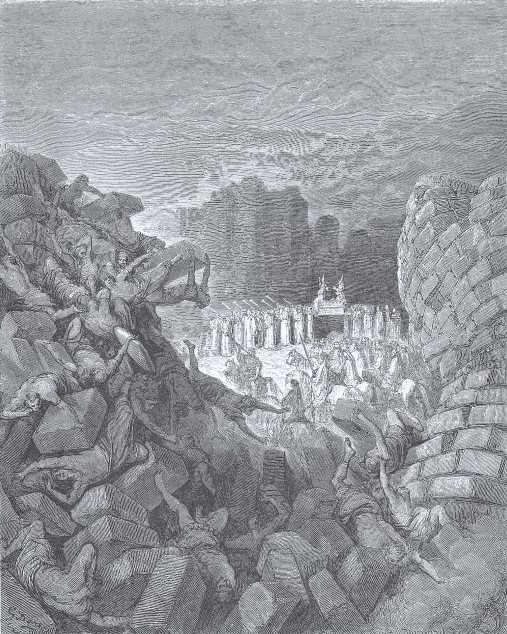



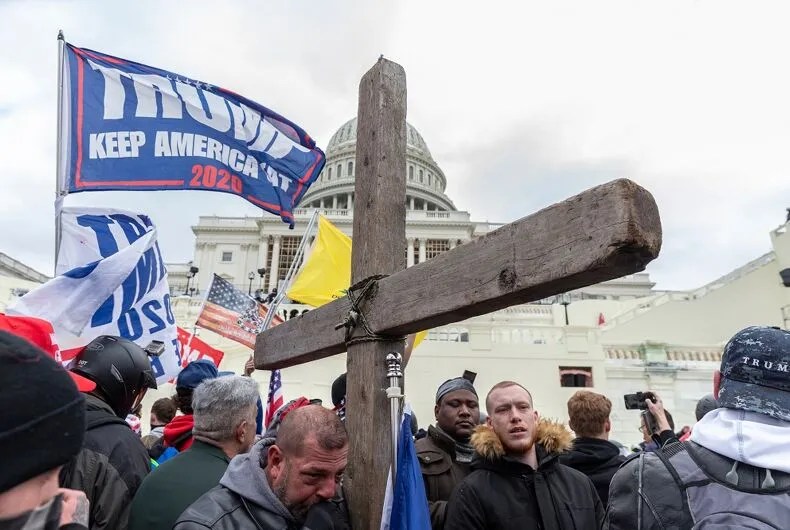

 Covenantide