I had indicated in my write-up on the PCA’s 49th General Assembly that I wanted to separately address Overture 26, the Overture proposed by Potomac Presbytery opposing political violence. My basic criticisms are twofold: 1) that I think the situation prompting the drafting of the Overture lent itself well to a rediscovery and restatement of the doctrine of the Spirituality of the Church, but Overture as written missed to opportunity to do that; and 2) there were more specific issues with how the Overture was written that undercut its potential effectiveness. To make the case for the first point, it is necessary to lay out my understanding of the Spirituality of the Church and that is the purpose of the essay attached to this blog post.
The Spirituality Doctrine of the Church can be found in the Westminster Confession of Faith 31.5:
“Synods and councils are to handle, or conclude, nothing, but that which is ecclesiastical: and are not to intermeddle with civil affairs which concern the commonwealth; unless by way of humble petition, in cases extraordinary; or by way of advice, for satisfaction of conscience, if they be thereunto required by the civil magistrate.“
The doctrine has at times been used historically to push a quietist agenda to preempt and prohibit the church from speaking on hot political issues such as slavery or the Civil Rights movement, but this these things have been a misuse. Properly understood, the Spirituality Doctrine means that the Church can only speak as far as Scripture itself speaks. Thus, the Church can speak to the moral aspects of contemporary issues, but it would be beyond the authority of the Church to speak to specific proposals for resolving political disputes. The Spirituality Doctrine is important for the Church in keeping its mission focus and protecting its institutional integrity amidst a politicized environment. This was important during the Civil War, but the positive and negative lessons from that experience have tremendous significance for us today, as we navigate a similarly politicized environment. The attached essay lays out in greater detail was the doctrine is and what this means for us today.
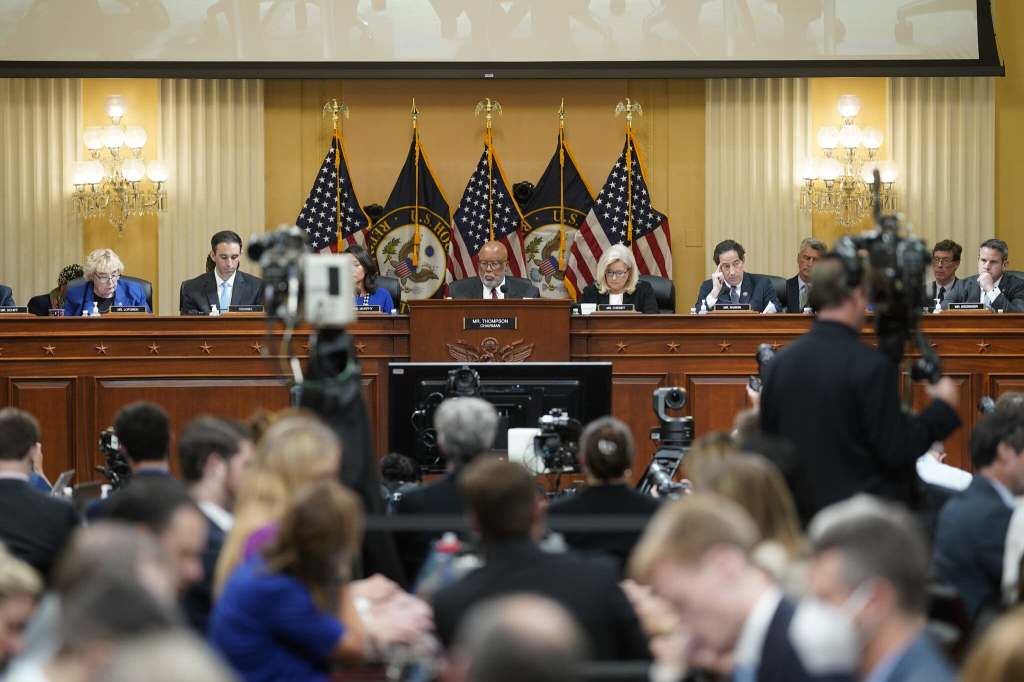
In coming back from General Assembly, I not only came back with several new friends and contacts, several books, and a lot of paper, I also with a case of COVID. So, in my period of isolation I ended up binge watching–what else?–the January 6 hearings on the riot at the Capitol. Someone (I cannot remember where) said tongue-in-cheek that January 6 hearings are the surprise hit TV series of the summer. Actually, I would agree with that. They are compelling in terms of the testimony, evidence, and the narrative that they present. All citizens, regardless of their political persuasion, should watch the hearings so as to be informed firsthand, rather than outsourcing their opinions to Newsmax or MSNBC (either of which is effectively abdicating critical thinking altogether, but that is another story). At a later point, I may offer up commentary on the hearings, but I will probably wait until later in the summer or even the fall to do that.
House Vote Regarding Bill Clinton’s Impeachment, 1999
Listening to the hearings, however, again brought to the fore how much government service is a public trust, and that reminded me of an essay that I wrote back in 1999 reflecting on the Monica Lewinsky scandal and the impeachment of President Bill Clinton. For me, writing essays are a way of organizing my thoughts and thinking through an issue. It is, admittedly, the antithesis of the Twitter universe, and I know full well that most people would rather read a 140-character tweet than a 15-page essay. Still, the essay format helps me think and I’m happy to share my essays with you, my dear readers, in the event that they may be useful to you as well. I’ll also post this essay on the Essays page of this blog for ease of reference. If this essay is not useful to you, well… you will always have Twitter.
During the Lewinsky scandal and the Clinton impeachment I was living overseas, so I watched that drama unfold from afar. A colleague of mine at the Embassy was a self-described liberal Democrat and I at the time was a self-described conservative Republican. Both of us, interestingly, were outraged at Clinton’s behavior for similar reasons: it was a betrayal of the public trust. We both decided to write private essays on the issue to process the situation; attached is mine. I processed the Clinton episode through the example of David’s sin with Bathsheba and the political consequences which flowed from that. Such abuses of the public trust foster an environment of cynicism which can be toxic for self-government. Rereading this after not having looked at it for years, most of what I wrote here has sadly held up well over time, not only about the Clinton scandal, but in terms of the deleterious effects our political culture would have on our political stability.
I have reformatted this from what I had earlier, done some proofreading and made a couple of minor updates, but by and large this is what I wrote in February 1999, after Clinton’s acquittal.
If we want to keep Jesus as the reason for the season, then maybe it would be best if we dropped the gift-giving associated with Christmas.
Years ago, I joined a very conservative Presbyterian church that in many ways was a blessing to me and helped to shape a lot of my understanding of what the church is to be. Nevertheless, they did one thing that I thought was totally weird at the time: they did not celebrate Christmas. Or Easter. Or for that matter, any holy day except for the weekly Sabbath. In this, they were following the rationale of the 17th century Puritans and later, American Old School Presbyterians like Samuel Miller, that saw no biblical command for observing the purported day of Christ’s birth. I had never heard of anyone not celebrating Christmas and my experience in this church moved me to research the issue.
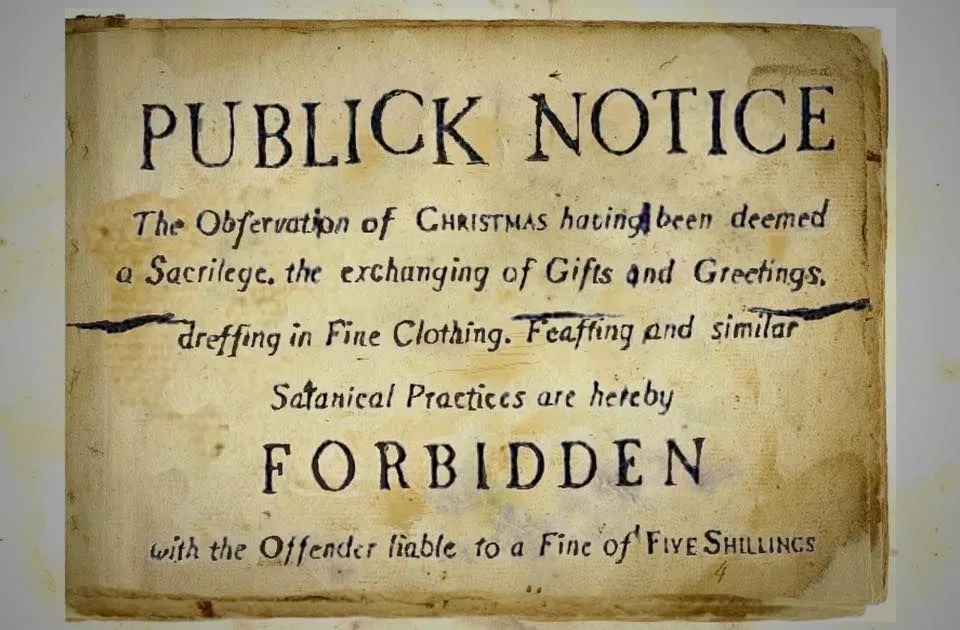
Few things have done more to solidify the reputation of the Puritans as dour killjoys than their non-observance of—nay, even legally banning—Christmas. The Westminster Assembly, which met from 1643 until 1647 and which produced the Westminster Confession of Faith and the Shorter and Larger Catechisms, confronted this issue in December 1643 when they had to decide whether or not to suspend deliberations on Christmas to allow for worship and preaching. They decided to go ahead with Christmas observances at that time, given popular sentiment, but when they produced the Directory of Public Worship in 1644 they indicated in an appendix that holy days other than the Sabbath were not to be observed. Since the Westminster Assembly was technically only an ecclesiastical advisory body to Parliament, the abolishment of Christmas observances officially came in 1647, when Parliament passed laws requiring businesses to stay open and penalizing those that closed for Christmas. Those laws remained on the books in England until 1660, when the Restoration Parliament rescinded all the laws Parliament passed going back to the beginning of the English Civil War in 1640. In New England, the Massachusetts Bay Colony passed a law in 1659 banning the observance of Christmas and that stayed in effect until the crown’s governor repealed it in 1681.
Public Notice on the Ban of Christmas
The Puritans’ reasons for such bans are more complicated contextually than the critics’ caricatures make them out to be and it is beyond the focus of this blog post to go into much explanation now. I’ll save that for another time. For the moment, I will note two things in favor of the Puritans.
First, there were reacting to the fact that Christmas, by that point in time, had become largely an excuse for big-time partying, with little connection to Christ or Christianity. Consider a modern-day equivalent in Mardi Gras. Technically, Mardi Gras is a commemoration of Shrove Tuesday, that is, the last day before Ash Wednesday, which begins the Lenten fast. Observant Roman Catholics would clean their house of foods that were prohibited during Lent and make a little celebration of it before the weeks of austerity imposed by Lent. How much of that religiosity do you typically see in modern Mardi Gras celebrations? I mean, seriously? It is pretty clear that Mardi Gras is, for all intents and purposes, a pagan holiday. The Puritans in their day faced a similar situation with Christmas.
Second, England at the time of the Puritans still had an established church, unlike the situation in modern-day America. What that meant is that the observance or non-observance of Christmas, Easter, or even the Sabbath was not a matter of personal conscience; it was mandated and enforced by the state. Thus, shopkeepers were forced to close their stores, turn away business, go to church services, and, facing cultural pressures, expend a fair amount of money in Christmas “celebrations”—and failure to do so would result in social ostracization and possibly even in civil fines. Thus, for the Puritans to say that there was no biblical warrant for such holidays and so observance is not required, one can see how that position might actually be popular with some people. In our own day, we see pretty clearly the backlash against forced store closures (in this case, because of mask restrictions and social distancing requirements), so it should not be a totally alien matter even for us.
Although the Puritan restrictions were repealed by 1690 in both England and America, observance of Christmas did not return to the status quo that existed prior to the English Civil War, and in practice it was fairly muted, if observed at all, for the better part of a century. This low regard for Christmas among some Americans is one reason, for example, that during the American War for Independence, George Washington was able to secure the victory that he did in the Battle of Trenton. For the New England militias that made up Washington’s fledgling army, December 25th was just another day; for the Hessian mercenaries encamped at Trenton, it was Christmas and they were largely resting (or recovering) from Christmas Eve celebrations the night before. Thus, it was a complete surprise for them to be attacked by the Americans on Christmas Day.
After the Revolution, however, American interest in celebrating Christmas picked up as part of the emerging Romantic sensibilities of the age. One of the earliest popularizers of such celebration was the New York writer, Washington Irving, in his book, The Sketchbook of Geoffrey Crayon. Irving’s book was a travelogue of a trip he took to Britain in about 1822, and he had a lengthy section in it in which he recounts a festive celebration of the holiday, contrasted with a tedious Christmas Day church service. Irving’s account of a convivial observance of the season seemed to capture at least some imaginations back in his native New York, since a few years later Presbyterian minister and Princeton Seminary professor Samuel Miller felt compelled to write a tract in 1825 defending Presbyterian non-observance of Christmas. It made little headway. Embrace of a sentimentalized Christmas grew over the years and was particularly crystalized by Charles Dickens’ Christmas Carol in 1848. While Christmas was ostensibly intended to observe the Nativity of Christ, in practice, thanks to Irving, Dickens, and others, Christ became increasingly less important to Christmas than an ephemeral “Christmas spirit.” Much of the “traditions” that we now associate with Christmas actually date back to the mid-nineteenth century. What is less well known but equally as true is that much of the commercialization that we now lament about the Christmas season in our own day dates back to the same period. Christmas is only tangentially related to Christ and that has been true for a long time.
The Puritan effort to ban Christmas outright failed, but the Puritans were right to ask the question of whether this is really honoring to the Lord or even good for ourselves. The background music in the stores may be playing “It’s the most wonderful time of the year,” but the reality for so many people is that the season is frenetically busy and undeniably stressful. We try to buy our way to some “magical Christmas moment,” only to find it to be fleeting and unfulfilling. Indeed, the consumerist liturgy of the season drives an untenable dichotomy between what we have been told we should expect of Christmas and the reality of emptiness and loneliness that we experience in rare moments of quietness. It is an untenable dichotomy because the more emptiness we feel, the more we seek to fill that gap with more gifts and sentimentality, which cannot really fulfill, thereby only widening the gap further.
I do not see this idea of a culturally consumerist liturgy surrounding Christmas as merely a rhetorical turn of phrase. James K. A. Smith, in his book, You Are What You Love, talks about the power of cultural liturgies to shape the cycles and rhythms of our lives, our habits, our expectations, our loves and our hopes. I believe that in the case of Christmas, we are inculcated into this consumerist liturgy from our earliest years. Santa Claus is all about gift-giving and every kid knows that the volume and quality of the gifts they get at Christmas far and away exceeds that which they get at any other time of the year, including on their own birthdays. And it is the gift-giving that drives much of the season, starting with Black Friday sales in November and continuing throughout December. The smarmy sentimentality of television programming through the season tries to soften the stark edge of rank consumerism, while at the same time feeding the narrative that gifts will make you happy. And the consumerist liturgy is inclusive: it does not matter what you actually believe about Jesus as long as you are out spending your money. Jesus, ironically, is incidental to the holiday that bears His name and is purportedly for His honor.
So, what should be done? It is not enough to make a nod to Jesus as the “reason for the season” through an occasional reference or prayer. That only puts a “Christian” gloss on things, without fundamentally changing the consumerist liturgy dominating our thoughts and actions. Rather, one has to break the liturgy more fundamentally and overwrite it with a different liturgy. A key way this can be done is to push any gift-giving away from Christmas to New Year’s, so as to sever the connection between Christmas and gifts; New Year’s, after all, has no particularly Christian connotations. We should make Christmas again a religious holiday, observing it with Christmas Eve services at church and family worship on Christmas day proper. This could seem like it will make Christmas boring—and that is precisely the point. It is in the ordinariness of worship that real significance of Christmas can be most clearly seen. The Incarnation of Christ was part of His humiliation, not His exaltation, an emptying rather than a glorification. But it is in that divine condescension that we have a more intangible yet far more real and significant gift, communion with Christ, God with us. Let’s celebrate that, rather than what is under some evergreen tree.
I started my previous posting with the observation by Jonah Goldberg back in April about how in the midst of this COVID-19 pandemic we are not hearing much talk of this being a “judgment of God.” In that posting, I laid out my thoughts in general on how we are to view the sovereignty and activity of God in the midst of moral evil and natural woe, but here I want to come back to the specific question as to whether what we are seeing now reflects God exercising judgment on the United States and even the world at this time. This question has nagged me for the last six months. Consider the following:
As of mid-October, there has been about 37 million reported cases of COVID-19 worldwide, with the United States having the most reported cases, nearly 7.7 million. The United States also leads in reported deaths, with about 214,000 deaths out of roughly 1,070,000 worldwide.[i] That is, about 1 in 5 COVID-19 cases and deaths worldwide are American. We have exceeded in absolute numbers the number of cases and deaths in India, which has four times more people and lower quality health care.
American media, being largely indifferent to what happens outside the United States, have not really focused all that much on the fact that the largest locust plague in literally decades has hit East Africa, the Arabian Peninsula and parts of India and Pakistan this year. The UN’s Food and Agricultural Organization estimates that a second generation of locusts this year would likely result in acute food shortages in East Africa for up to 25 million people, with another possible 25 million experiencing food insecurity.[ii]
Locusts Over Kenya, 2020
The longest economic expansion in American history (2009-20) ended in March, with a drop in real GDP of 31.7 percent by the end of the second quarter of this year. Unemployment reached 15 percent in the spring, dropping back to a “mere” 7.9 percent by September, with 12.6 million people unemployed. This is the second largest level of unemployment in US history since the Great Depression of the 1930s, and the economic situation is the worse it has been since 1982.[iii][iv]
As of September, this year’s Atlantic hurricane season is rivaling that of 2005, which was the most active on record and the year when Hurricane Katrina hit. Although storms this year have not been as intense as those in 2005, this year has already seen 25 storms, and this season may surpass the 2005 record, since the 2005 season did not reach that number of storms until October 22 of that year. These storms are caused in part by at or near record-setting sea surface temperatures.[v]
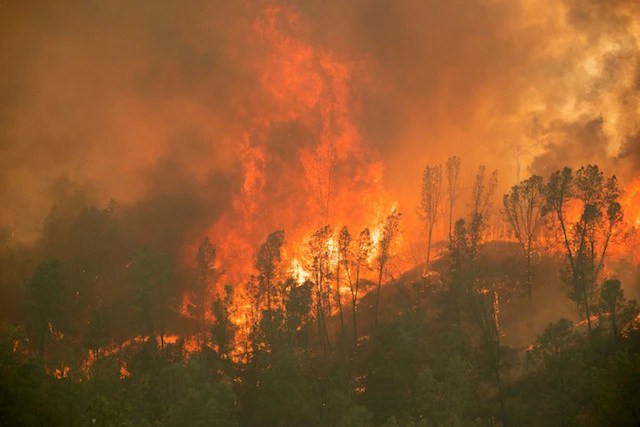
As of mid-October, wildfires in California have burned 4.04 million acres, the largest ever on record, and of the state’s top 20 largest wildfires historically, six were in August and September of this year, including the largest wildfire ever. This fire season surpasses the “Big Blowup of 1910,” which was so destructive that it changed the way that the U.S. fought wildfires for the better part of a century. Smoke from the fires in California, Oregon, and Washington State was so bad that it created haze on the East Coast of the United States.[vi][vii]
And all of this is independent of the fact that the U.S. now faces the deepest political divisions in at least 50 years. We started the year with impeachment proceedings against the President, and partisanship has only deepened since then. Daily protests against racial injustice across the country are stretching now into months, and commentators are talking about a “cold civil war” to engulf the nation after November regardless of the outcome of the elections.
The list could go on. In ordinary conversations we talk about 2020 as a wild or crazy year; one could even crassly call it a “dumpster fire.” What is undeniable is that the scale, scope, and convergence of the problems we now face is well out of the ordinary. If we truly believe what we profess as Christians that God is sovereign and is actively involved in the affairs of mankind, then the conclusion is inescapable that these things coming to pass is a result of His will. It is not simply that God permits them to happen. In His exercise of common grace toward all people, God sustains the world as we know it and constrains the exercise of moral evil and natural woe within certain boundaries so as to enable His Gospel to go forth to the peoples. What we are seeing now represents a loosening of that sustenance and of those restraints. This could only come about because either his sovereignty and power are weakening—an unbiblical notion that assumes that God is less than God and that chaos, not God is behind all things—or because it is His will for it to happen. Yet, to reiterate what Goldberg pointed out, few—including Christians—are really talking about any of this being a judgment from God. By contrast, when the last wave of the bubonic plague hit London between 1665-66 and the Great Fire gutted central parts of the city in 1666, pastors and theologians warned their congregants that these things were a judgment from God. When we experience greater things on a national, transnational, and global scale, we get breezy articles in magazines and newspapers about how celebrities are finding “meaning” in the pandemic through vaguely spiritual platitudes. Even conservative pastors and theologians today are going out of their way to dampen down the notion that these things represent any kind of judgment from God.
Hurricane Laura Aftermath, August 2020
Why are we so dismissive of the idea of God’s judgment?
Part of the reason, no doubt, is the penchant for religious leaders to invoke “God’s judgment” to moralistically whip particular hobby horses. In the immediate aftermath of 9/11, for example, Jerry Falwell Sr. and Pat Robertson said God allowed the attacks to happen because of abortion, homosexuality, secularism, and judicial activism in the United States, remarks that they quickly backed away from after incurring political backlash.[viii] The theological problem with their perspective was in seeing how one got to the effect (i.e., the attacks) from the purported cause (i.e., abortion, homosexuality, etc.). If “God’s judgment” requires a logical leap to see, then something is probably wrong with that reasoning. Nevertheless, poor reasoning by some pastors and theologians does not negate the possibility of God exercising judgment on people: God Himself promised to bring judgments against His people for turning away from Him (Lev. ch. 26, Deut. 28:15-68) and he executed such judgments against them by sending them into Exile. The writer of the Book of Hebrews also speaks of God disciplining His children with painful suffering (Heb. 12:5-6, quoting Prov. 3:11-12, cf. Rev. 3:19). God’s ultimate judgments thus far in history, of course, are the Flood and the Cross.
Reacting against simplistic correlations like what Falwell and Robertson made after 9/11, many theologians point to the fact that there is much unmerited suffering in the world and the Lord even told us to expect as much. There is truth in this observation, to be sure. Scripturally, one can point to Job, to the Lord’s statement about the Galileans who were executed by Pilate or on whom the tower of Siloam fell (Luke 13:1-5), as well as to the man born blind from birth (John 9:1-3ff). Theologians rightly note that the existence of such unmerited suffering means we should be cautious about declaring something to be “God’s judgment.” That said, it must be pointed out that all these examples are ones of suffering by individuals or small groups. If whole societies and nations are facing a convergence of pandemic, natural disasters, economic depression, and increased political strife, then does it not stand to reason that something a little more than individual misfortune is going on here? The question has to be asked that if those things do not constitute some kind of judgment from God, then what would? I am at a loss to describe what that could be.
I think the deeper issue in why we tend to be so dismissive of the idea that we could be experiencing God’s judgment is that, regardless of what many people may formally confess religiously, even as Christians, they more often than not act as functional atheists. Take, for example, House Speaker Nancy Pelosi’s remark to MSNBC on September 10 regarding the wildfires: “Mother Earth is angry. She’s telling us — whether she’s telling us with hurricanes on the Gulf Coast, fires in the West, whatever it is … that the climate crisis is real and has an impact.”[ix] The statement is foolish: she speaks as if creation is personified when it is not at all a sentient entity. “Mother Nature” no more exists than the Tooth Fairy, and as a professing Roman Catholic Pelosi should know this. God exists, however, He may well be angry. But in this case, He has been written out of the equation.
Pelosi’s reference to climate change implicitly points to another reason we dismiss the notion of God’s judgment and that is that we have a “God of the Gaps” mentality. That is, we only invoke God if we cannot explain a phenomenon. Wildfires and rampant hurricanes are thus due to climate change. The coronavirus came from wet markets in Wuhan (or if you prefer discredited conspiracy theories, from bioweapons labs there). Racial issues are due to systemic racism. Political divisions are due to the incompetence and malignity of the political parties, amplified to the nth degree by social media. Because we can identify these causes, we do not need for God for a hypothesis. This also logically means that we see our salvation coming from our ability to address these causes. Scientists, sociologists, and politicians are our saviors. Climate change can be fixed by rejoining the Paris Treaty. Racial frictions can be fixed by Critical Race Theory. Economic downturn can be fixed by socialism. The political dysfunction can be fixed by electing or re-electing the political party of your preference. And with the coronavirus, our salvation comes not from God, but Regeneron, Pfizer, or Astra Zeneca. When we get the vaccine, life will return to the status quo ante. Or so we tell ourselves.
California Wildfires
And this is what worries me about our current predicament. One does not have to probe too long or too deeply to realize that these modern “gods” in whom we are putting our faith will fail. They will fail because they operate on faulty assumptions, are incomplete, self-contradictory, and/or presume a greater wisdom and ability on the part of mankind than heretofore has been shown by our species in all of recorded history. They will fail, ultimately, because in being fixated on proximate causes they ignore the deeper reality of an absolute, self-contained, Triune Creator God who is behind all things and who, working through secondary causes, controls all things and has a purpose in all that comes to pass. Too often in our churches and seminaries, we have absolved God of any notion of judgment because a God who has the authority to judge and is capable of judging does not fit the therapeutic God we want. We want our autonomy from God, and we tell ourselves that the judging God of the Bible is reflective of a primitive stage in human development, one which we moderns have now transcended by our superior knowledge and technical skills. Never mind, the fact that despite our better technology and ability to handle complexity, people are still morally the same in essence and no better than they ever have been since the Fall. As the Apostle Paul said, quoting Ps. 14, “there is none that does good, no not one” (Rom. 3:12).
The idea of God as judge suffers from caricature, not only from unbelievers but also from within the church itself. A common image is that God declares arbitrary rules and then gets angry when people do not follow them. This image seems to be beneath the dignity of a loving God, which is why it is so easy for moderns to dismiss it. But that is not a biblical understanding of God as judge. Biblically speaking, the first and foremost thing we must realize is that because God is Creator, all of creation is His domain and it is His right to judge mankind. If you were to come into my house, berate my wife, harm my cat, and destroy my furniture it would not be unfair for me to judge you and throw you out my house, even using the police if needed. Likewise, it is well within God’s power and right to judge man in His dominion. God created man to both reflect His image to creation and to lead creation in glorifying God. Man’s purpose was to be in a relational union and communion with God, but that was broken by the Fall and man’s entrance into sin. In God’s redemptive work, He calls His people to love Him with all their heart, all their soul, and all their strength (Deut. 6:5, cf. Matt. 22:37). Because communion with God Himself is man’s greatest good, anything less than loving God with all our heart, soul, and strength—especially in insisting on our autonomy from God—is no less than cosmic treason, meriting death. This is the basis for God’s judgment.
Turning back to our current situation, we may well be fundamentally misjudging the seriousness and duration of our predicament by fixating on the immediate causes and ignoring the ultimate cause, the judgment of God. Current expectations are that once we get past the elections and get a vaccine for the coronavirus, then everything will return to normal. I sincerely hope this is the case—but at the same time, I cannot help thinking that if this is from God, then it will go on long enough for God to make His point. That may well be a lot longer than anyone would care for. To take but one example: the current search for a vaccine assumes that the virus is fairly stable, more like SARS than the regular flu, and that vaccination would provide immunity for an extended period of time. But if the virus begins to mutate at a rate like the regular flu and/or if immunity is only for a short duration of time, say only for six months, then we could be dealing with the pandemic for quite some time. And God controls those variables. In the Book of Acts, the respected Pharisee Gamaliel told his compatriots regarding the testimony of the Apostles that “if this plan or this work is of men, it will come to nothing; but if it is of God, you cannot overthrow it—lest you even be found to fight against God” (Acts 5:38-39). Though Gamaliel was not a Christian, it behooves us to heed his wisdom even today. If these things are from God, then we are fools to think they are merely temporary inconveniences that we can overcome by our own efforts.
What, then, is the purpose of God in all this? The common thread in the disasters we are now experiencing is that God exists and only He controls the circumstances we face. As such, it follows that people should rightly fear and revere Him. Christians and non-Christians alike are not doing that. The Apostle Paul, writing to the Romans, aptly observed that, “the wrath of God is revealed from heaven against all ungodliness and unrighteousness of men, who suppress the truth in unrighteousness, because what may be known of God is manifest in them, for God has shown it to them. For since the creation of the world His invisible attributes are clearly seen, being understood by the things that are made, even His eternal power and Godhead, so that they are without excuse, because, although they knew God, they did not glorify Him as God, nor were thankful, but became futile in their thoughts, and their foolish hearts were darkened” (Rom. 1:18-21). In the woes we have been experiencing, God displays His eternal power and deity. To whom? It would be easy to conclude that He only does this to unbelievers, but Paul speaks of those who although they knew God, did not glorify Him nor were thankful to Him. This description fits unbelievers as well as many believers. Christians are often quick to point out the sins of unbelievers. We want to believe that it is those who support abortion or homosexuality or the encroachment of the state whom God will judge. It is the Sins of Other People. Insofar as we reflect on our own sins, we often come up with things like we did not do enough to defend life or to uphold traditional marriage; they are sins of omission, more so than of commission. To be sure, God will not let the sins of others pass unjudged, but we forget that God calls upon His people to be holy as He is holy (1 Peter 3:16 cf. Lev. 11:44), and the LORD is zealous for the honor of His name. It is worth recalling that when David confessed his sin with Bathsheba, the prophet Nathan, under the inspiration of the LORD, pronounced God’s forgiveness and added this coda: “However, because by this deed [David’s adultery and murder] you have given great occasion to the enemies of the LORD to blaspheme, the child also who is born to you shall surely die” (2 Sam. 12:14). And the child did die. God does not mess around. Can we as those who bear the name of Christ say that we as a people have not given the enemies of God cause to blaspheme His name? Can we personally say we have sought to be holy before God? Many churches say that “Grace Changes Everything” but all too often this simply becomes a limited view of God and a way of excusing a lack of change in our lives.
According to Scripture, God’s judgment does not begin with the unbelievers, but with the believers. The Apostle Peter said in his first letter that, “the time has come for judgment to begin at the house of God; and if it begins with us first, what will be the end of those who do not obey the gospel of God?” (1 Pet. 4:17). This certainly was the case with Jonah. When Jonah sought to flee from the LORD because he hated his Assyrian enemies so much that he preferred to flee rather than preach the fear of God to them, God brought a great storm against the ship Jonah was on. The storm affected everyone on board, both Jonah and the pagan crewmembers, but God’s purpose was aimed squarely at Jonah (Jon. 1:1-16). The pagans feared Jonah’s God, but Jonah himself was so hard-hearted that he preferred to die rather than give a gospel to the denizens of Nineveh. He did not count on God using a large sea creature to swallow him up and thereby give him time to rethink his hard-heartedness.
God is calling all people, Christian and non-Christian alike, to acknowledge their sins, to repent, and to fear Him. Christ Himself said, “Do not be afraid of those who kill the body, and after that have no more that they can do. But I will show you whom you should fear: Fear Him who, after He has killed, has power to cast into hell; yes, I say to you, fear Him!” (Luke 12:4-5). Hell is a concept that Christians have been strenuously trying to remove from their theological vocabulary, but no one in Scripture talks more about Hell than Christ Himself. Hell displays the righteousness, holiness, and true justice of God. We want to think of God as love, and He is, but He is not reducible to merely that. God’s love is perfect, but so also is God’s justice and His wrath. God pronounced His name to Moses saying, “The LORD, the LORD God, merciful and gracious, longsuffering, and abounding in goodness and truth, keeping mercy for thousands, forgiving iniquity and transgression and sin, by no means clearing the guilty, visiting the iniquity of the fathers upon the children and the children’s children to the third and fourth generation” (Exod. 34:6-7). God is indeed longsuffering, but that does not mean He will not act to uphold His name and advance His kingdom. Only in repenting and accepting the mediatorial and atoning work of Christ does anyone avert this eternal judgment of God. And for Christians, we must examine ourselves, repent of our sins against God and return to Him. He will humble the proud but be with the broken and contrite (Ps. 31:23, Isa. 57:15).






 Covenantide