
Many who have encountered covenant theology quickly and intuitively recognize that this approach to Scripture has tremendous explanatory power. It reveals the progressive unfolding of the Old and New Testaments, while still providing a unifying coherence to the totality of Scripture, and it does so in a way that keeps the LORD at the center of the narrative. To me, as one who has been a practitioner in the field of international relations, the fact that the covenants were rooted in ancient Near Eastern diplomacy reinforced the historicity and truthfulness of the Bible. Scripture is not human reflections upon the divine in the abstract, but the Almighty God working in real history, working in real space and time, to bring about the redemption of a people He has graciously chosen for Himself from all eternity. And yet, as I have grappled with covenant theology over the years, two issues have stood out for me in terms of how theologians have tended to treat the topic: first, the definition of “covenant” tends to be inconsistent, oversimplified, and malleable; and, second, after making a passing nod to the ancient Near Eastern context, scholars often fail to draw out the significance of that milieu for what God is saying to His people through the covenants. This essay is an attempt to address those issues, not with the goal of giving yet another overview of covenant theology, but rather to provide sufficient background to make covenant theology clearer readers of Scripture.
Category: Reading Scripture Covenantally
-
The Centrality of the Covenant
Reading Scripture Covenantally (Lesson 2)
The previous lesson introduced the need to reading Scripture holistically highlighting how in Luke 24 our Lord Jesus Christ taught His disciples that all Scripture points to Himself. We concluded that lesson by positing that the most organic and best way to see Christ in all of Scripture is covenant theology. We will now begin to draw out what that means, looking first at how a covenantal reading brings the Old and New Testaments together, and then examining what a covenant is and how that structures our understanding of Scripture.
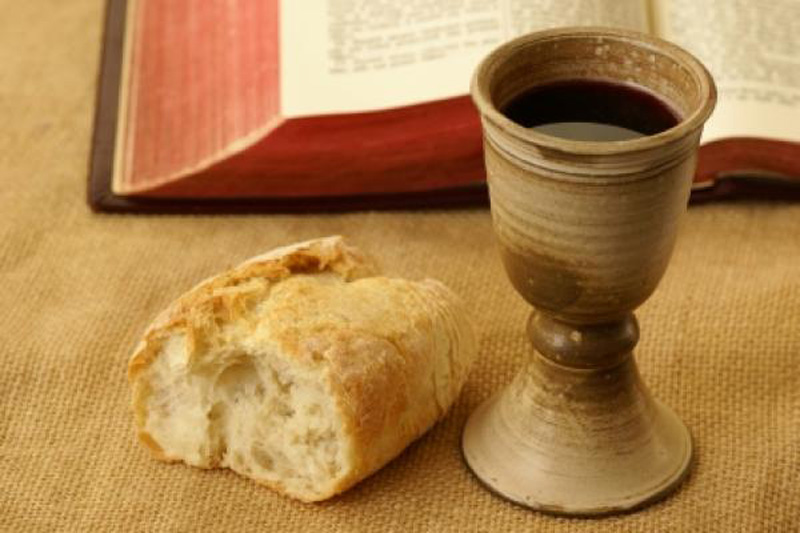
The best place to see how God’s covenants bring Scripture together is in our Lord’s institution of the Last Supper. Luke records that on the night on which He was betrayed, Jesus took some of the unleavened bread set aside earlier that evening and spoke to His disciples the words of institution: “And he took bread, and gave thanks, and brake it, and gave unto them, saying, This is my body which is given for you: this do in remembrance of me.” And then, “This cup is the new testament [covenant] in my blood, which is shed for you[1]” (Luke 22:19-20). The words would have been freighted with meaning for his disciples, but to see this we need to look at the broader context of what was going on.
Jesus’s disciples almost certainly were emotionally exhausted in the week prior to the Last Supper, having gone from excitement to euphoria to bewilderment. Six days prior they were in Bethany, just outside Jerusalem, at the home of their friends Martha, Mary, and Lazarus (John 12:1-8). Weeks earlier, the disciples were amazed to see Jesus raise Lazarus from the dead. Unlike other instances when Jesus raised people from the dead, Lazarus had not been dead only briefly; he had been dead and in the burial tomb for four days. To raise him under such circumstances was a clear manifestation of divine power. When the disciples had dinner with the family, however, it was as if Lazarus had never died. He was a living miracle. So grateful was his sister Mary that she opened a jar of expensive perfume and anointed Jesus’s feet with it, wiping them with her hair. Lazarus’s resurrection confirmed what Peter confessed months earlier, that Jesus was the Messiah, that is, the Christ (Matt. 16:16).
Jesus’s resurrection of Lazarus was the most recent—and perhaps most famous—episode that had garnered public attention. As the Apostle John records, once Jesus’s presence in the town became known, many Jews wanted to come by the house, not only to glimpse Him but to see the resurrected Lazarus (John 12:9). Unsurprisingly, when Jesus entered Jerusalem on the first day of the week, the throngs of people that massed in the city for the upcoming Feast of Unleavened Bread treated Him as a conquering king. They praised Him as He rode in on a donkey like royalty prophesied of old (Matt. 21:5), and bowed before Him, spreading out their cloaks as a sign of homage (Matt. 21:8-11, Mark 11:8-10, Luke 19:36-38). To many, He would have seemed to be the promised Messiah, now come to assume His rightful position of authority.
This authority was reinforced on Tuesday of that week in His confrontation with the religious leaders in the Temple. Jesus showed Himself to be shrewd and spoke with an authority that astonished the ordinary people and infuriated the leaders (Matt. 22:33). It is no wonder, then, that the disciples had the sense they were fast approaching the moment when Jesus would finally fulfill the prophecies of old regarding the eschatological restoration of God’s people.
This sense of expectation probably was behind the disciples’ comment as they exited the Temple that Tuesday afternoon regarding the beauty of the Temple. This was not the casual comment of country rustics who were in the big city for the first time. As adult Jewish men, the disciples almost certainly had been in Jerusalem before for observance of the national festivals and no doubt saw Herod’s Temple previously. No, now the disciples expected they were approaching the time in which the Lord would begin His march to power, expel the Roman occupiers, overthrow Herod, and restore justice and righteousness to Israel. They expected that as Jesus came into power, they too would come into power with Him. Like the Maccabees nearly 200 years before, who had regained Israel’s independence in a revolt against the Greek Seleucids, Jesus’s disciples expected that when they came into power, they would restore true worship in the Temple. Herod was a half-breed and not a true Jew—but he did build an impressive Temple, if only in a failed effort to ingratiate himself with the Jews. In pointing out the beauty of the building to Jesus, the disciples indicated they expected to repeat the Maccabean pattern of restoring what they understood to be true Temple worship when they all came into power.
And then Jesus told them the building would be destroyed, and no stone would be left upon stone (Matt. 24:2, Mark 13:2, Luke 19:44).
The disciples had to have been shocked and confused. Instead of returning immediately to Bethany, where they had been staying, Jesus and His disciples went just outside Jerusalem and rested on the Mount of Olives. With the afternoon sun setting behind the Temple, Peter, Andrew, James and John privately approached Jesus and asked “…When shall these things be? And what shall be the sign of thy coming, and of the end of the age?” (Matt. 24:3, cf. Mark 13:4). Their expectation and confusion was manifest. They clearly thought Jesus was going to establish His kingdom imminently and render Final Judgment on the peoples, but His words brought that idea into doubt. His answer, which we now call the Olivet Discourse, gives the sense that such a coming with power and glory was to be some time off. How far off was not clear. Despite Jesus’s words, the disciples a couple of days later still clung to the expectation they would soon come into glory, as evidenced by the argument they got into during the Passover meal over which of them was the greatest (Luke 22:24-30). It is this sense that things were moving to a climax, that long-held hopes were finally to be fulfilled, which made that particular celebration of the Passover pregnant with anticipation. And the covenant God had with His people was at the center of all these hopes.
The Last Supper was a Passover Seder,[2] which Jesus long desired to share with His disciples (Luke 22:15). Typically the head of household would serve as host during the dinner, and as host that evening Jesus led His disciples through the Paschal liturgy. At its heart, the Passover Seder was the occasion to remember the preeminent event in all of Israel’s history: when the Lord delivered Israel from bondage in Egypt nearly a millennium and a half earlier. The Lord chose Abraham to be the patriarch of the people He was dedicating to Himself, and confirmed by way of covenant His promises of making Abraham into a great nation and bringing His people into a land of their own (Gen. 12:1-3). Those promises were the ground for the Exodus. After the Exodus, the Lord made a covenant with the entire nation, first at Sinai (Exod. chs. 20-24), then again on the plains of Moab (the entire Book of Deuteronomy), just before the nation entered the Promised Land. The covenant not only reconfirmed the promises to Abraham, but went into greater detail about what the Lord expected of His people who would reflect His image to the surrounding nations. Indeed, it was in this “Mosaic” covenant that the Lord commanded the Passover be observed annually so the people would remember what their God did for them. Israel was unique among the nations of the ancient Near East in that only she had a covenant with her God. At the same time, in celebrating the Passover, however, it would have been impossible not to reflect as well on the nation’s long history of covenant-breaking. As the Lord warned in Deuteronomy, the ultimate penalty for such disloyalty was the most traumatic event in Israel’s history: the division of the country into the northern and southern kingdoms of Israel and Judah and the eventual destruction of both, with the people deported first by the Assyrian Empire and then, over 130 years later, by the Babylonian Empire.
Toward the close of the supper, Jesus filled and raised the third and penultimate cup, called the “Cup of Blessing.” To this point in the evening, everything had preceded as had for centuries with the Passover celebration. Then He did something unexpected: He took some of the unleavened bread set aside earlier that evening, and spoke to His disciples the words of institution noted earlier. The “New Covenant” that Jesus mentioned was originally prophesied by the prophet Jeremiah in Judah’s last days before the country was carried off into exile by the Babylonians (Jer. 31:31-34). Since that time the promised New Covenant held out the hope that God would permanently restore His chosen people and be with them. It was to complement the covenantal promise God made to David the King (2 Sam. 7), that the day would come in which his heir would establish his throne forever. This New Covenant was to surpass the covenant renewal which had been done under Ezra and Nehemiah, when the nation reconstituted itself after returning from the Exile. With His institution of the sacrament of His Supper, Jesus in effect told His disciples that the long-expected prophecy was to be fulfilled in His Person and in His Passion. With this simple act, He instituted a symbol by which His disciples were to remember Him until His Second Advent at the end of time. In continually reenacting this, His disciples not only would remind themselves that Jesus is the Messiah, they also would remind themselves of the Old and New Covenants.
This reference to the covenant is recorded by all of the Synoptic Gospel writers, as well as by the Apostle Paul in his first letter to the Corinthians where he too describes the institution of the Lord’s Supper. The unknown writer of the Epistle to the Hebrews, describing to his Jewish readers the culmination of all things in Christ, also talks in chapters 8 and 9 of the epistle about the superiority of the New Covenant over the Old. The concept of the covenant, then, reaches back to the earliest parts of biblical revelation, encompasses the high points of Old Testament history, and embodies the hopes of God’s people centered on Christ Jesus. For this reason, it is fair to say that the covenantal motif permeates all Scripture. It is the vehicle through which God’s redemptive purposes unfolded from beginning to end, and it parallels the progressive development of God’s relationship and presence with His people.
To read the rest of the lesson, download it below
[1] The Authorized Version (i.e., King James Version) and the New King James Version (NKJV) reflect the historic and received textual tradition, but most modern versions omit “new” in this verse, since two manuscripts do not have it. There is notable manuscript support, however, for the word both here and in the parallel passages in Matt. 26:26-28, Mark 14:22-26, and 1 Cor. 11:23-25.
[2] The Synoptic Gospels (Matthew, Mark and Luke) give the impression that it was, while the Gospel of John gives a seemingly contrary impression, that the meal took place on the day before the Passover. Alfred Edersheim, in his book, The Temple, Its Ministry and Services (Peabody MA: Hendrickson, 1994), 311-318, argues from a close examination of all the Gospels that the Last Supper was indeed a Passover Seder and there is not a contradiction between the Synoptics and the Gospel of John. The description here follows Edersheim’s reconstruction, 180-196.
 Covenantide