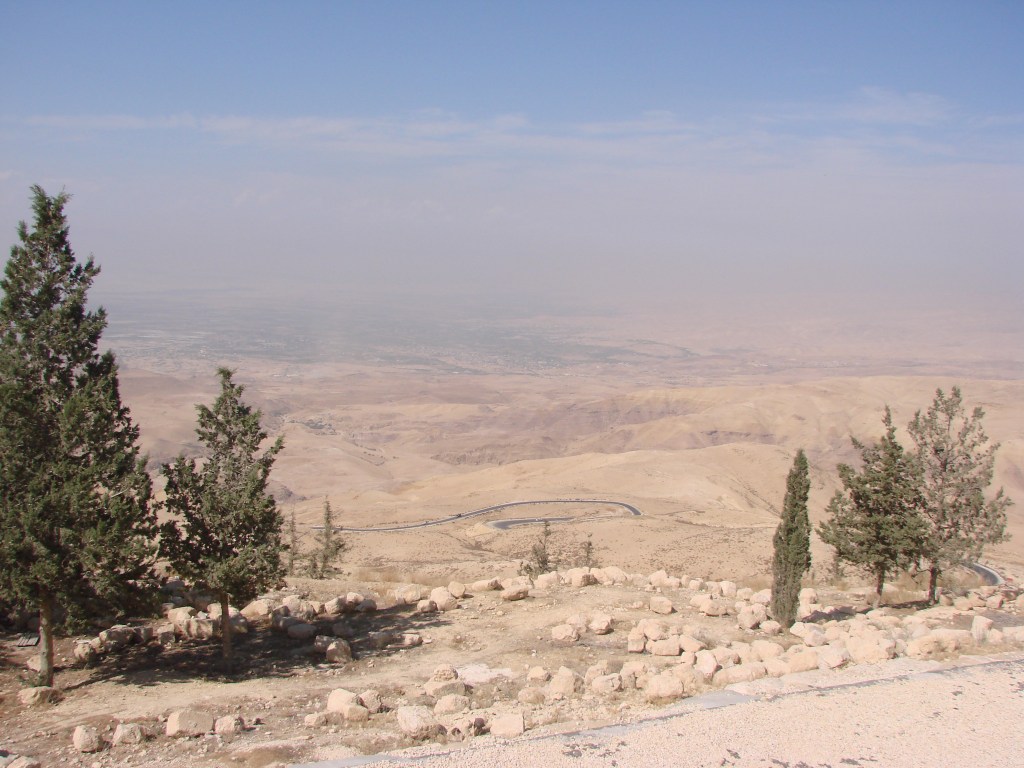
In the last two posts I started a series on Reading Scripture Covenantally to help people better understand how Scripture fits together and should be understood as whole. In the first post, I described what covenants were in the ancient Near East and how the covenantal motif provides unity to Scripture across all the different books and genres. I also noted how, using conservative dating assumptions, there are seven revelatory dispensations in which God’s revelation was produced over time. In the second post, I focused on the first revelatory dispensation, the period of Covenantal Foundations from 1450-1365 BC, in which Moses wrote Genesis, Exodus, Leviticus, Numbers, and Deuteronomy, and Joshua wrote the book bearing his name. In both posts, I highlighted the importance of the Book of Deuteronomy. In the Scripture lectionary that is integral to this site, one reads through Deuteronomy once every year because it is so important to understanding the rest of Scripture. What I want to do now, starting with this post, is blog through the Book of Deuteronomy, since while the Book is vitally important, it is admittedly not easy to read. I will come back to the Reading Scripture Covenantally series at a later point. My goal is to be more regular in posting, having a posting every two weeks, and Lord willing, weekly.
Why should you read Deuteronomy? The book is not exactly on the top of most lists for Bible study although it probably should be. In the arc of biblical redemptive history, Deuteronomy plays a pivotal role. It is the capstone of the Pentateuch; it is the foundation of the rest of the Old Testament, and it, along with the Psalms, is one of the most quoted Old Testament books in the New Testament. This alone should earn for the book more attention than it usually receives.
The importance of the book is vividly illustrated in an incident late in Judah’s history, near the end of its existence as an independent country. King Josiah, the last of Judah’s good kings, began a restoration of true worship in the eighth year of his reign, purging the high places scattered around the country, destroying the images and altars devoted to other gods, and even killing false priests. This religious restoration also included repairing the Temple in Jerusalem. Ten years into this restoration Josiah sent his servant Shaphan to the Temple for what should have been a fairly routine mission to disburse the monies collected for Temple repairs and do an accounting of the money already provided. While there, however, the high priest Hilkiah informs him of a discovery he made in the course of repairs and cleaning up the Temple:
8 And Hilkiah the high priest said unto Shaphan the scribe, I have found the book of the law in the house of the Lord. And Hilkiah gave the book to Shaphan, and he read it. 9 And Shaphan the scribe came to the king, and brought the king word again, and said, Thy servants have gathered the money that was found in the house, and have delivered it into the hand of them that do the work, that have the oversight of the house of the Lord. 10 And Shaphan the scribe shewed the king, saying, Hilkiah the priest hath delivered me a book. And Shaphan read it before the king. 11 And it came to pass, when the king had heard the words of the book of the law, that he rent his clothes. 12 And the king commanded Hilkiah the priest, and Ahikam the son of Shaphan, and Achbor the son of Michaiah, and Shaphan the scribe, and Asahiah a servant of the king’s, saying, 13 Go ye, inquire of the Lord for me, and for the people, and for all Judah, concerning the words of this book that is found: for great is the wrath of the Lord that is kindled against us, because our fathers have not hearkened unto the words of this book, to do according unto all that which is written concerning us. (2 Kings 22:8-13)
The “Book of the Law” Hilkiah found, of course, was Deuteronomy, which functioned as the constitution for God’s people. The tragedy of this scene is that the book that was foundational to the theocracy and should have been at the center of national life had been forgotten in the very place where it should have been most prominent, that is, in the Temple. Deuteronomy itself prescribed that kings, upon their ascension to the throne, were themselves to copy the book by hand and read it throughout their lives (Deut. 17:18-20). Deuteronomy also stipulated that the book was to be read every Sabbath year to the people during the Feast of Tabernacles, that they may know what they had been tasked to uphold being in covenant with the LORD God (Deut. 31:10-13). There is no evidence from Scripture, however, that that was ever done. Therefore, as Josiah realized to his horror, the nation was liable to the extensive curses of God’s judgment stipulated in Deuteronomy because of their unfaithfulness.
We tend to look at Deuteronomy as the close of the Pentateuch, that is, the first five books of the Bible, all ascribed to Moses. It may be more accurate, however, to see the other four books of the Pentateuch as a narrative and legal prologue to Deuteronomy. Deuteronomy was written at the end of Moses’ life, as he facilitated the transition of leadership from himself to Joshua. In this transition, Moses pointed the people back to their true leader, God Himself, who delivered them from Egypt, sustained them in the Wilderness and was about to bring them into the Promised Land. Written in a covenantal format, Deuteronomy underscores God’s Lordship over His People. These legal parts of the Pentateuch are foundational to God’s relationship with His people, but needed to be situated in historical context, which is supplied by the narrative parts of the Pentateuch—i.e., Genesis and parts of Exodus, Leviticus, and Numbers. Because Deuteronomy is the definitive articulation of the Mosaic Covenant, it is the prism through which the other books of the Pentateuch are to be read.
More than that, Deuteronomy provides the hinge for linking the Pentateuch with the Old Testament narrative histories (Joshua, Judges, 1 & 2 Samuel and 1 & 2 Kings) and the prophetic books. While Josiah rent his clothes because the nation had largely forgotten its constitution, God’s People in truth had not completely lost the covenant: the prophets were essentially God’s covenantal lawyers prosecuting His covenantal lawsuit against His unfaithful people. The basis for understanding how God’s people were expected to live and what they were expected to do is rooted in Deuteronomy. Having been freed from bondage, it was how the people were to live as they entered the Promise Land. It codified the relationship between Israel and her LORD, and it anticipated the apostasy that was to come. It thus set the stage for Israel’s true king to come, Christ Jesus.
Our age, like Josiah’s is one of unraveling and moral chaos, and so, we too as Christians would benefit from rediscovering our constitution as God’s people by exploring Deuteronomy. It is to that exploration that I invite the reader to now turn.
 Covenantide