Tag: Elisha

  • Descent into Ungodliness (Lesson 14)

    Descent into Ungodliness (Lesson 14)

    Elisha’s Ministry–Conflict with Syria

    I. The Syrians Blinded (2 Kings 6:8-23)

    8Then the king of Syria warred against Israel, and took counsel with his servants, saying, In such and such a place shall be my camp. And the man of God sent unto the king of Israel, saying, Beware that thou pass not such a place; for thither the Syrians are come down. 10 And the king of Israel sent to the place which the man of God told him and warned him of, and saved himself there, not once nor twice. 11 Therefore the heart of the king of Syria was sore troubled for this thing; and he called his servants, and said unto them, Will ye not shew me which of us is for the king of Israel? 12And one of his servants said, None, my lord, O king: but Elisha, the prophet that is in Israel, telleth the king of Israel the words that thou speakest in thy bedchamber. 13And he said, Go and spy where he is, that I may send and fetch him. And it was told him, saying, Behold, he is in Dothan. 14 Therefore sent he thither horses, and chariots, and a great host: and they came by night, and compassed the city about. 15 And when the servant of the man of God was risen early, and gone forth, behold, an host compassed the city both with horses and chariots. And his servant said unto him, Alas, my master! how shall we do? 16 And he answered, Fear not: for they that be with us are more than they that be with them. 17 And Elisha prayed, and said, Lord, I pray thee, open his eyes, that he may see. And the Lord opened the eyes of the young man; and he saw: and, behold, the mountain was full of horses and chariots of fire round about Elisha. 18 And when they came down to him, Elisha prayed unto the Lord, and said, Smite this people, I pray thee, with blindness. And he smote them with blindness according to the word of Elisha. 19 And Elisha said unto them, This is not the way, neither is this the city: follow me, and I will bring you to the man whom ye seek. But he led them to Samaria. 20 And it came to pass, when they were come into Samaria, that Elisha said, Lord, open the eyes of these men, that they may see. And the Lord opened their eyes, and they saw; and, behold, they were in the midst of Samaria. 21 And the king of Israel said unto Elisha, when he saw them, My father, shall I smite them? shall I smite them? 22 And he answered, Thou shalt not smite them: wouldest thou smite those whom thou hast taken captive with thy sword and with thy bow? set bread and water before them, that they may eat and drink, and go to their master. 23 And he prepared great provision for them: and when they had eaten and drunk, he sent them away, and they went to their master. So the bands of Syria came no more into the land of Israel.
    In this third lesson on the ministry of Elisha, we will look at events that take place in the latter part of Jehoram’s 12-year reign as King of Israel (852-841 BC).  In 2 Kings 8:1-2 Elisha tells the Shunamite woman whose help had been such a blessing to him and who son he raised from the dead that there would be a seven-year famine coming and he advised her to depart from the land for her own safety, which she does.  Gehazi, who had been stricken with leprosy on account of his greed in connection with the cleansing of Naaman the Syrian, reappears after departing Elisha’s company and at the end of the famine.  Given the frictions the Israelites had with the Syrians during most of Jehoram’s reign, it would make most sense if he came after peace had been restored between Israel and the Syrians.  All of these events took place during the reign of Jehoram.  With all that in mind, the famine was probably done by 845 BC, which meant that it would have started in around 852 BC.[1]

    The events described in 2 Kings 6:8-23 probably took place sometime during this famine period.  Israel’s weakness would have made it ripe for plunder by its neighbors to the north in Syria, hence frequent border raids into Israelite territory.  Elisha’s prophetic ministry was not only to the remnant of the people of God, but to the king and nation of Israel as well.  The king of Syria was looking for places to set up encampments inside of Israel, but at every place that they sortied into, they were met by the Israelites.  This gave the king of Syria the impression that he had a spy in his court, what we would day consider a counterintelligence problem.  In reality, God is giving that information to Elisha who is then transmitting it to the king, who acts on it.  When he learns that Elisha is the one providing this information, he decides that if he can separate Elisah from his connection to the Israelite court, then he would be successful.  So, he thus sends an armed incursion to Dothan, which is within ten miles of the Israelite capital of Samaria—well inside the nation, illustrating how ineffective Israel’s army was.

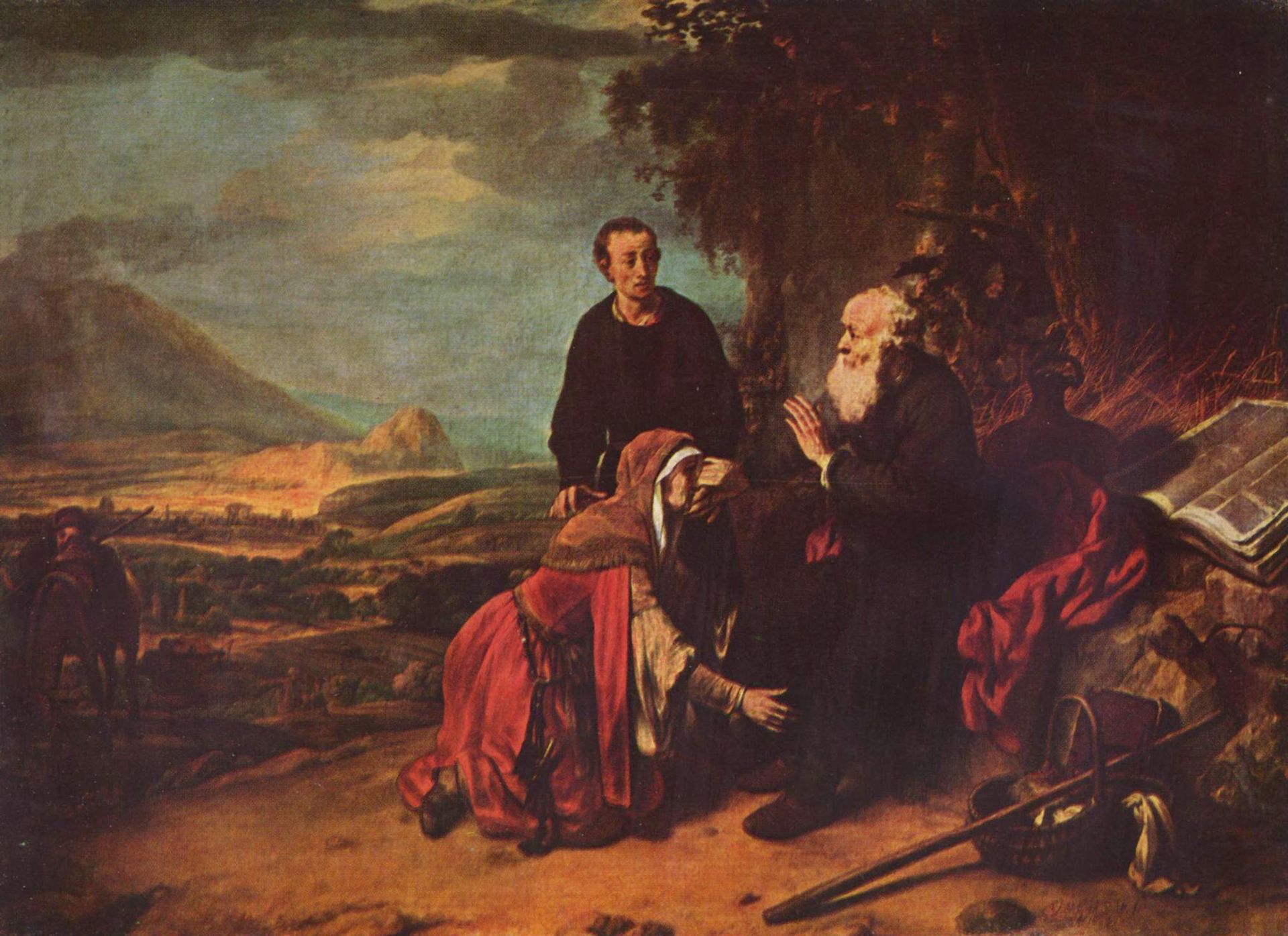
    The armed band arrives outside Elisha’s residence at night, and on the next morning, Elisha’s servant (possibly Gehazi, but not named) sees he and Elisha surrounded and despairs.  Elisha, however, does not despair—he prays to the LORD that the servant’s eyes be spiritually open to see that the LORD has a multitude of angelic warriors across the mountain who will protect them.  Then, in an ironic twist, Elisha prays that the eyes of the Aramean band be blinded so that they did not recognize him, nor know where they were.  In this dullard state—they probably were not totally blind—Elisha then leads them into Samaria.  When their “sight” is restored, they suddenly realize that they are in the heart of Israel’s capital surrounded by Israel’s military.  Joram, the King of Israel, is ready and eager to destroy them, but Elisha holds him off.  To slaughter captured prisoners would have been contrary to the biblical laws of war given in Deuteronomy (Deut. 20:11), namely that captured prisoners could be used as slaves, but were not to be slaughtered outright.

    Some things are worth pointing out in this narrative.  It is God who saves the nation, especially since Israel’s army was not doing an effective job of that.  To the readers of 2 Kings, languishing in exile, that would have been an important lesson to hear so as to not put their faith in kings and militaries to save a people.  Second, God also protects and preserves His own people.  That is something also that should be an encouragement to God’s people.   Lastly, there is an interesting contrast between Jehoram and Elisha in this episode.  Jehoram exhibits a typical tribal mentality—if our enemies are weak, then we should be merciless in destroying them, in exacting retribution from them.  Such a tribal mentality manifests itself even in our day, in that we want our enemies not simply defeated, but destroyed.  Yet, here we see Elisha, acting on behalf of the LORD, advocating for exercising mercy toward Israel’s enemies.  Yes, they needed to be defeated, but having been defeated, they are shown mercy.  In the New Testament, Christ would tell His disciples that in the Sermon on the Mount to foreswear retaliation (Matt. 5:39-42) and to love one’s enemies (Matt. 5:43-44).  Such mercy is balanced with God’s justice—in 2 Kings, it is consistent with God’s own Law—but it also reflects the greater mercy we have received from the LORD, as we too had been rebels toward Him but have been forgiven according to the work of Christ.

    II. The Syrians Flee (2 Kings 6:8-7:20)

    24 And it came to pass after this, that Ben-hadad king of Syria gathered all his host, and went up, and besieged Samaria. 25 And there was a great famine in Samaria: and, behold, they besieged it, until an ass’s head was sold for fourscore pieces of silver, and the fourth part of a cab of dove’s dung for five pieces of silver. 26 And as the king of Israel was passing by upon the wall, there cried a woman unto him, saying, Help, my lord, O king. 27 And he said, If the Lord do not help thee, whence shall I help thee? out of the barnfloor, or out of the winepress? 28 And the king said unto her, What aileth thee? And she answered, This woman said unto me, Give thy son, that we may eat him to day, and we will eat my son to morrow. 29So we boiled my son, and did eat him: and I said unto her on the next day, Give thy son, that we may eat him: and she hath hid her son. 30 And it came to pass, when the king heard the words of the woman, that he rent his clothes; and he passed by upon the wall, and the people looked, and, behold, he had sackcloth within upon his flesh. 31 Then he said, God do so and more also to me, if the head of Elisha the son of Shaphat shall stand on him this day.

    32 But Elisha sat in his house, and the elders sat with him; and the king sent a man from before him: but ere the messenger came to him, he said to the elders, See ye how this son of a murderer hath sent to take away mine head? look, when the messenger cometh, shut the door, and hold him fast at the door: is not the sound of his master’s feet behind him? 33 And while he yet talked with them, behold, the messenger came down unto him: and he said, Behold, this evil is of the Lord; what should I wait for the Lord any longer?

    7 Then Elisha said, Hear ye the word of the Lord; Thus saith the Lord, To morrow about this time shall a measure of fine flour be sold for a shekel, and two measures of barley for a shekel, in the gate of Samaria. Then a lord on whose hand the king leaned answered the man of God, and said, Behold, if the Lord would make windows in heaven, might this thing be? And he said, Behold, thou shalt see it with thine eyes, but shalt not eat thereof.

    And there were four leprous men at the entering in of the gate: and they said one to another, Why sit we here until we die? If we say, We will enter into the city, then the famine is in the city, and we shall die there: and if we sit still here, we die also. Now therefore come, and let us fall unto the host of the Syrians: if they save us alive, we shall live; and if they kill us, we shall but die. And they rose up in the twilight, to go unto the camp of the Syrians: and when they were come to the uttermost part of the camp of Syria, behold, there was no man there. 6For the Lord had made the host of the Syrians to hear a noise of chariots, and a noise of horses, even the noise of a great host: and they said one to another, Lo, the king of Israel hath hired against us the kings of the Hittites, and the kings of the Egyptians, to come upon us. Wherefore they arose and fled in the twilight, and left their tents, and their horses, and their asses, even the camp as it was, and fled for their life. And when these lepers came to the uttermost part of the camp, they went into one tent, and did eat and drink, and carried thence silver, and gold, and raiment, and went and hid it; and came again, and entered into another tent, and carried thence also, and went and hid it. Then they said one to another, We do not well: this day is a day of good tidings, and we hold our peace: if we tarry till the morning light, some mischief will come upon us: now therefore come, that we may go and tell the king’s household. 10 So they came and called unto the porter of the city: and they told them, saying, We came to the camp of the Syrians, and, behold, there was no man there, neither voice of man, but horses tied, and asses tied, and the tents as they were. 11 And he called the porters; and they told it to the king’s house within.

    12 And the king arose in the night, and said unto his servants, I will now shew you what the Syrians have done to us. They know that we be hungry; therefore are they gone out of the camp to hide themselves in the field, saying, When they come out of the city, we shall catch them alive, and get into the city. 13 And one of his servants answered and said, Let some take, I pray thee, five of the horses that remain, which are left in the city, (behold, they are as all the multitude of Israel that are left in it: behold, I say, they are even as all the multitude of the Israelites that are consumed:) and let us send and see. 14 They took therefore two chariot horses; and the king sent after the host of the Syrians, saying, Go and see. 15 And they went after them unto Jordan: and, lo, all the way was full of garments and vessels, which the Syrians had cast away in their haste. And the messengers returned, and told the king. 16 And the people went out, and spoiled the tents of the Syrians. So a measure of fine flour was sold for a shekel, and two measures of barley for a shekel, according to the word of the Lord.

    17 And the king appointed the lord on whose hand he leaned to have the charge of the gate: and the people trode upon him in the gate, and he died, as the man of God had said, who spake when the king came down to him. 18 And it came to pass as the man of God had spoken to the king, saying, Two measures of barley for a shekel, and a measure of fine flour for a shekel, shall be to morrow about this time in the gate of Samaria: 19 And that lord answered the man of God, and said, Now, behold, if the Lord should make windows in heaven, might such a thing be? And he said, Behold, thou shalt see it with thine eyes, but shalt not eat thereof. 20 And so it fell out unto him: for the people trode upon him in the gate, and he died.

    This next account is vivid in both its depiction of depravity and in the pathos of deliverance.  The famine that came upon Israel was not merely a happenstance, as we treat so much of our weather today; it was a judgment of God upon a heretical and apostate nation.  As moderns, we tend to think that if we can provide naturalistic reasons as to why something happened then that necessarily discounts God’s providence over it or in it.  The ancients did not have such hubris and would have seen some kind of divine hand in it.  In the ratification curses of the Deuteronomistic covenant, God promises that, “Thy heaven that is over thy head shall be brass, and the earth that is under thee shall be iron.  The LORD shall make the rain of thy land powder and dust: from heaven it come down upon the, until thou be destroyed” (Deut. 28:23-24).  In this case, exacerbating this natural famine was the siege that the Syrians laid against Israel’s capital of Samaria.  So severe was the combination of the two that people resorted to eating the unclean parts of unclean animals, and to cannibalism of family members.  In one case recounted here, two women agree that they will eat their children and one is upset when the other reneges, calling for the king to judge between them.  This is a perversion of the famous case in 1 Kings 3:16-28 showing Solomon’s wisdom.  There Solomon’s wisdom rendered justice and spared a life; here Jehoram abandons justice and shows his foolishness by vowing vengeance upon God’s prophet, Elisha, with his trusted advisor blaming God and questioning why they should trust the LORD any longer.

    A lesson for us here is to be wary of political leaders who claim they alone can save the people.  They cannot; only God can save.  For political leaders to make claims of being a savior or having their program be salvific is both fraudulent and blasphemous.  This is something that we should be mindful of in the corrupt politics of our own day, as we are not lacking in false messiahs.

    When confronted by the king’s advisor, Elisha prophesies that within the next day, people will be able to get real food for prices that are not ultra-high.  The king’s advisor scoffs at this, and Elisha responds with a second prophecy—the advisor will see this change, but not eat thereof.

    The description of the deliverance is almost comedic in a Shakespearian kind of way.  Four lepers discuss among themselves at the city gate their options.  If they go into the city, they will die of starvation like the rest of the city.  If they stay at the gate, they will die as well.  So, they decide to go into the Syrian camp in search of food, thinking they will either find food or be killed by the Syrians; what do they have to lose, since most of the options would result in them dying.  So, into the Syrian camp they go, only to find it totally deserted.  There was no orderly retreat; everything was left behind as the army left in apparent terror, believing that a convergence of mighty foreign armies was upon them.  The lepers find food and clothes, silver and gold.  They revel in their find, only to be conscience stricken shortly thereafter, sending word to the king regarding the withdrawal of the Syrian army.  The unbelieving king believes this is a Syrian ruse to get him to leave his city only to subsequently ambush his army.  Servants, however, impress upon the king to check out the account and they find it to be true.  Israelites come pouring out of the city and plunder the Syrian camp, resulting in the fulfillment of Elisha’s prophecy.  As for the scoffing advisor to the king, he saw the deliverance but was trampled to death by the streaming masses, in fulfillment of Elisha’s second prophecy as well.  The defeat of the Syrians was entirely the victory of the LORD, and His word fulfilled.

    III. The Shunamite Woman Returns (2 Kings 8:1-6)

    8 Then spake Elisha unto the woman, whose son he had restored to life, saying, Arise, and go thou and thine household, and sojourn wheresoever thou canst sojourn: for the Lord hath called for a famine; and it shall also come upon the land seven years. And the woman arose, and did after the saying of the man of God: and she went with her household, and sojourned in the land of the Philistines seven years. And it came to pass at the seven years’ end, that the woman returned out of the land of the Philistines: and she went forth to cry unto the king for her house and for her land. And the king talked with Gehazi the servant of the man of God, saying, Tell me, I pray thee, all the great things that Elisha hath done. And it came to pass, as he was telling the king how he had restored a dead body to life, that, behold, the woman, whose son he had restored to life, cried to the king for her house and for her land. And Gehazi said, My lord, O king, this is the woman, and this is her son, whom Elisha restored to life. And when the king asked the woman, she told him. So the king appointed unto her a certain officer, saying, Restore all that was hers, and all the fruits of the field since the day that she left the land, even until now.

    This account brings us back to the faithful remnant of God.  It does say something about Jehoram at the end of his life that he is even interested in hearing about the great things that Elisha did during Jehoram’s reign.  We cannot extrapolate from this whether or not Joram ever repented or what his motive was in wanting to hear about the great things that Elisha did; the text simply does not give us any details.  The text does, however, show that despite his punishment with leprosy, Gehazi did maintain a faithful testimony to the work of God, a testimony that was corroborated by the Shunamite woman.  That would have been a reminder to Jeremiah’s readers to maintain a faithful testimony even as they were experiencing the punishment of exile to a foreign land.  It is still a remainder to God’s people in all ages to do likewise.  The restoration of the Shunamite woman would have held out to God’s people in exile the promise of a restoration to their homeland.  If Jeremiah did author 1 and 2 Kings, as we have supposed throughout this series, then the same author prophesied that the Exile would only last 70 years; there would be taken into Exile who would return from it and witness the beginnings of the reconstitution of God’s people.  For us, this picture has eschatological significance.  We see elsewhere in Scripture pictures of restoration for God’s people if they repent of their sins and return to faithfulness (e.g., Job 42:7-17), and while this is certainly possible within God’s providence, we should not view it as an automatic guarantee in this life.  It is a promise that will be fulfilled in the New Heavens and the New Earth when we are with the LORD Christ Jesus in eternity.

    IV. Elisha’s Prophecy of Hazael (2 Kings 8:7-15)

    And Elisha came to Damascus; and Ben-hadad the king of Syria was sick; and it was told him, saying, The man of God is come hither. And the king said unto Hazael, Take a present in thine hand, and go, meet the man of God, and inquire of the Lord by him, saying, Shall I recover of this disease? So Hazael went to meet him, and took a present with him, even of every good thing of Damascus, forty camels’ burden, and came and stood before him, and said, Thy son Ben-hadad king of Syria hath sent me to thee, saying, Shall I recover of this disease? 10 And Elisha said unto him, Go, say unto him, Thou mayest certainly recover: howbeit the Lord hath shewed me that he shall surely die. 11 And he settled his countenance stedfastly, until he was ashamed: and the man of God wept. 12 And Hazael said, Why weepeth my lord? And he answered, Because I know the evil that thou wilt do unto the children of Israel: their strong holds wilt thou set on fire, and their young men wilt thou slay with the sword, and wilt dash their children, and rip up their women with child. 13 And Hazael said, But what, is thy servant a dog, that he should do this great thing? And Elisha answered, The Lord hath shewed me that thou shalt be king over Syria. 14 So he departed from Elisha, and came to his master; who said to him, What said Elisha to thee? And he answered, He told me that thou shouldest surely recover. 15 And it came to pass on the morrow, that he took a thick cloth, and dipped it in water, and spread it on his face, so that he died: and Hazael reigned in his stead.

    What is interesting about this account is that while Elisha’s impact on the Israelite royal house has been limited, his impact on the royal house of Syria has been more marked.  Ben-hadad, who had fought with Israel on multiple occasions, now sought to know from Elisha whether or not he would recover from his illness.  Ben-hadad sent an emissary, Hazael, to Elisha bearing many gifts.  Elisha provides a cryptic prophecy: Ben-hadad will recover but not live.  The meaning to this becomes clearer in the verses that follow:  Hazael is a ruthless and wicked man who will ascend to power after Ben-hadad dies and will be the bane of Israel’s existence.  Elisha weeps, perhaps in part because with Jehoram reflecting on the miracles which the LORD has wrought and Ben-hadad consulting Elisha that was a flicker of hope that maybe things were turning for the better.  In looking upon Hazael, however, Elisha knew that was not meant to be and that Israel’s downward trajectory would continue unabated towards God’s judgment.  Although Elisha would not die for at least another 40 years, this passage is the last major passage talking about Elisha’s ministry.  It is with this that we will transition to the next major era in the history of Israel and Judah.


    [1] See Eugene H. Merrill, Kingdom of Priests; A History of Old Testament Israel, 2nd ed. (Grand Rapids MI: Baker Academic, 2008), 366-368.
  • Descent into Ungodliness (Lesson 13)

    Descent into Ungodliness (Lesson 13)

    Elisha’s Miracles

    Note: This lesson was taught by Kyle Simmons

    I. The Miracle of the Oil (2 Kings 4:1-7)

    4 Now there cried a certain woman of the wives of the sons of the prophets unto Elisha, saying, Thy servant my husband is dead; and thou knowest that thy servant did fear the Lord: and the creditor is come to take unto him my two sons to be bondmen. And Elisha said unto her, What shall I do for thee? tell me, what hast thou in the house? And she said, Thine handmaid hath not any thing in the house, save a pot of oil. Then he said, Go, borrow thee vessels abroad of all thy neighbours, even empty vessels; borrow not a few. And when thou art come in, thou shalt shut the door upon thee and upon thy sons, and shalt pour out into all those vessels, and thou shalt set aside that which is full. 5So she went from him, and shut the door upon her and upon her sons, who brought the vessels to her; and she poured out. And it came to pass, when the vessels were full, that she said unto her son, Bring me yet a vessel. And he said unto her, There is not a vessel more. And the oil stayed. Then she came and told the man of God. And he said, Go, sell the oil, and pay thy debt, and live thou and thy children of the rest.

     A few things to note in this passage.  First is the existence of a community known as “the sons of the prophets.” Little is definitively known about this community, but given the Scripture references, they begin to emerge during the ministries of Elijah and particularly Elisha.  There are nine references to such a community between 1 Kings 20 and 2 Kings 9 (1 Kings 20:35; 2 Kings 2:3, 5, 7, 15; 4:1, 38, 5:22, 6:1, and 9:1), and the community seemed to exist exclusively in the northern kingdom of Israel.  Commentators have described the variously as a guild, a class, or a school, but it may be best to think of them as an organized remnant of the godly in Israel.  As most of these references are associated with Elisha, it is likely that he was the leader of this community.  The purpose of this community was to maintain faithfulness to the LORD and speak His truth to the nation in light of the apostasy and idolatry of the day.

    In this passage it is not surprising that the widow of one of these “sons of the prophets” was so impoverished that her sons were going to be taken into slavery.  If this is a community of the godly remnant, then people almost certainly had to make sacrifices for their faithfulness and, by not going along with the official religion, would be financially strapped.  What this episode shows is that God provides for His faithful servants.  Here it was not a handout, but the means by which she could raise the money to pay her debts.  Although this is a miracle, it was done in private. This preserved her dignity, while providing for her needs.  The care of widows and orphans is an important mark of the covenantal community, and in the New Testament, this can be seen in Paul’s description of the care for widows in 1 Tim. 5:2-16.

    II. The Shunammite Woman and Her Son (2 Kings 4:8-37)

    And it fell on a day, that Elisha passed to Shunem, where was a great woman; and she constrained him to eat bread. And so it was, that as oft as he passed by, he turned in thither to eat bread. And she said unto her husband, Behold now, I perceive that this is an holy man of God, which passeth by us continually. 10 Let us make a little chamber, I pray thee, on the wall; and let us set for him there a bed, and a table, and a stool, and a candlestick: and it shall be, when he cometh to us, that he shall turn in thither. 11 And it fell on a day, that he came thither, and he turned into the chamber, and lay there. 12 And he said to Gehazi his servant, Call this Shunammite. And when he had called her, she stood before him. 13 And he said unto him, Say now unto her, Behold, thou hast been careful for us with all this care; what is to be done for thee? wouldest thou be spoken for to the king, or to the captain of the host? And she answered, I dwell among mine own people. 14 And he said, What then is to be done for her? And Gehazi answered, Verily she hath no child, and her husband is old. 15 And he said, Call her. And when he had called her, she stood in the door. 16 And he said, About this season, according to the time of life, thou shalt embrace a son. And she said, Nay, my lord, thou man of God, do not lie unto thine handmaid. 17 And the woman conceived, and bare a son at that season that Elisha had said unto her, according to the time of life.

    18 And when the child was grown, it fell on a day, that he went out to his father to the reapers. 19 And he said unto his father, My head, my head. And he said to a lad, Carry him to his mother. 20 And when he had taken him, and brought him to his mother, he sat on her knees till noon, and then died. 21 And she went up, and laid him on the bed of the man of God, and shut the door upon him, and went out. 22 And she called unto her husband, and said, Send me, I pray thee, one of the young men, and one of the asses, that I may run to the man of God, and come again. 23 And he said, Wherefore wilt thou go to him to day? it is neither new moon, nor sabbath. And she said, It shall be well. 24 Then she saddled an ass, and said to her servant, Drive, and go forward; slack not thy riding for me, except I bid thee. 25 So she went and came unto the man of God to mount Carmel. And it came to pass, when the man of God saw her afar off, that he said to Gehazi his servant, Behold, yonder is that Shunammite: 26 Run now, I pray thee, to meet her, and say unto her, Is it well with thee? is it well with thy husband? is it well with the child? And she answered, It is well. 27 And when she came to the man of God to the hill, she caught him by the feet: but Gehazi came near to thrust her away. And the man of God said, Let her alone; for her soul is vexed within her: and the Lord hath hid it from me, and hath not told me. 28 Then she said, Did I desire a son of my lord? did I not say, Do not deceive me? 29 Then he said to Gehazi, Gird up thy loins, and take my staff in thine hand, and go thy way: if thou meet any man, salute him not; and if any salute thee, answer him not again: and lay my staff upon the face of the child. 30 And the mother of the child said, As the Lord liveth, and as thy soul liveth, I will not leave thee. And he arose, and followed her. 31 And Gehazi passed on before them, and laid the staff upon the face of the child; but there was neither voice, nor hearing. Wherefore he went again to meet him, and told him, saying, The child is not awaked. 32 And when Elisha was come into the house, behold, the child was dead, and laid upon his bed. 33 He went in therefore, and shut the door upon them twain, and prayed unto the Lord. 34 And he went up, and lay upon the child, and put his mouth upon his mouth, and his eyes upon his eyes, and his hands upon his hands: and he stretched himself upon the child; and the flesh of the child waxed warm. 35 Then he returned, and walked in the house to and fro; and went up, and stretched himself upon him: and the child sneezed seven times, and the child opened his eyes. 36 And he called Gehazi, and said, Call this Shunammite. So he called her. And when she was come in unto him, he said, Take up thy son. 37 Then she went in, and fell at his feet, and bowed herself to the ground, and took up her son, and went out.

    Here is an account of another woman associated with the ministry of Elisha, this time a wealthy woman further to the north in Shunem.  Shunem is in the territory of Issachar, on the southern slope of Mount Moreh, near Jezreel.  The Shunammite woman recognized that Elisha was a genuine man of God, and she made her house into a lodging point for when Elisha was in the region.  She is not looking for anything in return, but Elisha does want to bless her in some way.  Elisha’s servant Gehazi recognizes that she has no children, and her husband is old, which means that when he dies, she could be left destitute, with no one to care for her.  So, God, through Elisha, promises her a son, which is born the following year.  Years later, that boy suffers some kind of ailment with his head and dies.  The woman puts him in the room where Elisha would usually stay, and then goes on a 17-mile journey to seek Elisha out personally, both to pour out her grief to him but also with an expectation that he can do something about it, which he does.  Like Elijah in Zarephath on the Sidonian coast (1 Kings 17:8-24), Elisha raises the boy from the dead.  In the case with Elijah, the miracle proved to the Zidonian woman that Elijah was truly a man of God and that the word of the LORD was in his mouth.  With the Shunammite woman, it proved her faith that the same was true for Elisha as well.

    It is worth noting that these miracles, and particularly the one regarding the Shunammite woman, point forward to the earthly ministry of Christ Jesus.  Luke 7:11-17 records Christ performing a similar miracle in Nain.  Nain is on the north side of Mount Moreh, near Shunem.  No doubt word of Elisha resurrecting the Shunammite woman’s son probably became entrenched as part of the local tradition of that area.  Jesus’s miracle was the first of three resurrections that He performed in His ministry, which included the healing of Jairus’s daughter (Luke 8:40-56) and of Lazarus (John 11:38-44).  Given the tradition associated with Elisha, when Jesus healed the son of the widow of Nain, it almost certainly would have been seen in the same light, namely as a confirmation that Jesus was indeed a man of God and that word of God was truly in Him.

    III. “Death in the Pot” (2 Kings 4:38-41)

    38 And Elisha came again to Gilgal: and there was a dearth in the land; and the sons of the prophets were sitting before him: and he said unto his servant, Set on the great pot, and seethe pottage for the sons of the prophets. 39 And one went out into the field to gather herbs, and found a wild vine, and gathered thereof wild gourds his lap full, and came and shred them into the pot of pottage: for they knew them not. 40 So they poured out for the men to eat. And it came to pass, as they were eating of the pottage, that they cried out, and said, O thou man of God, there is death in the pot. And they could not eat thereof. 41 But he said, Then bring meal. And he cast it into the pot; and he said, Pour out for the people, that they may eat. And there was no harm in the pot.

    In this passage, we return again to the sons of the prophets community, this time in Gilgal, which is near Bethel, and was probably the center of the prophetic community.  Here, the failure of the one gathering the herbs to accurately identify the poisonous gourds could have led to the poisoning of the main community.  Had that poisoning been fatal, it would have struck a severe blow to the faithful witness in Israel.  Elisha’s response in curing the stew shows the graciousness of God in protecting and sustaining His people.

    IV. Feeding a Multitude (2 Kings 4:42-44)

    42 And there came a man from Baal-shalisha, and brought the man of God bread of the firstfruits, twenty loaves of barley, and full ears of corn in the husk thereof. And he said, Give unto the people, that they may eat. 43 And his servitor said, What, should I set this before an hundred men? He said again, Give the people, that they may eat: for thus saith the Lord, They shall eat, and shall leave thereof. 44 So he set it before them, and they did eat, and left thereof, according to the word of the Lord.

    Baal-shalisha is a village near Gilgal, in the hill country of Ephraim, so again, near to the center of the sons of the prophets community.  He is bringing food to the community but (in his mind) it is not sufficient to feed the entire community of one hundred or so men.  He is told nevertheless to set it before the community, which he does and the men ate and had bread left over.  This clearly anticipates Christ’s miracles of the feeding of the 5,000 at Bethsaida (Matt. 14:13-21, Mark 6:30-44, Luke 9:10-17, John 6:1-14) and the feeding of the 4,000 at Decapolis (Matt. 15:32-39, Mark 8:1-9).  Again, this is a miracle of God providing for and sustaining His people as try to be faithful to Him.

    V. Naaman’s Leprosy (2 Kings 5:1-27)

    5 Now Naaman, captain of the host of the king of Syria, was a great man with his master, and honourable, because by him the Lord had given deliverance unto Syria: he was also a mighty man in valour, but he was a leper. And the Syrians had gone out by companies, and had brought away captive out of the land of Israel a little maid; and she waited on Naaman’s wife. And she said unto her mistress, Would God my lord were with the prophet that is in Samaria! for he would recover him of his leprosy. And one went in, and told his lord, saying, Thus and thus said the maid that is of the land of Israel. And the king of Syria said, Go to, go, and I will send a letter unto the king of Israel. And he departed, and took with him ten talents of silver, and six thousand pieces of gold, and ten changes of raiment. And he brought the letter to the king of Israel, saying, Now when this letter is come unto thee, behold, I have therewith sent Naaman my servant to thee, that thou mayest recover him of his leprosy. And it came to pass, when the king of Israel had read the letter, that he rent his clothes, and said, Am I God, to kill and to make alive, that this man doth send unto me to recover a man of his leprosy? wherefore consider, I pray you, and see how he seeketh a quarrel against me. And it was so, when Elisha the man of God had heard that the king of Israel had rent his clothes, that he sent to the king, saying, Wherefore hast thou rent thy clothes? let him come now to me, and he shall know that there is a prophet in Israel. So Naaman came with his horses and with his chariot, and stood at the door of the house of Elisha. 10 And Elisha sent a messenger unto him, saying, Go and wash in Jordan seven times, and thy flesh shall come again to thee, and thou shalt be clean. 11 But Naaman was wroth, and went away, and said, Behold, I thought, He will surely come out to me, and stand, and call on the name of the Lord his God, and strike his hand over the place, and recover the leper. 12 Are not Abana and Pharpar, rivers of Damascus, better than all the waters of Israel? may I not wash in them, and be clean? So he turned and went away in a rage. 13 And his servants came near, and spake unto him, and said, My father, if the prophet had bid thee do some great thing, wouldest thou not have done it? how much rather then, when he saith to thee, Wash, and be clean? 14 Then went he down, and dipped himself seven times in Jordan, according to the saying of the man of God: and his flesh came again like unto the flesh of a little child, and he was clean.

    15 And he returned to the man of God, he and all his company, and came, and stood before him: and he said, Behold, now I know that there is no God in all the earth, but in Israel: now therefore, I pray thee, take a blessing of thy servant. 16 But he said, As the Lord liveth, before whom I stand, I will receive none. And he urged him to take it; but he refused. 17 And Naaman said, Shall there not then, I pray thee, be given to thy servant two mules’ burden of earth? for thy servant will henceforth offer neither burnt offering nor sacrifice unto other gods, but unto the Lord. 18 In this thing the Lord pardon thy servant, that when my master goeth into the house of Rimmon to worship there, and he leaneth on my hand, and I bow myself in the house of Rimmon: when I bow down myself in the house of Rimmon, the Lord pardon thy servant in this thing. 19 And he said unto him, Go in peace. So he departed from him a little way.

    20 But Gehazi, the servant of Elisha the man of God, said, Behold, my master hath spared Naaman this Syrian, in not receiving at his hands that which he brought: but, as the Lord liveth, I will run after him, and take somewhat of him. 21 So Gehazi followed after Naaman. And when Naaman saw him running after him, he lighted down from the chariot to meet him, and said, Is all well? 22 And he said, All is well. My master hath sent me, saying, Behold, even now there be come to me from mount Ephraim two young men of the sons of the prophets: give them, I pray thee, a talent of silver, and two changes of garments. 23 And Naaman said, Be content, take two talents. And he urged him, and bound two talents of silver in two bags, with two changes of garments, and laid them upon two of his servants; and they bare them before him. 24 And when he came to the tower, he took them from their hand, and bestowed them in the house: and he let the men go, and they departed. 25But he went in, and stood before his master. And Elisha said unto him, Whence comest thou, Gehazi? And he said, Thy servant went no whither. 26 And he said unto him, Went not mine heart with thee, when the man turned again from his chariot to meet thee? Is it a time to receive money, and to receive garments, and oliveyards, and vineyards, and sheep, and oxen, and menservants, and maidservants? 27 The leprosy therefore of Naaman shall cleave unto thee, and unto thy seed for ever. And he went out from his presence a leper as white as snow.

    There are a lot of things going on in this account.  There had been continuing frictions between the House of Ahab in Israel and Ben-Hadad, the king of Damascus in Syria.  It is in the course of these border frictions that a young girl was captured and made a servant in the house of Aram’s military commander, Naaman the Syrian.  When Naaman contracts leprosy, it is the servant girl who suggests he can be healed by Elisha, the prophet in Israel.  Rather than seeking him out privately, Naaman accompanies a diplomatic entourage to Samaria to first engage Jehoram, king of Israel, on the assumption that a prophet operating within Israel would actually be in the court of the king.  Jehoram’s spiritual blindness is such, however, that he completely misreads Syrian intentions and assumes that it is a provocation to initiate a war.  Elisha, upon hearing of the king’s reaction, sees this as an opportunity to demonstrate that there is a genuine prophet in Israel.  When Naaman comes to Elisha’s house, he is simply told to go and wash himself in the Jordan seven times.  At first indignant, he is confronted by his servants for his unbelief and backs down.  The washing in the Jordan actually heals Naaman by God’s grace, resulting in him being healed of his leprosy and in praising God.  Naaman’s confession of the true God and his newfound faith, contrasts starkly with the lack of faith of Jehoram and with greedy exploitation of Naaman by Elisha’s servant, Gehazi.

    This experience would have been a prophetic warning to Israel that without repentance, it too would become unclean and would be banished from God’s presence, but that if it repented, then it too would be blessed.  Indeed, God’s blessing is not limited to Israel alone, but would be expanded to include the Gentiles.  This incident would also prefigure the truth we see in the New Testament, that grace entirely is by faith alone.  It cannot be bought or sold.  This is especially true of the salvation extended to us by God through Christ Jesus.

    VI. The Floating Axe Head (2 Kings 6:1-7)

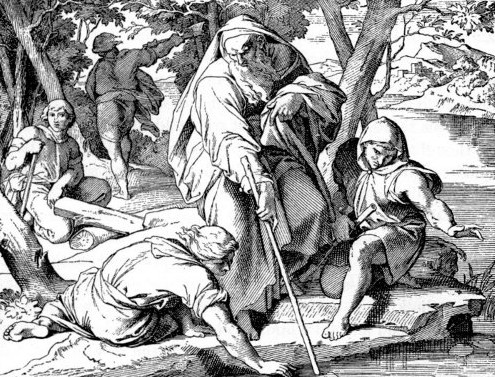
    6 And the sons of the prophets said unto Elisha, Behold now, the place where we dwell with thee is too strait for us. Let us go, we pray thee, unto Jordan, and take thence every man a beam, and let us make us a place there, where we may dwell. And he answered, Go ye. And one said, Be content, I pray thee, and go with thy servants. And he answered, I will go. 4So he went with them. And when they came to Jordan, they cut down wood. 5But as one was felling a beam, the axe head fell into the water: and he cried, and said, Alas, master! for it was borrowed. And the man of God said, Where fell it? And he shewed him the place. And he cut down a stick, and cast it in thither; and the iron did swim. Therefore said he, Take it up to thee. And he put out his hand, and took it.

    Elisha Recovers the Floating Axe Head

    Again we see God’s providence in providing for the community of the sons of the prophets.  In this particular age, iron tools probably were very expensive, and to accidently lose one could be financially costly, perhaps even to the point of risking indentured servitude to repay the debt.  Recovering the iron axe head, therefore, would have been cause for great rejoicing.

    VII. The Significance of These Miracles

    All these accounts beg the question as to why they are in 1 and 2 Kings, or, a better question is, “How do these narratives advance the overall theme of these two books?”  Remember, Jeremiah wrote these books to those in exile to explain why God’s chosen lost their land and were driven into exile.  These chapters notably deviate from the focus on kings.  The chapters on the kings focus on the retrograde actions they took or failed to take which contributed to the downward, unbelieving spiral.  These chapters, however, focus on the believing remnant, highlighting God’s miraculous providence for His faithful people.  To a people in exile, this provides a positive example for them to follow during their exile, namely to hold fast in faith to their God, who has delivered and will continue to deliver his people, and to follow true prophets speaking the true words of God.  This example is one that still applies to us even today.

  • The Descent into Ungodliness (Lesson 10)

    The Descent into Ungodliness (Lesson 10)

    From Elijah to Elisha

    I. Summary of Jehoshaphat’s Reign (1 Kings 22:44-50)

    41 And Jehoshaphat the son of Asa began to reign over Judah in the fourth year of Ahab king of Israel. 42 Jehoshaphat was thirty and five years old when he began to reign; and he reigned twenty and five years in Jerusalem. And his mother’s name was Azubah the daughter of Shilhi. 43 And he walked in all the ways of Asa his father; he turned not aside from it, doing that which was right in the eyes of the Lord: nevertheless the high places were not taken away; for the people offered and burnt incense yet in the high places. 44 And Jehoshaphat made peace with the king of Israel. 45 Now the rest of the acts of Jehoshaphat, and his might that he shewed, and how he warred, are they not written in the book of the chronicles of the kings of Judah? 46 And the remnant of *the sodomites, which remained in the days of his father Asa, he took out of the land. 47 There was then no king in Edom: a deputy was king. 48 Jehoshaphat made ships of Tharshish to go to Ophir for gold: but they went not; for the ships were broken at Ezion-geber. 49 Then said Ahaziah the son of Ahab unto Jehoshaphat, Let my servants go with thy servants in the ships. But Jehoshaphat would not. 50 And *Jehoshaphat slept with his fathers, and was buried with his fathers in the city of David his father: and Jehoram his son reigned in his stead.

    By way of summary, Jehoshaphat was a king of Judah, the son of Asa, and generally a good king.  He starts reigning at age 35 and rules 25 years.  He like Asa, is a reformer king, who worked to do justice and appoint righteous priests and Levites as judges.  Judah’s territory extends as far south as Ezion Geber, as in Solomon’s reign, and he even builds a fleet to sail to Ophir as Solomon did.  Edom is not in revolt but is a vassal kingdom to Judah again.  Judah is almost at the heights which existed under Solomon, which explains why Jehoshaphat reaches out to Israel—he is trying to reestablish that golden era.  Unfortunately, he is going to do the same thing as Solomon, that is, start with godliness and fall into syncretism, uniting godliness and ungodliness.  This takes the form of his reaching out to Ahab to form an alliance, which he likely sealed with the marriage of Jehoshaphat’s son Jehoram to Ahab’s daughter Athaliah.  In 2 Chronicles 19:2-3, a seer sent by the Lord confronts Jehoshaphat over this deadly alliance.

    2 And Jehu the son of Hanani the seer went out to meet him, and said to king Jehoshaphat, “Shouldest thou help the ungodly and love them that hate the LORD?  Therefore is wrath upon thee from before the Lord. 3Nevertheless good things are found in thee, in that thou hast taken away the groves out of the land, and hast prepared thine heart to seek God.

    In reading this as Christians, Hanani’s question poses a challenge for us, since he clearly implies that we should not help the wicked or love those who hate the LORD.  Yet, how should we reconcile that with Christ’s command to love our enemies and do good to those who persecute us (Matt. 5:44-47)?  We should not set Hanani’s comment in opposition to the Lord’s.  In thinking about this we need to be discerning in terms of who we are to love, to what ends, and what exactly do we mean by “love.”  We can love someone in terms of wanting what is best for them, in accordance with what God has said is best for all people.  What they want and what God wants, however, may be separate things.  A man in an adulterous affair may want his mistress, but genuine love for him would seek for him to break off the affair.  While we are to love even our enemies, we also need to be cognizant of who God’s enemies are.  Our enemies are not necessarily God’s enemies, and we should not support those who have consciously set themselves in opposition to God’s authority and kingdom.  Indeed, we should be faithful to God first and foremost, even contrary to such individuals.

    In this regard, Jehoshaphat lacked discernment in dealing with the Ahab’s house.  First Kings 22:48-49 and 2 Chronicles 20:35 describe a joint venture that Jehoshaphat made with Ahaziah, Ahab’s son, to build ships for a trade expedition to Ophir. The LORD, however, sent another prophet to tell Jehoshaphat that his works would be smashed for allying with Ahaziah.  In 1 Kings 22:49 then states that Jehoshaphat would not permit Ahaziah to join in on his trade expedition to Ophir, denying them the wealth that would have surely been split between them. The Lord then smashes the merchant ships in a storm, true to his word.  God’s people are warned about building bonds with hypocrites and evil men, as poor company corrupts good morals: I have not sat with vain persons, neither will I go in with dissemblers. I have hated the congregation of evil doers; and will not sit with the wicked. I will wash mine hands in innocency: So will I compass thine altar, O Lord.  Jehoshaphat tried to pretend he could ignore the sins of evil men because doing so would result in more prosperity. God shut that down, since holiness of the nation is the goal, not prosperity through sin.

    II. Ahaziah of Israel’s Reign (1 Kings 22:51-2 Kings 1:18)

    So, with that quick summary of Jehoshaphat, let u roll back in time to where we were at the end of last lesson.  We still have Jehoshaphat in Judah, Jezebel is queen mother in Israel, and Ahaziah takes over the throne of Israel upon the death of his father Ahab, around 853 BC.

    51 *Ahaziah the son of Ahab began to reign over Israel in Samaria the seventeenth year of Jehoshaphat king of Judah, and reigned two years over Israel. 52 And he did evil in the sight of the Lord, and walked in the way of his father, and in the way of his mother, and in the way of Jeroboam the son of Nebat, who made Israel to sin: 53For he served Baal, and worshipped him, and provoked to anger the Lord God of Israel, according to all that his father had done.

    Previous kings of Israel have been referred to as walking in the way of their fathers, or more frequently, in the way of Jeroboam, “who made Israel sin.”  Ahab, however, was an exception he surpassed Jeroboam in sin.  Ahaziah, his son, walks in the way of his father and mother, as well as Jeroboam.  Jezebel here is a new addition to this list. Even in the past when we assumed the mother of the king, like Rehoboam’s mother, was pagan, this is the first reference we have to her being evil.  Indeed, evil enough to warrant inclusion alongside Jeroboam and Ahab in their sins.  Jezebel is not getting let off the hook for what she has done. In many ways, Jezebel is worse than Ahab.  When Ahab was cowed after Mt. Carmel, it was she who threatened to kill Elijah.  When Ahab was sulking about not being able to get Naboth’s Garden, it was she who laid the charge of false blasphemy at Naboth’s feet, subverted God’s law, and had him executed.  Ahab humbled himself before God when Elijah pronounced that the curse would fall on him and destroy his family.  Jezebel did not.  There is a reason the name “Jezebel” has been an insult in the past.  Ahaziah follows in her path, bowing down to Baal in worship.  Because Ahab humbled himself before God, God postponed the enactment of judgement on the house of Ahab until after Ahab’s death.

    1 Then Moab rebelled against Israel after the death of Ahab. And Ahaziah fell down through a lattice in his upper chamber that was in Samaria, and was sick: and he sent messengers, and said unto them, Go, inquire of Baal-zebub the god of Ekron whether I shall recover of this disease.

    Even from the first verse, we see things starting to unravel.  The first verse said that Moab is in rebellion against Israel, and the next loss is that Ahaziah falls through a lattice. This can also be translated as fall through railing, a reference to Deuteronomic Law. Deuteronomy 22:8 commands Israelites to build railings on their roofs, so that people cannot fall off of them. “When you build a new house, then you shall make a parapet for your roof, that you may not bring guilt of bloodshed on your household if anyone falls from it” (NKJV).  If Ahaziah thinks he can shelter himself from God behind his strong castle walls, he is dead wrong (emphasis on the dead).  After Ahaziah falls/injures himself, he calls upon messengers to ask Baal-Zebub, the god of Ekron (a Phoenician coastal city), if he will recover.  He did not wish to know what he could do to get better, only to know his fortune.  His accident happened in his palace, not on the battlefield against Moab. This, combined with the fact that he has no heir, suggests a king profoundly disinterested in his duties.

    It is not certain who this Baal-Zebub is, as this is only time in the Old Testament that this name is mentioned. Some scholars think it is Baal or a different aspect of Baal, and it has already been noted that Ahaziah worshipped Baal.  Others think that this is an intentional mocking of Baal using a misspelling, since Baal-zebub means “Lord of Flies/Dung”) versus Baal-zebul, which means the Lord of Heavens. This particular verse draws a lot of attention because Jesus identifies the prince of demons (Satan) in Matthew 12:24 (|| Mark 3:22 || Luke 11:15) by a name very similar to this.  What is important in this context is that Ahaziah is not reaching out to God, but rather, he is reaching out to a deity other than the LORD and of a completely separate city which he does not even rule over.  And so, God sends Elijah to intercept the messengers of Ahaziah sent to pray to Ekron, and give them a message for Ahaziah.

    But the angel of the Lord said to Elijah the Tishbite, Arise, go up to meet the messengers of the king of Samaria, and say unto them, Is it not because there is not a God in Israel, that ye go to inquire of Baal-zebub the god of Ekron? Now therefore thus saith the Lord, Thou shalt not come down from that bed on which thou art gone up, but shalt surely die. And Elijah departed. And when the messengers turned back unto him, he said unto them, Why are ye now turned back? And they said unto him, There came a man up to meet us, and said unto us, Go, turn again unto the king that sent you, and say unto him, Thus saith the Lord, Is it not because there is not a God in Israel, that thou sendest to inquire of Baal-zebub the god of Ekron? therefore thou shalt not come down from that bed on which thou art gone up, but shalt surely die. And he said unto them, What manner of man was he which came up to meet you, and told you these words? And they answered him, He was an hairy man, and girt with a girdle of leather about his loins. And he said, It is Elijah the Tishbite.

    Ahaziah probably groaned at hearing that not only was Elijah still alive, he was being a thorn in his side as much as he had been to his fathers.  He may also have been mindful of the fact that everything Elijah prophesied came come true.  So now Ahaziah knows he is dying. In a last desperate stroke of revenge, he sends fifty men to go fetch Elijah, get him off the mountain and bring him to Ahaziah (and probably kill him). And so when they threaten him, Elijah calls down fire from Heaven, burning them all away.  The Puritan Matthew Henry points out in his commentary that Elijah did this not to secure himself, nor to avenge himself, but to prove his mission, and to reveal the wrath of God from heaven against the ungodliness and unrighteousness of men.”  Ahaziah sent another fifty men, and when they threaten Elijah, he also has them consumed.  Elijah is not retrieved until a third group of fifty men comes, led by a captain who crawled on his knees before Elijah and begs him not to kill him and his men. “Have respect for my life and the lives of these fifty men, your servants.”  An angel of the Lord told Elijah that he can trust these men, and Elijah does.  He is escorted into the halls of Ahaziah by an honor guard, and he pronounced the judgement of God upon Ahaziah.  Ahaziah died, having only reigned two years.  With no son as his heir, Ahaziah’s brother Joram took the throne in 852 BC.

    III. The Transition from Elijah to Elisha (2 Kings 2:1-18)

    Elijah is back at full strength.  In Chapter 19 we saw him waver, flee from Israel and Jezebel, but subsequently again pronounced judgement on Ahab. And here, we see him boldly calling down fire, walking into the fortress of his enemy surrounded by hostile soldiers, and pronouncing death and judgment upon Ahaziah, as he did his father. Elijah has his mojo back. This begs the question as to why Elijah did not call down such fire upon Ahab and Jezebel when they first threatened his life, after the battle of Mt. Carmel.  Why was Elijah no longer afraid now? Or a better question, why was Elijah afraid in the first place? One possibility, of course, is the inconsistency and weakness of man.  We are given tremendous promises by God, but it is sometimes hard to focus on those promises and ignore the fears pressing right up against us.  Like Peter who walked a handful of steps on water, and yet his faith faltered in the face of the storm, such that he fell into the sea. Beyond this, however, there may have been unmet expectations. Elijah’s expectations, his dream of national renewal were dashed after Jezebel’s threat. And his crushed spirit was so caught up in that, he could not remember God or His promises.  But now, Elijah is back for one final chapter.  Second Kings Chapter 2 is about the transference of the prophetic office from Elijah to Elisha.

    2 And it came to pass, when the Lord would take up Elijah into heaven by a whirlwind, that Elijah went with Elisha from Gilgal. And Elijah said unto Elisha, Tarry here, I pray thee; for the Lord hath sent me to Beth-el. And Elisha said unto him, As the Lord liveth, and as thy soul liveth, I will not leave thee. So they went down to Beth-el. And the sons of the prophets that were at Beth-el came forth to Elisha, and said unto him, Knowest thou that the Lord will take away thy master from thy head to day? And he said, Yea, I know it; hold ye your peace. And Elijah said unto him, Elisha, tarry here, I pray thee; for the Lord hath sent me to Jericho. And he said, As the Lord liveth, and as thy soul liveth, I will not leave thee. So they came to Jericho. And the sons of the prophets that were at Jericho came to Elisha, and said unto him, Knowest thou that the Lord will take away thy master from thy head to day? And he answered, Yea, I know it; hold ye your peace. And Elijah said unto him, Tarry, I pray thee, here; for the Lord hath sent me to Jordan. And he said, As the Lord liveth, and as thy soul liveth, I will not leave thee. And they two went on. And fifty men of the sons of the prophets went, and stood to view afar off: and they two stood by Jordan. And Elijah took his mantle, and wrapped it together, and smote the waters, and they were divided hither and thither, so that they two went over on dry ground. And it came to pass, when they were gone over, that Elijah said unto Elisha, Ask what I shall do for thee, before I be taken away from thee. And Elisha said, I pray thee, let a double portion of thy spirit be upon me. 10 And he said, Thou hast asked a hard thing: nevertheless, if thou see me when I am taken from thee, it shall be so unto thee; but if not, it shall not be so. 11 And it came to pass, as they still went on, and talked, that, behold, there appeared a chariot of fire, and horses of fire, and parted them both asunder; and Elijah went up by a whirlwind into heaven.

    This passage opens with saying that that it was time for Elijah to depart, not by death and burial in the ground, but by taking Elijah via “whirlwind.”  What this exactly means—and views differ—the importance of this chapter is the functional death of Elijah. The Lord is going to take him away from Elisha.  Elijah tells Elisha three times to stay as he goes away, once at Bethel, once at Jericho, once at the banks of the Jordan.  Elisha refuses each time, insisting on accompanying Elijah to the very end. “As the LORD lives, and as your soul lives, I will not leave you!” Elijah once complained about how he alone was left.  Now, he cannot get rid of this guy Elisha. God answers prayers! Like a son tries to follow his father around and do what he does, Elisha is set on following after Elijah.  Elijah may be trying to spare Elisha the pain of seeing him taken from him.  This is hard for Elisha, as evidenced when the “sons of the prophets” ask Elisha “Do you know that God is taking Elijah away from you today?” and Elisha’s response is basically “Yes. Shut up!”  Elijah and Elisha continue across the Jordan alone, which Elijah parts by striking it with his cloak, like Moses with his staff did the Red Sea.  Then Elijah asks Elisha what gift he can give him before his departure. Elisha asks only for a double portion of the same Spirit that dwelt within Elijah.  This is a big ask. Solomon’s request for wisdom looks tiny reasonable compared to this.  This also is in line with the “adopted son” dynamic we see between these two. The double portion is the right of the firstborn son, his inheritance, and Elisha requests this of Elijah.  The recognition of varying degrees of the Holy Spirit within people is true, particularly in gifts of the Spirit, as Christ gives the gift of the Spirit to whom he desires. But unto every one of us is given grace according to the measure of gift of Christ. Wherefore he saith: When He ascended up on high, He led captivity captive, and gave gifts to men(Ephesians 4:7-8).  We are the adopted sons of God, like Elisha was the adopted son of Elijah. We are granted the gifts of inheritance given to Christ, as we are co-heirs with him.  Jesus gave the best gifts of all: His Holy Spirit, His Righteousness, His glory. Through our union with him, we will have all of these everlasting, unto eternity.

    However, blessings do not come without responsibility. Elijah himself said to Elisha that Elisha asked for a hard thing. To those who much is given, much will be expected.  They continued talking until a chariot of fire with flaming steeds separated the two of them, and a whirlwind caught Elijah up into the sky.

    12 And Elisha saw it, and he cried, My father, my father, the chariot of Israel, and the horsemen thereof. And he saw him no more: and he took hold of his own clothes, and rent them in two pieces. 13 He took up also the mantle of Elijah that fell from him, and went back, and stood by the bank of Jordan; 14 And he took the mantle of Elijah that fell from him, and smote the waters, and said, Where is the Lord God of Elijah? and when he also had smitten the waters, they parted hither and thither: and Elisha went over. 15 And when the sons of the prophets which were to view at Jericho saw him, they said, The spirit of Elijah doth rest on Elisha. And they came to meet him, and bowed themselves to the ground before him. 16 And they said unto him, Behold now, there be with thy servants fifty strong men; let them go, we pray thee, and seek thy master: lest peradventure the Spirit of the Lord hath taken him up, and cast him upon some mountain, or into some valley. And he said, Ye shall not send. 17 And when they urged him till he was ashamed, he said, Send. They sent therefore fifty men; and they sought three days, but found him not. 18 And when they came again to him, (for he tarried at Jericho,) he said unto them, Did I not say unto you, Go not?  (2 Kings 2:12-18)

    Elisha calls out to Elijah, calling him his father, and the chariot of Israel, the chariot representing the military power and might of Israel. Elijah was a warrior for the faith, and this marks the end of his ministry, up to and including his priestly robes, AKA his mantle, falling to the ground and remaining there with Elisha.  Elisha will never see him again, he knows it. When the sons of the prophets went out searching for Elisha, he told them not to, for he knew they would not find him. Elijah is gone, and now the mantle of responsibility lies before Elisha.  Elisha takes it up, both literally and figuratively.

    He could have left the mantle by the river. He could have gone home to his farm and his oxen. He could have spared himself a lot of toil and pain, left the nation to its own devices, and lived a peaceful life. But he did not. He chose the hard path because that was the path he had been called to follow by God.  And to signify this, his first miracle was the same as Elijah’s last, parting the Jordan River as he re-enters the promised land, like the Israelites did so long ago, and like Moses parted the Red Sea.

    IV. The Miracles of Elisha (2 Kings 2:19-25)

    19 And the men of the city said unto Elisha, Behold, I pray thee, the situation of this city is pleasant, as my lord seeth: but the water is naught, and the ground barren. 20 And he said, Bring me a new cruse, and put salt therein. And they brought it to him. 21 And he went forth unto the spring of the waters, and cast the salt in there, and said, Thus saith the Lord, I have healed these waters; there shall not be from thence any more death or barren land. 22So the waters were healed unto this day, according to the saying of Elisha which he spake.

    Many of Elisha’s miracles are similar to other figures in the Bible. He parts waters, heals lepers, multiplies food for the hungry, and raises the dead. In many of Elisha’s miracles as prophet, one can think forward to the coming of Christ, the last prophet, who does all Elisha does and more.  Elisha is not just a clone of Elijah though.  Elijah did eight miracles, whereas Elisha did 16 (a literal echo of “double portion” element).  Elijah was very much an outcast character, wearing rough garments, dealing with individuals and not making many allies. Elisha, in his very first solo act, heals the water for a whole town and makes it good for drinking. He heals food and drink for others and provides for many more than a single family.  He is his own man, and does many things Elijah did not, which is a good segue into our last section.

    23 And he went up from thence unto Beth-el: and as he was going up by the way, there came forth little children out of the city, and mocked him, and said unto him, Go up, thou bald head; go up, thou bald head. 24 And he turned back, and looked on them, and cursed them in the name of the Lord. And there came forth two she bears out of the wood, and tare forty and two children of them. 25 And he went from thence to mount Carmel, and from thence he returned to Samaria.

    Elisha continues on the road to Israel, and must pass through Bethel to do so. On his way there, he is confronted some “youths” who call him bald, and so Elisha casts “summon bears” who maul a bunch of them. We know Bethel as a city of sin- still containing that golden calf of Jeroboam.

    Here is an instance where a lot of translations miss the ball. The KJV translates this “little children,” the NIV as “boys,” and the ESV as “small boys.”  Grammatically, this is a fair translation, since the Hebrew word na’ar for “boy” can also mean anything from young adult to servant.  Solomon uses the same word to describe himself when he prayed to God for wisdom.  So it misses the mark to call these little children, when what is being depicted here is the immaturity of young men.  What we have here is not a gaggle of preschoolers, it’s a gang of young men.  The insults of these young men “go up, you baldhead,” are not merely calling him bald, but has multiple dimensions.  Baldness was a sign of disease like leprosy, and the reference to “go up” was no doubt a reference to Elijah, who had been taken from Elisha.  These young men are insulting and mocking God’s propjet, and so Elisha calls down a curse on them, which God immediately fulfills in the form of two bears.  Elisha here is following the path of Joshua.  He parts the Jordan river, enters Israel, and sends the local wildlife after the unbelievers. True to the covenant curses of Deuteronomy, the land itself is rising up against them.  The metaphor for being torn apart by wild beasts is also found in messages of the minor prophets like Hosea, as symbolism for the destruction of a nation.  As we will see in the next lesson, Elisha will continue to be God’s witness to a nation devolving into apostasy.