
Elisha’s Ministry–Conflict with Syria
I. The Syrians Blinded (2 Kings 6:8-23)
8Then the king of Syria warred against Israel, and took counsel with his servants, saying, In such and such a place shall be my camp. 9 And the man of God sent unto the king of Israel, saying, Beware that thou pass not such a place; for thither the Syrians are come down. 10 And the king of Israel sent to the place which the man of God told him and warned him of, and saved himself there, not once nor twice. 11 Therefore the heart of the king of Syria was sore troubled for this thing; and he called his servants, and said unto them, Will ye not shew me which of us is for the king of Israel? 12And one of his servants said, None, my lord, O king: but Elisha, the prophet that is in Israel, telleth the king of Israel the words that thou speakest in thy bedchamber. 13And he said, Go and spy where he is, that I may send and fetch him. And it was told him, saying, Behold, he is in Dothan. 14 Therefore sent he thither horses, and chariots, and a great host: and they came by night, and compassed the city about. 15 And when the servant of the man of God was risen early, and gone forth, behold, an host compassed the city both with horses and chariots. And his servant said unto him, Alas, my master! how shall we do? 16 And he answered, Fear not: for they that be with us are more than they that be with them. 17 And Elisha prayed, and said, Lord, I pray thee, open his eyes, that he may see. And the Lord opened the eyes of the young man; and he saw: and, behold, the mountain was full of horses and chariots of fire round about Elisha. 18 And when they came down to him, Elisha prayed unto the Lord, and said, Smite this people, I pray thee, with blindness. And he smote them with blindness according to the word of Elisha. 19 And Elisha said unto them, This is not the way, neither is this the city: follow me, and I will bring you to the man whom ye seek. But he led them to Samaria. 20 And it came to pass, when they were come into Samaria, that Elisha said, Lord, open the eyes of these men, that they may see. And the Lord opened their eyes, and they saw; and, behold, they were in the midst of Samaria. 21 And the king of Israel said unto Elisha, when he saw them, My father, shall I smite them? shall I smite them? 22 And he answered, Thou shalt not smite them: wouldest thou smite those whom thou hast taken captive with thy sword and with thy bow? set bread and water before them, that they may eat and drink, and go to their master. 23 And he prepared great provision for them: and when they had eaten and drunk, he sent them away, and they went to their master. So the bands of Syria came no more into the land of Israel.
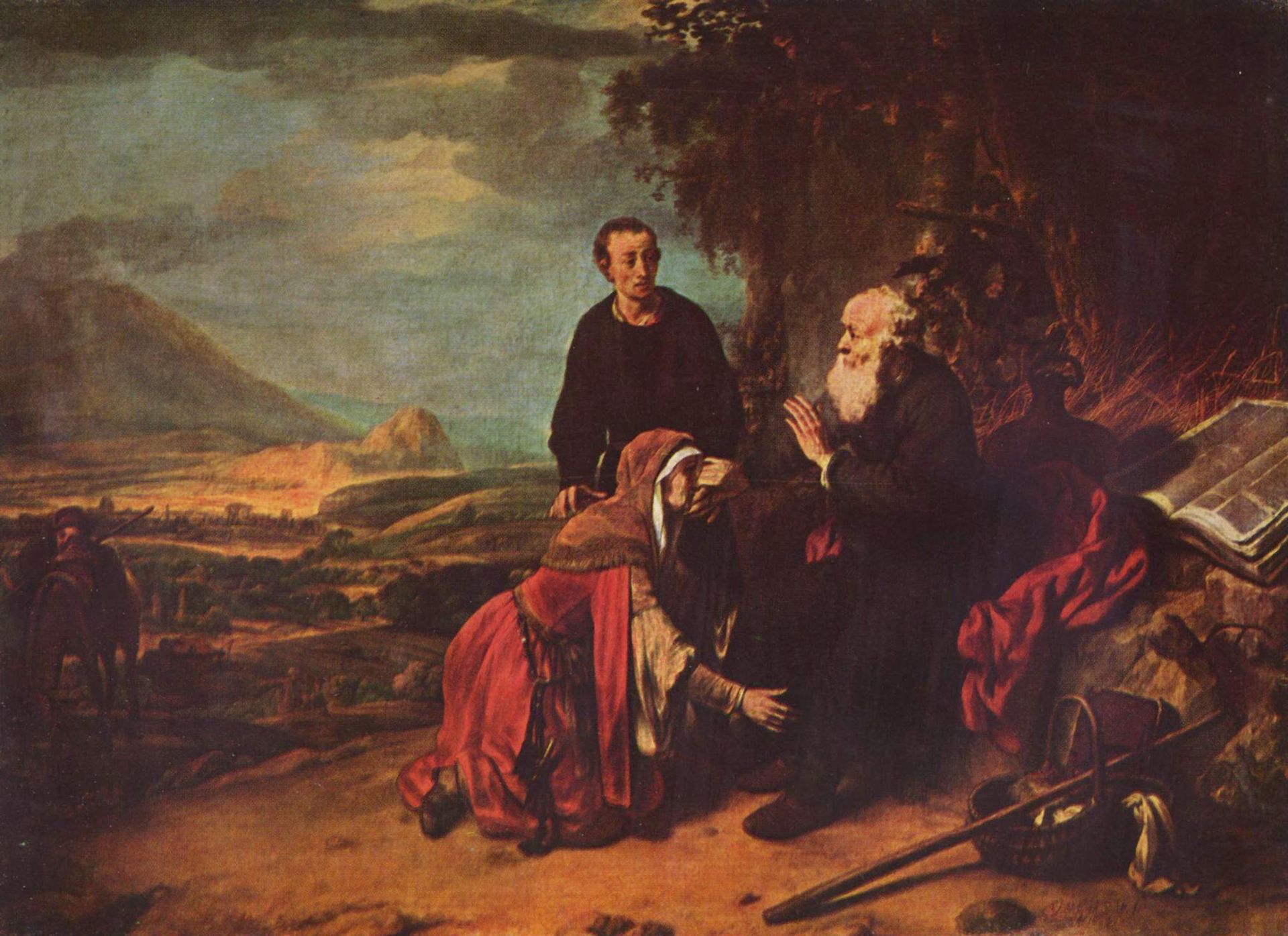
In this third lesson on the ministry of Elisha, we will look at events that take place in the latter part of Jehoram’s 12-year reign as King of Israel (852-841 BC). In 2 Kings 8:1-2 Elisha tells the Shunamite woman whose help had been such a blessing to him and who son he raised from the dead that there would be a seven-year famine coming and he advised her to depart from the land for her own safety, which she does. Gehazi, who had been stricken with leprosy on account of his greed in connection with the cleansing of Naaman the Syrian, reappears after departing Elisha’s company and at the end of the famine. Given the frictions the Israelites had with the Syrians during most of Jehoram’s reign, it would make most sense if he came after peace had been restored between Israel and the Syrians. All of these events took place during the reign of Jehoram. With all that in mind, the famine was probably done by 845 BC, which meant that it would have started in around 852 BC.[1]
The events described in 2 Kings 6:8-23 probably took place sometime during this famine period. Israel’s weakness would have made it ripe for plunder by its neighbors to the north in Syria, hence frequent border raids into Israelite territory. Elisha’s prophetic ministry was not only to the remnant of the people of God, but to the king and nation of Israel as well. The king of Syria was looking for places to set up encampments inside of Israel, but at every place that they sortied into, they were met by the Israelites. This gave the king of Syria the impression that he had a spy in his court, what we would day consider a counterintelligence problem. In reality, God is giving that information to Elisha who is then transmitting it to the king, who acts on it. When he learns that Elisha is the one providing this information, he decides that if he can separate Elisah from his connection to the Israelite court, then he would be successful. So, he thus sends an armed incursion to Dothan, which is within ten miles of the Israelite capital of Samaria—well inside the nation, illustrating how ineffective Israel’s army was.
The armed band arrives outside Elisha’s residence at night, and on the next morning, Elisha’s servant (possibly Gehazi, but not named) sees he and Elisha surrounded and despairs. Elisha, however, does not despair—he prays to the LORD that the servant’s eyes be spiritually open to see that the LORD has a multitude of angelic warriors across the mountain who will protect them. Then, in an ironic twist, Elisha prays that the eyes of the Aramean band be blinded so that they did not recognize him, nor know where they were. In this dullard state—they probably were not totally blind—Elisha then leads them into Samaria. When their “sight” is restored, they suddenly realize that they are in the heart of Israel’s capital surrounded by Israel’s military. Joram, the King of Israel, is ready and eager to destroy them, but Elisha holds him off. To slaughter captured prisoners would have been contrary to the biblical laws of war given in Deuteronomy (Deut. 20:11), namely that captured prisoners could be used as slaves, but were not to be slaughtered outright.
Some things are worth pointing out in this narrative. It is God who saves the nation, especially since Israel’s army was not doing an effective job of that. To the readers of 2 Kings, languishing in exile, that would have been an important lesson to hear so as to not put their faith in kings and militaries to save a people. Second, God also protects and preserves His own people. That is something also that should be an encouragement to God’s people. Lastly, there is an interesting contrast between Jehoram and Elisha in this episode. Jehoram exhibits a typical tribal mentality—if our enemies are weak, then we should be merciless in destroying them, in exacting retribution from them. Such a tribal mentality manifests itself even in our day, in that we want our enemies not simply defeated, but destroyed. Yet, here we see Elisha, acting on behalf of the LORD, advocating for exercising mercy toward Israel’s enemies. Yes, they needed to be defeated, but having been defeated, they are shown mercy. In the New Testament, Christ would tell His disciples that in the Sermon on the Mount to foreswear retaliation (Matt. 5:39-42) and to love one’s enemies (Matt. 5:43-44). Such mercy is balanced with God’s justice—in 2 Kings, it is consistent with God’s own Law—but it also reflects the greater mercy we have received from the LORD, as we too had been rebels toward Him but have been forgiven according to the work of Christ.
II. The Syrians Flee (2 Kings 6:8-7:20)
24 And it came to pass after this, that Ben-hadad king of Syria gathered all his host, and went up, and besieged Samaria. 25 And there was a great famine in Samaria: and, behold, they besieged it, until an ass’s head was sold for fourscore pieces of silver, and the fourth part of a cab of dove’s dung for five pieces of silver. 26 And as the king of Israel was passing by upon the wall, there cried a woman unto him, saying, Help, my lord, O king. 27 And he said, If the Lord do not help thee, whence shall I help thee? out of the barnfloor, or out of the winepress? 28 And the king said unto her, What aileth thee? And she answered, This woman said unto me, Give thy son, that we may eat him to day, and we will eat my son to morrow. 29So we boiled my son, and did eat him: and I said unto her on the next day, Give thy son, that we may eat him: and she hath hid her son. 30 And it came to pass, when the king heard the words of the woman, that he rent his clothes; and he passed by upon the wall, and the people looked, and, behold, he had sackcloth within upon his flesh. 31 Then he said, God do so and more also to me, if the head of Elisha the son of Shaphat shall stand on him this day.
32 But Elisha sat in his house, and the elders sat with him; and the king sent a man from before him: but ere the messenger came to him, he said to the elders, See ye how this son of a murderer hath sent to take away mine head? look, when the messenger cometh, shut the door, and hold him fast at the door: is not the sound of his master’s feet behind him? 33 And while he yet talked with them, behold, the messenger came down unto him: and he said, Behold, this evil is of the Lord; what should I wait for the Lord any longer?
7 Then Elisha said, Hear ye the word of the Lord; Thus saith the Lord, To morrow about this time shall a measure of fine flour be sold for a shekel, and two measures of barley for a shekel, in the gate of Samaria. 2 Then †a lord on whose hand the king leaned answered the man of God, and said, Behold, if the Lord would make windows in heaven, might this thing be? And he said, Behold, thou shalt see it with thine eyes, but shalt not eat thereof.
3 And there were four leprous men at the entering in of the gate: and they said one to another, Why sit we here until we die? 4 If we say, We will enter into the city, then the famine is in the city, and we shall die there: and if we sit still here, we die also. Now therefore come, and let us fall unto the host of the Syrians: if they save us alive, we shall live; and if they kill us, we shall but die. 5 And they rose up in the twilight, to go unto the camp of the Syrians: and when they were come to the uttermost part of the camp of Syria, behold, there was no man there. 6For the Lord had made the host of the Syrians to hear a noise of chariots, and a noise of horses, even the noise of a great host: and they said one to another, Lo, the king of Israel hath hired against us the kings of the Hittites, and the kings of the Egyptians, to come upon us. 7 Wherefore they arose and fled in the twilight, and left their tents, and their horses, and their asses, even the camp as it was, and fled for their life. 8 And when these lepers came to the uttermost part of the camp, they went into one tent, and did eat and drink, and carried thence silver, and gold, and raiment, and went and hid it; and came again, and entered into another tent, and carried thence also, and went and hid it. 9 Then they said one to another, We do not well: this day is a day of good tidings, and we hold our peace: if we tarry till the morning light, some mischief will come upon us: now therefore come, that we may go and tell the king’s household. 10 So they came and called unto the porter of the city: and they told them, saying, We came to the camp of the Syrians, and, behold, there was no man there, neither voice of man, but horses tied, and asses tied, and the tents as they were. 11 And he called the porters; and they told it to the king’s house within.
12 And the king arose in the night, and said unto his servants, I will now shew you what the Syrians have done to us. They know that we be hungry; therefore are they gone out of the camp to hide themselves in the field, saying, When they come out of the city, we shall catch them alive, and get into the city. 13 And one of his servants answered and said, Let some take, I pray thee, five of the horses that remain, which are left in the city, (behold, they are as all the multitude of Israel that are left in it: behold, I say, they are even as all the multitude of the Israelites that are consumed:) and let us send and see. 14 They took therefore two chariot horses; and the king sent after the host of the Syrians, saying, Go and see. 15 And they went after them unto Jordan: and, lo, all the way was full of garments and vessels, which the Syrians had cast away in their haste. And the messengers returned, and told the king. 16 And the people went out, and spoiled the tents of the Syrians. So a measure of fine flour was sold for a shekel, and two measures of barley for a shekel, according to the word of the Lord.
17 And the king appointed the lord on whose hand he leaned to have the charge of the gate: and the people trode upon him in the gate, and he died, as the man of God had said, who spake when the king came down to him. 18 And it came to pass as the man of God had spoken to the king, saying, Two measures of barley for a shekel, and a measure of fine flour for a shekel, shall be to morrow about this time in the gate of Samaria: 19 And that lord answered the man of God, and said, Now, behold, if the Lord should make windows in heaven, might such a thing be? And he said, Behold, thou shalt see it with thine eyes, but shalt not eat thereof. 20 And so it fell out unto him: for the people trode upon him in the gate, and he died.
This next account is vivid in both its depiction of depravity and in the pathos of deliverance. The famine that came upon Israel was not merely a happenstance, as we treat so much of our weather today; it was a judgment of God upon a heretical and apostate nation. As moderns, we tend to think that if we can provide naturalistic reasons as to why something happened then that necessarily discounts God’s providence over it or in it. The ancients did not have such hubris and would have seen some kind of divine hand in it. In the ratification curses of the Deuteronomistic covenant, God promises that, “Thy heaven that is over thy head shall be brass, and the earth that is under thee shall be iron. The LORD shall make the rain of thy land powder and dust: from heaven it come down upon the, until thou be destroyed” (Deut. 28:23-24). In this case, exacerbating this natural famine was the siege that the Syrians laid against Israel’s capital of Samaria. So severe was the combination of the two that people resorted to eating the unclean parts of unclean animals, and to cannibalism of family members. In one case recounted here, two women agree that they will eat their children and one is upset when the other reneges, calling for the king to judge between them. This is a perversion of the famous case in 1 Kings 3:16-28 showing Solomon’s wisdom. There Solomon’s wisdom rendered justice and spared a life; here Jehoram abandons justice and shows his foolishness by vowing vengeance upon God’s prophet, Elisha, with his trusted advisor blaming God and questioning why they should trust the LORD any longer.
A lesson for us here is to be wary of political leaders who claim they alone can save the people. They cannot; only God can save. For political leaders to make claims of being a savior or having their program be salvific is both fraudulent and blasphemous. This is something that we should be mindful of in the corrupt politics of our own day, as we are not lacking in false messiahs.
When confronted by the king’s advisor, Elisha prophesies that within the next day, people will be able to get real food for prices that are not ultra-high. The king’s advisor scoffs at this, and Elisha responds with a second prophecy—the advisor will see this change, but not eat thereof.
The description of the deliverance is almost comedic in a Shakespearian kind of way. Four lepers discuss among themselves at the city gate their options. If they go into the city, they will die of starvation like the rest of the city. If they stay at the gate, they will die as well. So, they decide to go into the Syrian camp in search of food, thinking they will either find food or be killed by the Syrians; what do they have to lose, since most of the options would result in them dying. So, into the Syrian camp they go, only to find it totally deserted. There was no orderly retreat; everything was left behind as the army left in apparent terror, believing that a convergence of mighty foreign armies was upon them. The lepers find food and clothes, silver and gold. They revel in their find, only to be conscience stricken shortly thereafter, sending word to the king regarding the withdrawal of the Syrian army. The unbelieving king believes this is a Syrian ruse to get him to leave his city only to subsequently ambush his army. Servants, however, impress upon the king to check out the account and they find it to be true. Israelites come pouring out of the city and plunder the Syrian camp, resulting in the fulfillment of Elisha’s prophecy. As for the scoffing advisor to the king, he saw the deliverance but was trampled to death by the streaming masses, in fulfillment of Elisha’s second prophecy as well. The defeat of the Syrians was entirely the victory of the LORD, and His word fulfilled.
III. The Shunamite Woman Returns (2 Kings 8:1-6)
8 Then spake Elisha unto the woman, whose son he had restored to life, saying, Arise, and go thou and thine household, and sojourn wheresoever thou canst sojourn: for the Lord hath called for a famine; and it shall also come upon the land seven years. 2 And the woman arose, and did after the saying of the man of God: and she went with her household, and sojourned in the land of the Philistines seven years. 3 And it came to pass at the seven years’ end, that the woman returned out of the land of the Philistines: and she went forth to cry unto the king for her house and for her land. 4 And the king talked with Gehazi the servant of the man of God, saying, Tell me, I pray thee, all the great things that Elisha hath done. 5 And it came to pass, as he was telling the king how he had restored a dead body to life, that, behold, the woman, whose son he had restored to life, cried to the king for her house and for her land. And Gehazi said, My lord, O king, this is the woman, and this is her son, whom Elisha restored to life. 6 And when the king asked the woman, she told him. So the king appointed unto her a certain officer, saying, Restore all that was hers, and all the fruits of the field since the day that she left the land, even until now.
This account brings us back to the faithful remnant of God. It does say something about Jehoram at the end of his life that he is even interested in hearing about the great things that Elisha did during Jehoram’s reign. We cannot extrapolate from this whether or not Joram ever repented or what his motive was in wanting to hear about the great things that Elisha did; the text simply does not give us any details. The text does, however, show that despite his punishment with leprosy, Gehazi did maintain a faithful testimony to the work of God, a testimony that was corroborated by the Shunamite woman. That would have been a reminder to Jeremiah’s readers to maintain a faithful testimony even as they were experiencing the punishment of exile to a foreign land. It is still a remainder to God’s people in all ages to do likewise. The restoration of the Shunamite woman would have held out to God’s people in exile the promise of a restoration to their homeland. If Jeremiah did author 1 and 2 Kings, as we have supposed throughout this series, then the same author prophesied that the Exile would only last 70 years; there would be taken into Exile who would return from it and witness the beginnings of the reconstitution of God’s people. For us, this picture has eschatological significance. We see elsewhere in Scripture pictures of restoration for God’s people if they repent of their sins and return to faithfulness (e.g., Job 42:7-17), and while this is certainly possible within God’s providence, we should not view it as an automatic guarantee in this life. It is a promise that will be fulfilled in the New Heavens and the New Earth when we are with the LORD Christ Jesus in eternity.
IV. Elisha’s Prophecy of Hazael (2 Kings 8:7-15)
7 And Elisha came to Damascus; and Ben-hadad the king of Syria was sick; and it was told him, saying, The man of God is come hither. 8 And the king said unto Hazael, Take a present in thine hand, and go, meet the man of God, and inquire of the Lord by him, saying, Shall I recover of this disease? 9 So Hazael went to meet him, and took a present with him, even of every good thing of Damascus, forty camels’ burden, and came and stood before him, and said, Thy son Ben-hadad king of Syria hath sent me to thee, saying, Shall I recover of this disease? 10 And Elisha said unto him, Go, say unto him, Thou mayest certainly recover: howbeit the Lord hath shewed me that he shall surely die. 11 And he settled his countenance stedfastly, until he was ashamed: and the man of God wept. 12 And Hazael said, Why weepeth my lord? And he answered, Because I know the evil that thou wilt do unto the children of Israel: their strong holds wilt thou set on fire, and their young men wilt thou slay with the sword, and wilt dash their children, and rip up their women with child. 13 And Hazael said, But what, is thy servant a dog, that he should do this great thing? And Elisha answered, The Lord hath shewed me that thou shalt be king over Syria. 14 So he departed from Elisha, and came to his master; who said to him, What said Elisha to thee? And he answered, He told me that thou shouldest surely recover. 15 And it came to pass on the morrow, that he took a thick cloth, and dipped it in water, and spread it on his face, so that he died: and Hazael reigned in his stead.
What is interesting about this account is that while Elisha’s impact on the Israelite royal house has been limited, his impact on the royal house of Syria has been more marked. Ben-hadad, who had fought with Israel on multiple occasions, now sought to know from Elisha whether or not he would recover from his illness. Ben-hadad sent an emissary, Hazael, to Elisha bearing many gifts. Elisha provides a cryptic prophecy: Ben-hadad will recover but not live. The meaning to this becomes clearer in the verses that follow: Hazael is a ruthless and wicked man who will ascend to power after Ben-hadad dies and will be the bane of Israel’s existence. Elisha weeps, perhaps in part because with Jehoram reflecting on the miracles which the LORD has wrought and Ben-hadad consulting Elisha that was a flicker of hope that maybe things were turning for the better. In looking upon Hazael, however, Elisha knew that was not meant to be and that Israel’s downward trajectory would continue unabated towards God’s judgment. Although Elisha would not die for at least another 40 years, this passage is the last major passage talking about Elisha’s ministry. It is with this that we will transition to the next major era in the history of Israel and Judah.
[1] See Eugene H. Merrill, Kingdom of Priests; A History of Old Testament Israel, 2nd ed. (Grand Rapids MI: Baker Academic, 2008), 366-368.

 Covenantide
Leave a comment