Two lessons ago we looked at how God’s intention to save His people is rooted in the agreement of the Father, Son, and Holy Spirit from all eternity to save a chosen people and in the predestination and election of that people to Himself. In the previous lesson we examined how God brings us to the point of accepting the salvation He wrought for us through the crucifixion of Christ, through raising Christ from the dead, and through sending the Holy Spirit at Pentecost. The fact that God chose a people for Himself from all eternity raises the question as to what that means experientially for the individual Christian. Understanding this requires examining the nature of regeneration, effectual calling, faith, and conversion.
Without a full biblical understanding of how salvation works, the natural human tendency is to assume that it applies to us by inspiration or by the affirmation of faith. Our salvation, however, was ordained by the Triune God from all eternity in His foreknowledge of His people and His predestination and election of them unto Christ. Our union with Christ, therefore, is of central importance in our salvation.
God’s actions in eternity lays the groundwork for how He worked out salvation in history. This is rooted in the pactum salutis, that is, the agreement between the three Persons of the Trinity, Father, Son and Holy Spirit, to bring about the salvation of God’s people. This agreement necessarily consists of God’s foreknowledge and predestination to election in Christ. God’s predestination of a people to be elected in Christ does not depend on anything that they did, but solely upon His free grace alone. Because of God’s foreknowledge and predestination, we have assurance that our salvation rests in His promises alone, not in our decisions. We also have assurance that all those elected by God will come to salvation; none will be lost. This should be a comfort to believers.
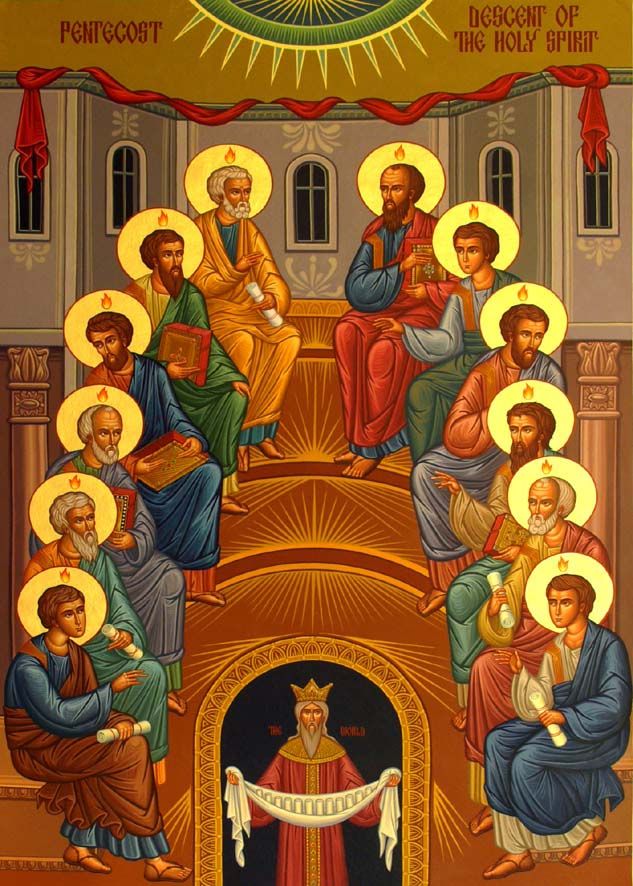
Salvation is commonly seen as just the work of atonement and forgiveness of sin, but the work of salvation which God has wrought includes not only the crucifixion of Christ Jesus, but also His resurrection and the outpouring of the Holy Spirit upon God’s people on the Day of Pentecost. Thus, all three Persons of the Godhead are involved in the work of salvation, making it a truly Trinitarian activity. Understanding this lays the groundwork for explaining how this applies to us as Christians. To see this on the level of practical experience, we can look at the Apostle Paul’s conversion experience on the road to Damascus.
Paul’s experience pointed to the crucifixion of Christ, His resurrection, and the outpouring of the Holy Spirit at Pentecost as the essential acts of salvation. For Paul, the grace He experienced after encountering Christ could not have been possible if Christ had not paid the penalty for sin at the cross. The crucifixion changes our position before God. The resurrection of Christ enables our new life and gives us a Mediator with the Father. And through the outpouring of the Holy Spirit at Pentecost, God brings us into continual communion with Christ, renovating us to conform to His image. Indeed, this idea of our union with Christ is essential to understanding how the work that God did applies to us and moves us to the fulfillment of God’s purposes for us.
In the previous lessons we have been looking at why God saved mankind. God intended for man to glorify Him throughout creation by bearing His image and by enjoying communion with Him. This exalted position was established in the Covenant of Life (also known as the Covenant of Works) that God made with Adam. Adam possessed true knowledge, original holiness, and righteousness relative to God Himself and to creation. Adam would have gone on to an even more intimate communion with God had he passed his probation of temptation in the Garden of Eden by speaking God’s word to his wife and to the serpent and by expelling the serpent to maintain the sanctity of the Garden. Adam, however, failed in his role as God’s original Prophet, Priest and King thereby plunging himself and his posterity into a state of corruption that affected all humanity. Adam’s sin was not simply transgression against God’s laws, nor just falling short of what God intended for man. Rather, it was—and still is—personal rebellion against and a direct affront to God Himself. For this reason, God utterly hates sin and is right to judge it.
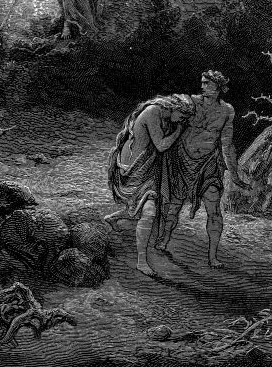
Adam and Eve Driven from Eden
We looked at these things because there is a persistent tendency for people—even Christians—to denigrate the pre-Fall high status of man, deny the seriousness of sin, and dismiss the idea of God as judge. Such tendencies eviscerate the Gospel. At the same time, this background sets the stage for why salvation is necessary. Indeed, God has not given up on having communion with His people. God’s work of salvation was thus needed to restore His people in terms of their position before Him and to renew His image in them.
 Covenantide